
Ichneumon
Ichneumon wasps
Species Guides
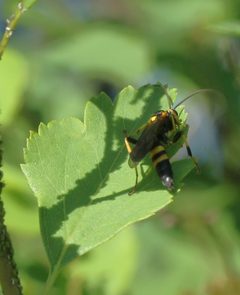
17Ichneumon is a of parasitic in the Ichneumonidae, one of the largest and most diverse groups of insects. Members of this genus exhibit typical ichneumonid with elongated bodies, long , and often prominent ovipositors. The genus name derives from Greek "ichneumon" meaning "tracker," reflecting their -finding . Like other ichneumonids, they are parasitoids of other insects, with larvae developing on or within host organisms.
Pronunciation
How to pronounce Ichneumon: /ɪkˈnjuːmən/
These audio files are automatically generated. While they are not always 100% accurate, they are a good starting point.
Identification
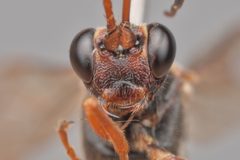
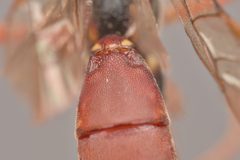
Difficult to identify to from images alone; -level identification requires examination of wing venation, segmentation, and other morphological characters. Distinguished from spider wasps (Pompilidae) by having many short antennal segments rather than fewer, longer segments. The "horse " in the forewing is a key diagnostic feature for the .
Images
Habitat
Diverse including forests, shrublands, and open areas where insects are present. often found on flowers or searching vegetation for hosts.
Distribution
Widespread across the Holarctic region; individual show Nearctic, Palaearctic, or broader distributions.
Seasonality
active during warmer months; in temperate regions, females of many enter (hibernation) in autumn and emerge in spring (March-May depending on latitude).
Diet
feed on nectar from flowers and honeydew from sap-feeding insects.
Life Cycle
development; females deposit on or within insects. Larvae develop as internal or external , eventually killing the host. Some are idiobionts (arrest host development at ), others are koinobionts (allow host to continue developing).
Behavior
Females use ovipositor to locate and deposit in or on insects; males do not possess functional ovipositors. Some exhibit egg-carrying where females retain eggs externally between oviposition attempts.
Ecological Role
Important agents; of various insects including Lepidoptera larvae and other groups. Help regulate in natural and agricultural .
Human Relevance
Generally harmless to humans; cannot sting. Ecologically valuable as natural enemies of pest insects. Some used in programs.
Similar Taxa
- Pompilidae (spider wasps)Similar body shape and coloration; distinguished by fewer, longer antennal segments and different wing venation. Spider wasps are active hunters of spiders rather than of immobile .
- Other Ichneumonidae generaMany within Ichneumonidae are superficially similar; precise identification requires expert examination of morphological characters.
More Details
Etymology
The name "Ichneumon" derives from Greek ἰχνεύμων (ichneumōn), meaning "tracker" or "searcher," referring to the female's of searching for .
Sources and further reading
- BugGuide
- Wikipedia
- iNaturalist taxon
- NCBI Taxonomy
- Catalogue of Life
- Bug Eric: Ichneumon Wasp: Ceratogastra ornata
- Bug Eric: Wasp Wednesday: Pachysomoides fulvus
- Bug Eric: Strange Behavior Explained (Sort of)
- Peer Review Report For: The genome sequence of a parasitoid wasp, Ichneumon xanthorius Forster, 1771 [version 1; peer review: 3 approved]
- Darwin wasps (Hymenoptera, Ichneumonidae) of the Nature Reserve of Pantalica (Sicily, Italy).
- First comprehensive catalogue of hibernating Darwin wasps in the Western Palaearctic (Hymenoptera, Ichneumonidae).
- The genome sequence of the ichneunomid wasp, Ischnus inquisitorius (Muller, 1776) (Hymenoptera: Ichneumonidae).