
Heteroecus
Kinsey, 1922
woolly gall wasp, golden gall wasp, beaked spindle gall wasp, mushroom gall wasp
Species Guides
5- Heteroecus dasydactyli
- Heteroecus lyoni(Lyon's Gall Wasp)
- Heteroecus melanoderma(Golden Gall Wasp)
- Heteroecus pacificus(beaked spindle gall wasp)
- Heteroecus sanctaeclarae(Mushroom Gall Wasp)
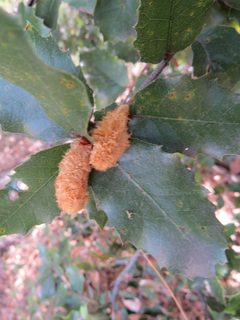
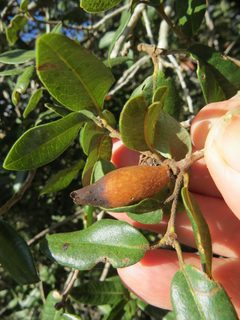
Heteroecus is a of gall wasps in the Cynipidae, described by Kinsey in 1922. The genus contains approximately five to seven described , all of which are obligate associates of oaks in the section Protobalanus. These induce characteristic galls on their plants. Several species have received reflecting their gall , including the woolly gall wasp, golden gall wasp, beaked spindle gall wasp, and mushroom gall wasp.
Pronunciation
How to pronounce Heteroecus: /hɛt.əˈriː.kəs/
These audio files are automatically generated. While they are not always 100% accurate, they are a good starting point.
Identification
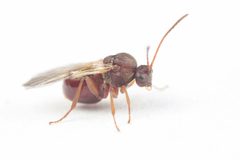
Identification to level requires examination of gall and oak species. The is distinguished within Cynipini by its specific association with oaks of section Protobalanus. Species-level identification relies on gall characteristics: Heteroecus dasydactyli produces woolly galls, Heteroecus melanoderma produces golden galls, Heteroecus pacificus produces beaked spindle galls, and Heteroecus sanctaeclarae produces mushroom-shaped galls. are small, typically 2-5 mm, with reduced wing venation characteristic of cynipid gall wasps.
Images
Habitat
Restricted to supporting oaks of section Protobalanus, primarily in western North America. These include dry slopes, chaparral, and mixed evergreen forests where Protobalanus oaks occur.
Distribution
Western North America, corresponding to the range of Quercus section Protobalanus. This includes California and adjacent regions of Oregon and Baja California.
Diet
Larvae feed on plant tissue within galls induced on oaks of section Protobalanus. do not feed; they emerge from galls to mate and oviposit.
Host Associations
- Quercus - obligate section Protobalanus only
Life Cycle
As with other Cynipidae, Heteroecus exhibits a complex involving , though specific details for most remain incompletely documented. The sexual induces galls on catkins or leaves, while the agamic (parthenogenetic) generation produces the more commonly observed galls on stems or buds. Development occurs entirely within galls on the oak.
Behavior
Females oviposit into oak tissue, inducing gall formation through chemical manipulation of plant growth. Galls provide nutrition and protection for developing larvae. are short-lived and do not disperse far from oaks.
Ecological Role
Acts as a herbivore on Protobalanus oaks. Galls may serve as microhabitats for and . The contributes to local biodiversity of gall-forming insects and their associated .
Human Relevance
No direct economic importance. Of interest to entomologists studying gall wasp diversity and oak-insect . Some are documented in regional biodiversity surveys.
Similar Taxa
- AndricusBoth are Cynipini inducing galls on oaks, but Andricus primarily associates with section Cerris and Quercus oaks, not Protobalanus. Andricus often show greater gall morphological diversity and geographic range.
- CynipsAnother Cynipini on oaks, but Cynips are generally associated with section Quercus oaks and produce different gall types, often spherical or irregular rather than the distinctive woolly, spindle, or mushroom forms of Heteroecus.
More Details
Taxonomic history
The was established by Alfred Kinsey in 1922, who described several based on gall and associations. Kinsey's work on Cynipidae preceded his more widely known research in human sexuality. Species counts vary between sources (5-7 species) due to taxonomic revisions and synonymy.
Host specificity
The restriction to Quercus section Protobalanus represents a notable ecological specialization. This oak section includes approximately 5-6 concentrated in California and adjacent regions, making Heteroecus a regional tied to this plant lineage.