
Disholcaspis spissa
Weld, 1957
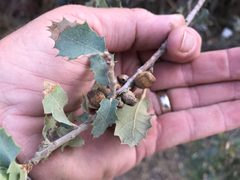
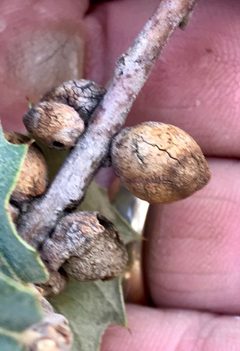
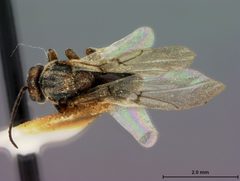
Disholcaspis spissa is a gall-inducing in the Cynipidae, first described by Weld in 1957. Like other members of the Disholcaspis, it induces galls on oak trees (Quercus spp.), though specific associations for this are not well documented in the provided sources. The species is part of a diverse radiation of cynipid wasps that manipulate plant growth to create protective structures for their developing larvae. Research on related Disholcaspis species indicates these wasps possess enlarged venom glands, implicating venom compounds in the induction of gall formation.
Pronunciation
How to pronounce Disholcaspis spissa: //dɪsˌhɒlˈkæspɪs ˈspɪsə//
These audio files are automatically generated. While they are not always 100% accurate, they are a good starting point.
Identification
Specific diagnostic features for D. spissa are not documented in the available sources. Members of the Disholcaspis are generally identified by the distinctive bullet-shaped or spherical galls they induce on oak twigs and stems. Accurate identification of the itself typically requires examination of morphological characters including segmentation, wing venation, and body , ideally by a in cynipid .
Images
Habitat
information specific to D. spissa is not available. Based on -level patterns, Disholcaspis are associated with oak-dominated forests and woodlands where their plants occur.
Distribution
Specific distribution records for D. spissa are not provided in the available sources. The Disholcaspis is primarily Nearctic in distribution, with most occurring in North America.
Host Associations
- Quercus - gall induction-level association inferred from genus Disholcaspis; specific oak for D. spissa not documented
Behavior
Like other cynipid gall wasps, D. spissa likely exhibits an with a sexual spring and an agamic (parthenogenetic) winter generation, though this has not been specifically documented for this . The sexual generation produces the large, conspicuous galls from which wingless females emerge.
Ecological Role
As a gall inducer, this creates structures that may be exploited by other organisms. Galls produced by related Disholcaspis species are known to and (guest organisms that occupy galls without harming the gall wasp larva).
Similar Taxa
- Disholcaspis quercusmammaAlso produces bullet galls on oaks; distinguished by gall and specificity, though precise differences require identification
- Disholcaspis quercusglobulusProduces round bullet galls on chinquapin oak (Quercus muhlenbergii); D. spissa may differ in association and gall form
More Details
Gall induction mechanism
Research on the Disholcaspis has shown that D. quercusmamma possesses a venom occupying one-third of its volume, and D. cinerosa has venom glands ten times longer than its abdomen when unfolded. These findings suggest venom compounds play a key role in gall induction, though this has not been specifically studied in D. spissa.
Taxonomic note
The was described by Weld in 1957. The Disholcaspis is part of the species-rich lineage of Cynipidae that induces galls on oaks, with over 750 cynipid species occurring north of Mexico.