
Disholcaspis rubens
(Gillette, 1893)
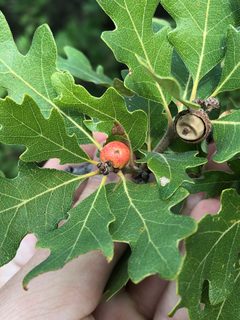
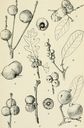
Disholcaspis rubens is a of gall wasp in the Cynipidae, first described by Gillette in 1893. Like other members of its , it induces distinctive galls on oak plants. Species in Disholcaspis are known for producing twig galls rather than leaf galls, and many exhibit parthenogenetic with all-female . The genus is characterized by enlarged venom glands, which are implicated in the chemical induction of gall formation.
Pronunciation
How to pronounce Disholcaspis rubens: //dɪsˈhɒlkæspɪs ˈruːbɛnz//
These audio files are automatically generated. While they are not always 100% accurate, they are a good starting point.
Identification
Disholcaspis rubens can be distinguished from by the specific of its galls and associations. Related such as D. quercusglobulus (round bullet gall wasp) and D. quercusmamma (oak rough bulletgall ) produce similar twig galls but on different oak species or with distinct gall shapes. D. quercusglobulus forms round, detachable galls singly or in small clusters, while D. quercusmamma produces rough bullet galls. Identification to species level typically requires examination of gall characteristics combined with knowledge of the specific host oak species.
Images
Habitat
Found in supporting its oak plants, including dry-mesic upland deciduous forests and oak-dominated woodlands. The occurs in areas where suitable Quercus species provide twig tissue for gall induction.
Distribution
North America. Specific range details beyond the continent are not well documented in available sources.
Seasonality
timing is not explicitly documented for this . Related Disholcaspis species show fall emergence patterns for the agamic () , with wingless females emerging to lay in twigs for the subsequent generation.
Diet
Larvae feed internally within the gall tissue they induce on oak twigs. The gall provides both nutrition and shelter for developing .
Host Associations
- Quercus - gall Specific oak for D. rubens not explicitly documented; use various Quercus species
Life Cycle
As with other Cynipidae, D. rubens likely exhibits an with both bisexual (spring) and agamic (, fall/winter) . The agamic generation consists of parthenogenetic females that reproduce without males. Larvae develop within twig galls, pupate, and emerge as that chew exit holes from the gall.
Behavior
Females inject into oak twig tissue using their ovipositor, simultaneously introducing secretions from enlarged venom glands that chemically induce gall formation. The does not sting humans; the ovipositor functions solely for egg-laying.
Ecological Role
As a gall inducer, modifies oak twig growth to create for its own offspring. Galls may serve as microhabitats for other organisms including (guest organisms) and , though specific associates for D. rubens are not documented.
Similar Taxa
- Disholcaspis quercusglobulusProduces similar round bullet galls on oak twigs; distinguished by gall and preferences
- Disholcaspis quercusmammaProduces rough bullet galls; has notably large venom occupying one-third of volume
- Disholcaspis cinerosaMealy oak gall wasp with exceptionally large venom gland (10 times body length when unfolded)