
Disholcaspis lacuna
Disholcaspis lacuna is a of gall wasp in the Cynipidae. Like other members of its , it induces the formation of characteristic galls on oak trees (Quercus spp.). The species exhibits the typical cynipid involving , with separate sexual and parthenogenetic (agamic) that produce distinct gall forms. Its and gall are less documented than those of such as D. quercusmamma and D. quercusglobulus.
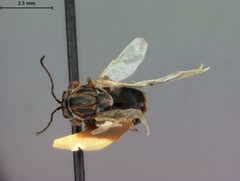
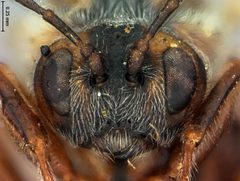
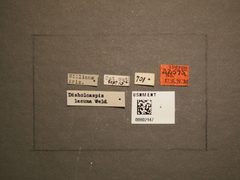
Pronunciation
How to pronounce Disholcaspis lacuna: /dɪs.hɔlˈkæs.pɪs ləˈkuː.nə/
These audio files are automatically generated. While they are not always 100% accurate, they are a good starting point.
Identification
Disholcaspis lacuna can be distinguished from other Disholcaspis by the specific of the galls it induces on oaks, though detailed diagnostic features for the itself remain poorly documented. The Disholcaspis is characterized by relatively small adult wasps that induce woody, often spherical or bullet-shaped galls on oak twigs and stems. Species-level identification typically requires examination of the gall structure and oak species, combined with microscopic analysis of adult morphology. D. lacuna is most reliably identified by its association with specific gall forms on particular Quercus species, distinguishing it from the rough bullet gall wasp (D. quercusmamma) and the round bullet gall wasp (D. quercusglobulus).
Images
Habitat
Associated with oak-dominated forests and woodlands, specifically in areas where Quercus occur. The species has been documented in dry-mesic upland deciduous forest where chinquapin oak (Quercus muhlenbergii) and related oak species grow.
Distribution
North America; documented in the central United States including Missouri, with records from the Ozark Highlands region. The appears to have a more restricted range than some , with most observations concentrated in the Mississippi River valley and adjacent areas.
Host Associations
- Quercus - gall Specific oak association requires confirmation; likely includes Q. muhlenbergii based on patterns
Life Cycle
Exhibits the characteristic cynipid , with a sexual producing one gall type and an agamic (parthenogenetic) generation producing a different gall type. The sexual generation typically emerges in spring, while the agamic generation emerges in late autumn or winter. Larval development occurs entirely within the protective gall structure, which provides both shelter and nutrition.
Behavior
females lay in actively growing oak tissue, introducing chemical compounds that induce gall formation. The induced galls serve as protective enclosures for developing larvae. Adults of the agamic are wingless and capable of parthenogenetic , while the sexual generation produces winged males and females.
Ecological Role
As a gall inducer, modifies oak tissue to create specialized microhabitats that support a of associated organisms. The galls provide food and shelter not only for the gall wasp larvae but also for (commensal organisms that occupy galls without harming the gall wasp) and that attack gall wasp larvae. Contributes to biodiversity in oak by creating structural complexity and supporting trophic interactions.
Similar Taxa
- Disholcaspis quercusmammaAlso induces bullet-shaped galls on oaks; distinguished by gall surface texture and preferences
- Disholcaspis quercusglobulusProduces round bullet galls; D. lacuna galls differ in specific morphological details
- Disholcaspis cinerosaMealy oak gall wasp with distinct gall ; has notably enlarged venom glands relative to body size