
Disholcaspis globosa
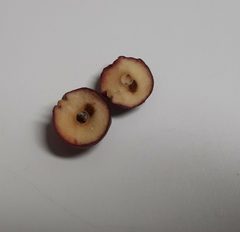
Globular root gall
A cynipid gall wasp that induces distinctive globular galls on oak roots. Like other members of the Disholcaspis, it exhibits parthenogenetic in at least one , with females capable of producing offspring without mating. The is one of approximately twelve described in the genus, all of which appear to have eliminated males from their . Root galls differ from the more commonly observed twig and leaf galls of related species, occurring below ground where they are rarely encountered unless excavated.
Pronunciation
How to pronounce Disholcaspis globosa: /dɪs.hɒlˈkas.pɪs ɡloʊˈboʊ.sə/
These audio files are automatically generated. While they are not always 100% accurate, they are a good starting point.
Identification
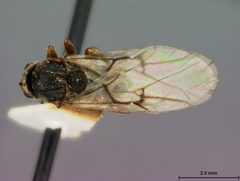
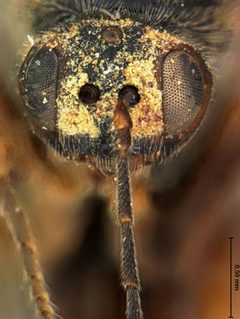
The galls are spherical to subspherical swellings on oak roots, distinguishable from twig galls of by their subterranean location and tissue type. are small typical of the Cynipidae, with reduced wing venation characteristic of the group. Field identification relies entirely on gall and host association, as the wasps themselves are minute and rarely observed alive. The globular root gall differs from the bullet-shaped twig galls of Disholcaspis quercusglobulus and the rough bullet galls of D. quercusmamma.
Images
Habitat
Associated with oak-dominated forests and woodlands, specifically where oaks (Quercus spp.) occur. The subterranean galls indicate a below-ground distinct from above-ground galling relatives. Specific oak host have not been definitively documented in available sources.
Distribution
North America; precise range boundaries are not well documented in available literature. The Disholcaspis is broadly distributed across North American oak .
Host Associations
- Quercus - gall induction on rootsSpecific oak not confirmed in available sources
Similar Taxa
- Disholcaspis quercusglobulusProduces round bullet galls on oak twigs rather than roots; galls are detachable and occur above ground on Quercus alba and Q. muhlenbergii
- Disholcaspis quercusmammaProduces rough bullet galls on oak twigs; larger venom gland relative to body size, with venom occupying one-third of volume
- Disholcaspis cinerosaProduces mealy oak galls; possesses exceptionally large venom gland (10 times body length when unfolded), the largest known among oak gallers