
Andricus brunneus
Fullaway, 1911
Clustered Gall Wasp
Pronunciation
How to pronounce Andricus brunneus: /ˈæn.dɹɪ.kəs ˈbɹʌn.i.əs/
These audio files are automatically generated. While they are not always 100% accurate, they are a good starting point.
Identification
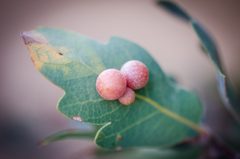
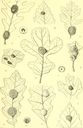
Distinguished from other Andricus by the clustered, round, reddish-brown leaf galls on white oaks, particularly blue oaks. The galls are approximately 6 mm in diameter with a single larval chamber each. The exclusive presence of females and Pacific Coast distribution further separate this species from eastern North American .
Images
Appearance
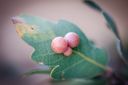
are brown or reddish-brown, approximately 3 millimetres in length. The galls are round, 6 millimetres in diameter, reddish to light brown in color, and typically occur in clusters on leaf surfaces.
Habitat
Associated with oak woodlands and savannas where white oaks, especially blue oaks (Quercus douglasii), occur. The depends on the presence of its specific oak species for gall formation.
Distribution
Pacific Coast of North America. Specific range includes California and adjacent regions where blue oaks and other white oaks are present.
Seasonality
females emerge from galls in autumn. Gall formation occurs on developing leaves during the growing season.
Host Associations
- Quercus douglasii - gall formation on leavesPrimary ; blue oak
- white oaks (Quercus section Quercus) - gall formation on leavesBroader range within white oak group
Life Cycle
The involves deposition into developing oak leaf tissue, induction of round galls, larval development within a single chamber per gall, inside the gall, and in autumn. Only females are produced, indicating parthenogenetic without a sexual .
Behavior
Females emerge in autumn and presumably oviposit into oak buds or developing tissues to initiate the next . The has eliminated the male sex entirely.
Ecological Role
As a gall-former, the manipulates oak leaf development to create protected feeding chambers. The galls represent a form of plant-insect interaction that may affect leaf physiology, though specific ecological impacts are not well documented.
Human Relevance
No significant direct human impact. The galls are of interest to naturalists and entomologists studying oak gall wasp diversity. No economic damage to oaks has been reported.
Similar Taxa
- Andricus pattoniAnother Andricus forming leaf galls on oaks, but produces different gall and occurs in different geographic regions
- Andricus dimorphusForms clustered galls on oak leaves but on different and with different gall structure; known as clustered midrib gall wasp
More Details
Parthenogenesis
A. brunneus is one of numerous Cynipidae that have eliminated males entirely, reproducing through . This reproductive strategy is common in the tribe Cynipini, which contains many Andricus species.
Gall characteristics
The clustered arrangement of galls on leaves is a distinctive feature that gives the its . Each gall contains a single larval chamber, unlike some cynipid galls that house multiple larvae.
Sources and further reading
- BugGuide
- Wikipedia
- iNaturalist taxon
- NCBI Taxonomy
- Grasshoppers of Colorado
- Grasshoppers of Colorado
- Grasshoppers of Colorado
- Species Records and Accounts
- Gall darn it! Gall insects on hickory, oak, and elm, Phylloxera caryaecaulis, Andricus palustris, Colopha ulmicola — Bug of the Week
- Cynipidae | Beetles In The Bush