
Ectemnius lapidarius
(Panzer, 1803)
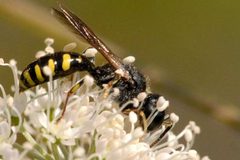
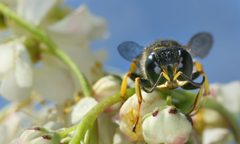
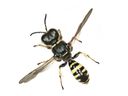
Ectemnius lapidarius is a square-headed wasp in the Crabronidae. It has a broad distribution spanning Africa, Europe, Northern Asia (excluding China), North America, and Southern Asia. The is one of numerous solitary in the Ectemnius, which are typically predatory and nest in various substrates including soil, wood, or plant stems.
Pronunciation
How to pronounce Ectemnius lapidarius: /ɛkˈtɛmniəs læpɪˈdɛəriəs/
These audio files are automatically generated. While they are not always 100% accurate, they are a good starting point.
Identification
Ectemnius are characterized by their square or rectangular , a trait that distinguishes them from many other crabronid . Within the , E. lapidarius can be difficult to separate from without detailed examination. The genus Ectemnius can be distinguished from similar genera such as Anacrabro, Lestica, and Crabro by head shape and other subtle morphological features; for example, Anacrabro has a very concave underside of the not seen in Ectemnius.
Images
Distribution
Found in Africa, Europe and Northern Asia (excluding China), North America, and Southern Asia. Specific distribution records include the Azores.
Similar Taxa
- Anacrabro ocellatusSimilar black and yellow coloration and size, but distinguished by very concave underside of and different prey preferences (Miridae plant bugs vs. flies for Ectemnius)
- Other Ectemnius speciesNumerous share the square-headed ; -level identification typically requires detailed examination of structural features
More Details
Taxonomic note
The was first described by Panzer in 1803. It is classified within the tribe Crabronini, Crabroninae, of the Crabronidae.
Sources and further reading
- BugGuide
- Wikipedia
- GBIF taxonomy match
- iNaturalist taxon
- NCBI Taxonomy
- Catalogue of Life
- Bug Eric: Wasp Wednesday: Anacrabro ocellatus
- Study Finds Very Few Wild Bee Species Pollinate Major Crops
- National Meadows Day 2023 in England - Buglife Blog - Buglife
- Novel research seeking to solve environmental challenges
- BioRisk | Blog - Part 2
- Pensoft Editorial Team | Blog - Part 50