
Anacrabro
Packard, 1866
Species Guides
1- Anacrabro ocellatus(square-headed wasp)
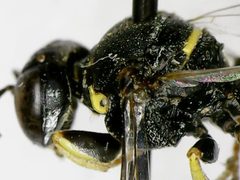
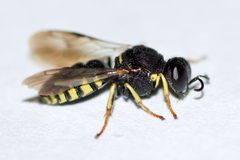
Anacrabro is a of square-headed wasps in the Crabronidae containing approximately 15 described . Two species occur in North America north of Mexico: A. ocellatus, widespread east of the Rocky Mountains, and A. boerhaviae in the extreme southwestern U.S. and Mexico. The genus is distinguished from related crabronine by its concave abdominal underside and, in A. ocellatus, by its specialized on plant bugs (Miridae) rather than flies.
Pronunciation
How to pronounce Anacrabro: /ˌænəˈkreɪbroʊ/
These audio files are automatically generated. While they are not always 100% accurate, they are a good starting point.
Identification
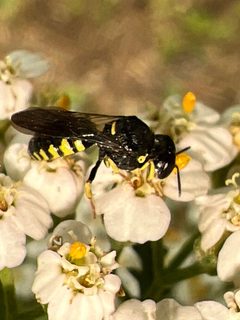
Separable from similar-looking Ectemnius, Lestica, and Crabro by the strongly concave underside of the . A. ocellatus specifically can be recognized by its small size (6-7 mm), black and yellow coloration, and association with mirid prey.
Images
Habitat
Hard-packed sandy or loamy soils suitable for burrow excavation; nest entrances often concealed by overhanging vegetation.
Distribution
Approximately 15 described globally. In North America: A. ocellatus occurs east of the Rocky Mountains; A. boerhaviae in extreme southwestern U.S. and Mexico.
Seasonality
active during summer months; A. ocellatus observed in Massachusetts in early August.
Diet
A. ocellatus hunts almost exclusively of the tarnished plant bug, Lygus lineolaris (Miridae). Other ' diets are poorly documented.
Life Cycle
Females are solitary nesters, excavating nearly vertical burrows 9-16 cm deep in soil. Burrows contain 1-10 , each provisioned with 4-9 prey items and housing one larva. observed. Multiple nests may be constructed per female.
Behavior
Females disperse excavated soil to conceal nest entrances. visit flowers for nectar, particularly wild carrot (Daucus carota), goldenrod (Solidago), and milkweed (Asclepias).
Ecological Role
of plant bugs (Miridae); A. ocellatus provides substantial of Lygus lineolaris, a major agricultural pest affecting over half of cultivated plant in the continental U.S.
Human Relevance
Beneficial as a natural enemy of the tarnished plant bug, reducing crop and garden damage from this pest.
Similar Taxa
- EctemniusSimilar appearance but lacks the strongly concave abdominal underside of Anacrabro; typically preys on flies rather than plant bugs.
- LesticaSimilar appearance but lacks the strongly concave abdominal underside; different prey preferences.
- CrabroSimilar appearance but lacks the strongly concave abdominal underside; typically preys on flies rather than plant bugs.