
Foxia
Ashmead, 1898
Species Guides
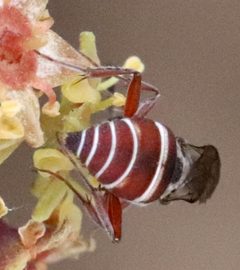
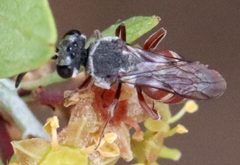
2Foxia is a of cleptoparasitic in the Crabronidae, Bembicinae. The genus comprises 10 described distributed across arid regions of the New World, from the United States south through Chile and Argentina. These wasps are obligate , meaning they exploit the nests and provisions of other wasp species rather than constructing their own nests or hunting prey directly.
Pronunciation
How to pronounce Foxia: /ˈfɔksiə/
These audio files are automatically generated. While they are not always 100% accurate, they are a good starting point.
Identification
Foxia can be distinguished from other bembicine by their cleptoparasitic lifestyle, which is associated with reduced morphological features typical of nest . Specific diagnostic characters for the genus require examination of detailed structural features; the 10 described species are distinguished by subtle morphological differences in genitalia and other fine structures. The genus is placed in the subtribe Nyssonina alongside related cleptoparasitic genera.
Images
Habitat
of Foxia occur in xeric (dry) , including deserts and arid scrublands. The shows a strong association with arid environments throughout its New World range.
Distribution
The ranges from the United States (including southwestern states) south through Mexico and Central America to Chile and Argentina in South America. -level distributions vary, with some restricted to North America (e.g., F. navajo, F. pacifica) and others occurring in South America.
Host Associations
- Other Bembicinae - Foxia are obligate that lay in the nests of other bembicine , with larvae consuming the 's provisioned prey.
Behavior
Foxia exhibit cleptoparasitic , entering the nests of to deposit . The larvae develop by consuming the prey items (typically flies) that the host female has provisioned for her own offspring. This parasitic strategy eliminates the need for females to hunt or construct nests.
Ecological Role
As , Foxia function as regulators of their species within arid . They represent a that converts prey captured by hosts into , potentially influencing host nesting success and in xeric .
Similar Taxa
- NyssonAlso in subtribe Nyssonina and cleptoparasitic, but distinguished by specific morphological characters and associations; Foxia is more restricted to xeric .
- StizoidesAnother cleptoparasitic bembicine , but Stizoides are typically associated with different groups (often Stizus) and show different geographic patterns.
More Details
Taxonomic history
Foxia was established by Ashmead in 1898 with F. pacifica as the type . The has been consistently placed in the Nyssonini (or Nyssoninae in older treatments) based on cleptoparasitic and .
Species diversity
Ten are currently recognized: F. cuna, F. deserticola, F. divergens, F. garciai, F. martinezi, F. navajo, F. pacifica, F. pirita, F. secunda, and F. tercera. Several were described by Fritz in 1972, indicating significant taxonomic work in that period.