
Bembix amoena
Handlirsch, 1893
sand wasp
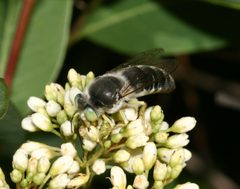
Bembix amoena is a of solitary sand wasp in the Crabronidae, native to North America. Like other members of the Bembix, females construct burrows in sandy substrates and provision them with paralyzed flies to feed their larvae. The species exhibits , where the mother continues to bring prey to her developing offspring. of both sexes visit flowers for nectar, particularly composites in the Asteraceae family.
Pronunciation
How to pronounce Bembix amoena: /ˈbɛmbɪks əˈmɔɪnə/
These audio files are automatically generated. While they are not always 100% accurate, they are a good starting point.
Identification
Bembix amoena can be distinguished from other Bembix through specific morphological characters, though detailed diagnostic features require examination. The Bembix as a whole is characterized by a tarsal rake—spines on the front legs used for digging—and a generally robust body form adapted for burrowing in sand. Species-level identification within Bembix typically requires examination of genitalia and other subtle structural features.
Images
Habitat
Sandy environments including dunes, beaches, and sand prairies with loose, deep sand suitable for burrow excavation. The requires open, sparsely vegetated ground where females can dig their characteristic oblique, nearly horizontal burrows.
Distribution
North America. Records include Canada (British Columbia) and the United States. The occurs within the broader range of the Bembix in North America.
Seasonality
are active during warmer months, with typically two per year. occurs as within sand-woven cocoons. Activity patterns follow seasonal temperature cycles, with males emerging before females.
Diet
feed on nectar from flowers, particularly composites (Asteraceae). Larvae are fed exclusively on true flies (Diptera, excluding ), which are captured, paralyzed or killed by the female 's sting, and transported back to the nest.
Life Cycle
Females excavate burrows 19–57 cm long and 5–28 cm deep before hunting. An is laid either on the first prey item or in the empty . The larva receives —additional flies brought by the mother as needed. The larva spins a cocoon incorporating sand grains, as a . Usually two annually. Some females construct 1–2 additional cells on short branch tunnels from the main burrow.
Behavior
Females dig burrows using a tarsal rake on their front legs, rapidly excavating sand. They employ subtle landmarks to locate concealed nest entrances. Males perform aerial 'sun dances'—erratic, rapid 1–2 inches above ground to detect emerging virgin females. Mating occurs in flight or after pairs leave the . Both sexes are fast, erratic fliers rarely seen perching for more than moments.
Ecological Role
of Diptera, contributing to fly . through nectar feeding on flowers. Prey for various including cuckoo wasps (Chrysididae), velvet ants (Mutillidae), satellite flies (Sarcophagidae), and bee flies (Bombyliidae). may be parasitized by thick-headed flies (Conopidae) or killed by robber flies (Asilidae).
Human Relevance
Generally beneficial due to on flies. Non-aggressive; stings are rare and not medically significant for healthy humans. May be encountered in recreational sandy areas such as beaches and parks.
Similar Taxa
- Bembix americanaSimilar size, coloration, and preferences; distinguished by specific morphological details and geographic overlap in some regions
- Other Bembix speciesShared characteristics including sand-burrowing and dipteran prey; require examination for definitive separation
- Sphecius speciosus (cicada killer)Similar burrowing in sandy soils and general body plan, but much larger, with different prey (cicadas rather than flies) and distinct color pattern
More Details
Nesting behavior
Females may dig short, dead-end burrows or furrows near the real nest entrance, likely to confuse . The true burrow entrance is thoroughly concealed once complete.
Taxonomic history
Formerly placed in Sphecidae; now classified in Crabronidae (or Bembicidae in some treatments) based on phylogenetic revisions.