
Megastigmidae
Thomson, 1876
Genus Guides
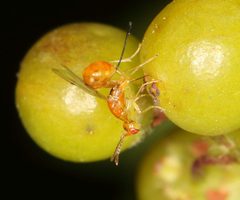
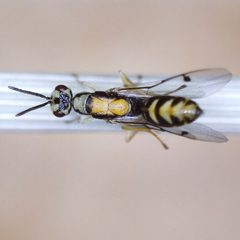
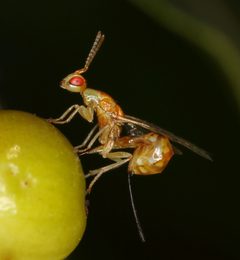
2Megastigmidae is a of chalcidoid wasps comprising approximately 12 and over 170 described . Formerly classified as a of Torymidae, it was elevated to family status based on molecular and morphological evidence. The family exhibits remarkable ecological diversity: some species are phytophagous seed-feeders, while others are of gall-forming insects. Many species are associated with plant galls, where they may act as parasitoids, , or seed .
Pronunciation
How to pronounce Megastigmidae: /ˌmɛɡəˈstɪɡmɪˌdiː/
These audio files are automatically generated. While they are not always 100% accurate, they are a good starting point.
Identification
Megastigmidae can be distinguished from similar chalcidoid , particularly Torymidae, by the combination of an enlarged wing stigma with infuscation and 6 flagellomeres between the and clava (versus 8 in Torymidae). Body size ranges overlap with Torymidae, and both families share long ovipositors in females, making antennal segmentation and wing stigma structure critical for identification.
Images
Habitat
Diverse including forests, woodlands, and urban areas where plants occur. Many are associated with oak trees (Quercus spp.) and their galls, while seed-feeding species inhabit coniferous forests, rose thickets, and other vegetation where their host plants produce seeds.
Distribution
Worldwide distribution with strong representation in the Palearctic and Australian regions; over 80% of Megastigmus are recorded from these regions. Documented from Africa, Asia, Europe, North America (including introduced Palearctic species), and Oceania. Notable absences include the Neotropical region for Megastigmus. Specific country records include Morocco, Belgium, Netherlands, Japan, Australia, China, Maldives, and the United States.
Diet
Highly variable: phytophagous feed on seeds of conifers (Pinaceae, Cupressaceae), roses (Rosaceae), and other plants; species attack gall-forming insects including cynipid , cecidomyiid flies, and other chalcidoids. Some species are in galls.
Host Associations
- Quercus spp. - gall associationoak gall wasps and their galls
- Leptocybe spp. - eucalypt gall chalcids, biocontrol target
- Rosa spp. - seed for phytophagous
- Juniperus spp. - seed J. phoenicea, J. oxycedrus, J. thurifera
- Cupressus spp. - seed C. atlantica, C. sempervirens
- Cedrus atlantica - seed Atlas cedar
- Pistacia spp. - seed pistachio and relatives
- Pemphis acidula - seed first record for Lythraceae
- Ilex spp. - seed I. pedunculosa and other fleshy-fruited
Life Cycle
strategies vary by and . Seed-feeding species typically develop within seeds; some are , while at least one species (Macrodasyceras japonicum) is multivoltine with two or more per year in warm-temperate regions. of some species overwinter outside of fruits. species develop within or on gall-forming insects.
Behavior
of some seed-feeding overwinter outside of fruits, likely as a avoidance strategy. Some species demonstrate host-switching capabilities, with introduced in North America attacking multiple native oak gall wasp hosts. Oviposition timing is critical: are laid before protective seed tissues harden.
Ecological Role
Functions as both seed and , influencing plant reproductive success and regulating of gall-forming insects. Seed-feeding can cause severe predispersal seed damage (up to ~80% in some ). Parasitoid species contribute to of gall pests, with some species investigated or employed as biocontrol agents against eucalypt gall chalcids (Leptocybe spp.).
Human Relevance
Some are investigated as biocontrol agents for forest pests. Seed-feeding species may impact forestry and horticulture through seed . Multiple species have been introduced to non-native regions (e.g., Bootanomyia dorsalis in North America, Megastigmus transvaalensis in Mediterranean regions), with potential impacts on native insect . Citizen science initiatives (Gall Week, Gallformers.org) contribute to documenting their diversity.
Similar Taxa
- TorymidaeFormerly included Megastigmidae as a ; shares similar body size ranges and long female ovipositors. Distinguished by 8 flagellomeres (vs. 6) and wing stigma structure.
More Details
Taxonomic history
Elevated from of Torymidae to status based on molecular phylogenetic studies and morphological , part of a broader reclassification of Chalcidoidea.
Biocontrol significance
Several Megastigmus are under investigation or in use as biocontrol agents against the blue gum chalcid Leptocybe spp. in eucalypt plantations worldwide.
Introduction events
Bootanomyia dorsalis has been introduced to North America at least twice from separate European source , demonstrating the cryptic nature of invasions and the need for genetic monitoring.
Sources and further reading
- BugGuide
- Wikipedia
- GBIF taxonomy match
- iNaturalist taxon
- NCBI Taxonomy
- Catalogue of Life
- Discovery of wasp species previously unknown in the U.S.
- Species of Megastigmidae from Morocco (Hymenoptera, Chalcidoidea)
- Review of the Megastigmidae in Belgium and the Netherlands (Hymenoptera: Chalcidoidea)
- Seasonal patterns of host utilization in the multivoltine seed-feeding wasp, Macrodasyceras japonicum (Hymenoptera: Megastigmidae)
- Molecular markers reveal diversity in composition of Megastigmus (Hymenoptera: Megastigmidae) from eucalypt galls
- Megastigmus transvaalensis (Hussey, 1956) (Hymenoptera: Megastigmidae) and recruited native parasitoids in Cyprus and Greece
- Discovery of two Palearctic Bootanomyia Girault (Hymenoptera, Megastigmidae) parasitic wasp species introduced to North America
- Studies of the Families Cleonymidae, Coelocybidae, Epichrysomallidae, Eunotidae, Heydeniidae, Megastigmidae, Neanastatidae, Pirenidae, Spalangiidae and Systasidae (Hymenoptera: Chalcidoidea)
- Description of two new Australian genera of Megastigmidae (Hymenoptera, Chalcidoidea) with notes on the biology of the genus Bortesia
- A New Species of Megastigmus and First Record of the Genus and Megastigmidae Family from the Paradise of the Maldives Archipelago
- Confirmation of Avian Dispersal of a Seed Chalcid Wasp in North America and a New Host Record for Megastigmus aculeatus (Hymenoptera: Megastigmidae)
- Multivariate ratio analysis and DNA markers reveal a new Australian species and three synonymies in eucalypt-gall-associatedMegastigmus(Hymenoptera: Megastigmidae)
- Figure 7 from: Böhmová J, Rasplus J-Y, Taylor GS, Janšta P (2022) Description of two new Australian genera of Megastigmidae (Hymenoptera, Chalcidoidea) with notes on the biology of the genus Bortesia. Journal of Hymenoptera Research 90: 75-99. https://doi.org/10.3897/jhr.90.82582
- Figure 4 from: Böhmová J, Rasplus J-Y, Taylor GS, Janšta P (2022) Description of two new Australian genera of Megastigmidae (Hymenoptera, Chalcidoidea) with notes on the biology of the genus Bortesia. Journal of Hymenoptera Research 90: 75-99. https://doi.org/10.3897/jhr.90.82582
- Figure 3 from: Böhmová J, Rasplus J-Y, Taylor GS, Janšta P (2022) Description of two new Australian genera of Megastigmidae (Hymenoptera, Chalcidoidea) with notes on the biology of the genus Bortesia. Journal of Hymenoptera Research 90: 75-99. https://doi.org/10.3897/jhr.90.82582
- Figure 1 from: Böhmová J, Rasplus J-Y, Taylor GS, Janšta P (2022) Description of two new Australian genera of Megastigmidae (Hymenoptera, Chalcidoidea) with notes on the biology of the genus Bortesia. Journal of Hymenoptera Research 90: 75-99. https://doi.org/10.3897/jhr.90.82582
- A new species of Megastigmus (Hymenoptera, Megastigmidae) from China.