
Megastigmus
Dalman, 1820
Species Guides
2- Megastigmus spermotrophus(Douglas Fir Seed Chalcidoid Wasp)
- Megastigmus transvaalensis(Peppertree Seed Chalcid)
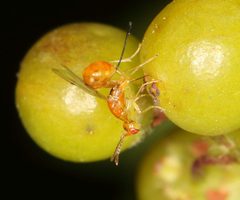
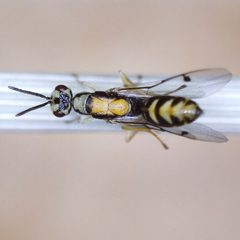
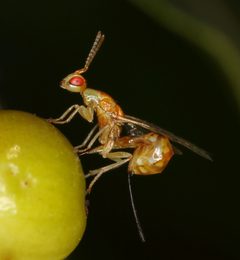
Megastigmus is a large of minute chalcid wasps comprising over 145 described , representing the largest genus in the Megastigmidae. Many species undergo larval development within the seeds of trees and shrubs, exhibiting diverse feeding habits ranging from strictly phytophagous to strictly entomophagous, with intermediate forms. The genus displays pronounced wing pigmentation with relatively large black spots located medially, and females possess characteristically long ovipositors. Species exhibit varying degrees of specialization, with some tightly associated with specific conifer genera while others demonstrate broader host ranges.
Pronunciation
How to pronounce Megastigmus: /mɛˈɡæstɪɡməs/
These audio files are automatically generated. While they are not always 100% accurate, they are a good starting point.
Identification
Megastigmus are distinguished from related by the combination of relatively large black spots on the wings positioned toward the middle, and the notably long ovipositor in females. The name reflects these diagnostic features: Greek "mega" (large) and "stigmus" (mark or spot). Minute body size is typical for the . Species-level identification requires examination of antennal clava structure and funicle segment proportions, with eucalypt-associated species tending to have larger clava and strongly increasing width of funicle segments.
Images
Habitat
occupy diverse corresponding to their plants, ranging from montane forest-steppe at high altitudes (2600–4300 m on the Qinghai-Tibet Plateau) to temperate coniferous forests and Mediterranean-type . Phytophagous species are predominantly associated with conifer seeds, while others occur in angiosperm fruits and seeds.
Distribution
Global distribution with highest in the Palearctic, Australian, and Nearctic regions. Subtropical and tropical regions harbor fewer described ; the Afrotropical region contains approximately 7 described species. Specific species show restricted distributions: Megastigmus sabinae is to the northeastern Qinghai-Tibet Plateau (Gansu Province, China), while Megastigmus spermotrophus occurs across Europe, North America, New Zealand, and has been introduced to Australasia.
Diet
Highly variable across . Many phytophagous species feed on conifer seeds, particularly within Pinaceae, Cupressaceae, and Taxodiaceae. Some species consume angiosperm seeds including Rosaceae (rose hips and rosaceous fruits), Anacardiaceae, Fabaceae, Aquifoliaceae, and Hamamelidaceae. Other species are entomophagous or exhibit intermediate feeding strategies. Larvae of Megastigmus sabinae feed exclusively on cone endosperm of Juniperus przewalskii.
Life Cycle
Development typically involves larval stages within seeds or cones. In Megastigmus sabinae, oviposit into healthy cones; larvae pass through five instars from late August to late June, with the majority as second instar larvae. Development is synchronized with host cone maturation, culminating in following complete nutrient depletion of the endosperm. Other complete development within single seeds of host plants.
Behavior
Many exhibit tight developmental synchronization with plant . Some species associated with Pinaceae demonstrate host-shifting capability across congeneric and even intergeneric host plants, suggesting elevated potential. Eucalypt-associated species display morphological adaptations including enlarged antennal clava. Larvae of specialized species such as Megastigmus sabinae deploy stage-specific physiological counter-adaptations including early-instar detoxification maintenance and late-instar digestive enzyme upregulation to overcome host chemical defenses.
Ecological Role
Phytophagous function as specialized seed , causing cone or seed abortion and potentially limiting natural of tree . In montane forest-steppe , species such as Megastigmus sabinae act as significant barriers to regeneration of constructive tree species. The has been investigated for biocontrol potential against pests such as the eucalyptus gall wasp Leptocybe invasa, with multiple species recorded in association with eucalypt galls across the Indomalaya, Palearctic, Afrotropic, and Neotropic realms.
Human Relevance
Several are economically significant as seed pests in conifer seed orchards and natural forests. The has been extensively studied for applications, particularly targeting the glassy-winged sharpshooter (Homalodisca vitripennis) and eucalyptus gall wasp (Leptocybe invasa). Species associated with Pinaceae are hypothesized to pose elevated risk due to -shifting capabilities.
Sources and further reading
- BugGuide
- Wikipedia
- GBIF taxonomy match
- iNaturalist taxon
- NCBI Taxonomy
- Catalogue of Life
- Publications | Entomology Research Museum
- Megastigmus spermotrophus . [Distribution map].
- Physiological Adaptation Strategies of the Interaction Defense Between Larvae of Megastigmus sabinae and the Host Juniperus przewalskii.