
Chalcedectus
Walker, 1852
Species Guides
4Chalcedectus is a of chalcid wasps constituting the sole genus of the Chalcedectidae. Formerly classified within the Cleonyminae of Pteromalidae, molecular phylogenetic studies placed it in a distinct lineage within the 'weird clade' of Chalcidoidea. The genus comprises approximately 20 described distributed across tropical and subtropical regions. Most species are of wood-boring beetles.
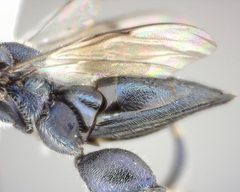
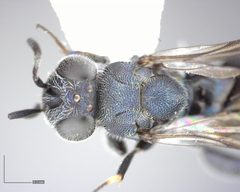
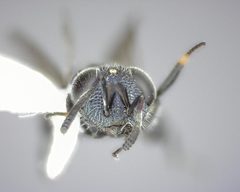
Pronunciation
How to pronounce Chalcedectus: //ˈkælsɪˌdɛktəs//
These audio files are automatically generated. While they are not always 100% accurate, they are a good starting point.
Identification
Chalcedectus exhibits a mosaic of morphological features that historically complicated its classification: the resembles that of Perilampus (Perilampidae), thoracic resembles Perilampidae and Eurytomidae, and the hind legs resemble those of Leucospidae and Chalcididae. This combination of traits distinguishes it from its closest relatives, the Pelecinellidae, despite their phylogenetic proximity. The lacks the uniform morphological typical of most chalcid .
Images
Habitat
Associated with supporting wood-boring beetles, which serve as . Tropical and subtropical distribution suggests preference for warm climates.
Distribution
Tropical and subtropical regions globally. Described occur in Central and South America (including Brazil, Argentina, Paraguay), the Caribbean, North America (southern United States), Africa (Egypt), and Southeast Asia.
Diet
Most are of wood-boring beetles. Specific associations have been documented for some species but remain incompletely known across the .
Host Associations
- wood-boring beetles - primary for most
Ecological Role
agent of wood-boring beetles. As , they contribute to regulation of in forest and woodland .
Human Relevance
Potential utility in of pest wood-boring beetles, though specific applications have not been widely documented. Of primary scientific interest for understanding chalcid evolution and the phylogenetic 'weird clade' of Chalcidoidea.
Similar Taxa
- PelecinellidaeClosest phylogenetic relatives within the 'weird clade', but markedly different in external
- LyciscaHistorical taxonomic association within Cleonyminae; Chalcedectus was considered most allied to this by Walker (1852)
- PerilampusShares ; Chalcedectus was noted by Walker to have 'the head of Perilampus'
More Details
Taxonomic history
Francis Walker described the type Chalcedectus maculicornis in 1852, recognizing its intermediate morphological position between Pteromalidae and Eupelmidae. The remained classified within Cleonyminae (Pteromalidae) until molecular phylogenetic studies by Cruaud and colleagues demonstrated its distinct evolutionary trajectory, leading to recognition as the separate Chalcedectidae.
Phylogenetic significance
Chalcedectus exemplifies the 'weird clade' of Chalcidoidea—lineages that diverged early in the superfamily's evolution and retain distinctive morphological combinations. Its long divergence time from relatives supports -level recognition despite low .