
Triepeolus martini
(Cockerell, 1900)
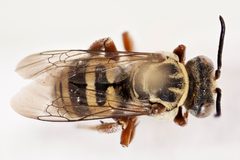
Triepeolus martini is a cleptoparasitic in the Apidae, first described by Cockerell in 1900. As a member of the Triepeolus, it functions as a cuckoo bee, laying in the nests of bees. The species has been documented in the United States and Mexico.
Pronunciation
How to pronounce Triepeolus martini: /traɪˈiːpiɒləs ˈmɑːrtɪni/
These audio files are automatically generated. While they are not always 100% accurate, they are a good starting point.
Identification
Triepeolus are characterized by their cleptoparasitic lifestyle and can be recognized by features typical of the , including a relatively robust body and often distinctive coloration patterns. Specific diagnostic features for T. martini are not well documented in available sources. Identification to species level typically requires examination of morphological details such as punctation patterns, hair , and genitalia structure, ideally by a in apoid .
Images
Distribution
United States and Mexico.
Host Associations
- Triepeolus - Triepeolus are , laying in the nests of other bees, typically in the Apidae such as long-horned bees (Eucerini). The specific (s) for T. martini have not been documented.
Behavior
As a cleptoparasitic , Triepeolus martini exhibits the typical of cuckoo bees: females enter nests to lay in provisioned by the host. The Triepeolus larva consumes the host's pollen and nectar provisions, and often the host egg or larva. This parasitic strategy eliminates the need for nest construction and pollen collection.
Ecological Role
As a , T. martini functions as a natural regulator of its . Such parasitic relationships contribute to bee dynamics and may influence host nesting success and distribution.
Similar Taxa
- Triepeolus lunatusAnother North American Triepeolus with similar cleptoparasitic ; distinguished by morphological details and potentially geographic distribution.
- NomadaAnother of cuckoo bees in Apidae with similar cleptoparasitic ; Nomada typically parasitize Andrenidae and other bees, and often have more slender bodies with distinctive yellow and black banding patterns.
- EpeolusRelated in tribe Epeolini with similar cleptoparasitic habits; Epeolus often parasitize Colletidae and can be distinguished by specific morphological characters including thoracic and abdominal punctation.
More Details
Taxonomic authority
First described by Theodore Dru Alison Cockerell in 1900, a prolific British-American entomologist who described thousands of .
Observation rarity
As of available records, this has relatively few documented observations (3 records in iNaturalist), suggesting it may be genuinely rare, under-collected, or difficult to identify.
Sources and further reading
- BugGuide
- Wikipedia
- GBIF taxonomy match
- iNaturalist taxon
- NCBI Taxonomy
- Catalogue of Life
- The Native Bees in the UC Davis Bee Haven | Bug Squad
- What Native California Plants Are Best for Attracting Pollinators? | Bug Squad
- “Mantises and Martinis”! The Chinese Praying Mantis, Tenodera aridifolia sinensis — Bug of the Week
- Bug Eric: White Prairie Clover: An Awesome Blossom
- Evidence for Biodiversity Insurance Hypothesis: More Species Are Indeed Beneficial
- cornelian cherry | Blog