
Spanioneura
Förster, 1848
Species Guides
3- Spanioneura buxi(boxwood psyllid)
- Spanioneura fonscolombii
- Spanioneura sanguinea
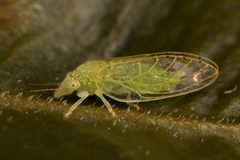
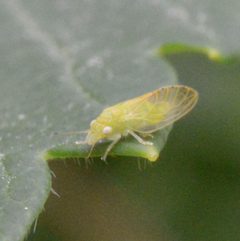
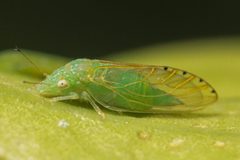
Spanioneura is a of psyllids (jumping plant-lice) established by Arnold Förster in 1848. are primarily European in distribution, though the type species S. fonscolombii has been accidentally introduced to the United States. The genus comprises at least five described species, with S. fonscolombii being the most widely studied due to its economic significance as a pest of boxwood (Buxus species).
Pronunciation
How to pronounce Spanioneura: //ˌspænioʊˈnʊərə//
These audio files are automatically generated. While they are not always 100% accurate, they are a good starting point.
Identification
Members of Spanioneura can be distinguished from other by features of the forewing venation and genitalia, though specific diagnostic characters require examination. S. fonscolombii is recognized by its association with Buxus plants and can be separated from similar psyllids by its small size, typical psyllid body plan with enlarged hind adapted for jumping, and -specific wing markings visible under magnification.
Images
Habitat
Associated with boxwood (Buxus) shrubs in cultivated and natural settings. S. fonscolombii has been recorded from Buxus sempervirens and Buxus balearica, suggesting a -level association with Buxaceae.
Distribution
Primarily Palearctic. Native to Europe with records from Denmark, Norway, Sweden, Romania, and Turkey. S. fonscolombii introduced to the United States (accidental). The Turkish and Romanian records represent the southernmost and easternmost known distribution of this .
Diet
Phloem-feeding on plants; specifically documented feeding on Buxus sempervirens and Buxus balearica.
Host Associations
- Buxus sempervirens - primary European boxwood; confirmed in Romania
- Buxus balearica - primary new record from Turkey
Life Cycle
has been documented for S. fonscolombii, though specific details of the overwintering stage are not stated in available sources.
Behavior
Jumping locomotion using enlarged hind legs, characteristic of Psylloidea. Forms dense on plants when conditions are favorable.
Ecological Role
Herbivore; acts as a plant-parasitic pest causing damage to boxwood foliage. densities can reach high levels, potentially impacting plant health.
Human Relevance
Economic pest of ornamental boxwood (Buxus ), which are widely used in landscaping and horticulture. The accidental introduction of S. fonscolombii to the United States represents a potential concern for North American boxwood plantings.
Similar Taxa
- CacopsyllaAnother with feeding on woody plants; Spanioneura distinguished by specificity to Buxaceae and genitalic characters
- PsyllaMorphologically similar ; Spanioneura separated by wing venation patterns and association with boxwood rather than other plant
More Details
Taxonomic History
The was erected by Arnold Förster in 1848, with Spanioneura fonscolombii as the type . The genus has remained relatively small, with only five described species recognized in major databases.
Invasive Potential
S. fonscolombii demonstrates capacity, having established in the United States outside its native range. Its specialized association with widely cultivated Buxus suggests continued risk of spread through horticultural trade.