
Aphalara
Förster, 1848
jumping plant lice, psyllids
Species Guides
2Aphalara is a of jumping plant lice (psyllids) in the Aphalaridae and tribe Aphalarini. The genus contains approximately 37 recognized valid distributed across the Palearctic, Nearctic, and Neotropical regions. Many species are specialized herbivores of Polygonaceae, particularly Polygonum and Rumex, with some groups showing strict associations. The genus includes A. itadori, a widely studied agent for knotweeds (Reynoutria/Fallopia spp.) in Europe and North America. Species exhibit diverse biologies including gall induction on host plants and during mate search.
Pronunciation
How to pronounce Aphalara: //æfəˈlɑːrə//
These audio files are automatically generated. While they are not always 100% accurate, they are a good starting point.
Identification
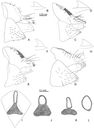
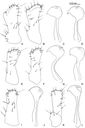
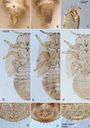
identification relies on morphological examination of genitalia structure, particularly in males. Wing venation patterns and surface spinule provide additional diagnostic characters. Some morphologically distinct sympatric species produce nearly identical male calling signals, rendering acoustic patterns unreliable as sole taxonomic traits. Species groups within the (itadori, siamensis, exilis, rumicis, maculipennis, and calthae groups) can be distinguished through cladistic analysis of morphological characters.
Images
Habitat
vary by group and geographic region. Palearctic species occupy temperate zones with plants in Polygonaceae. Neotropical species occur in damp areas around ponds or near rivers, and in artificial habitats such as urban parks with clusters of Persicaria. Riparian and wetland environments support associated with Polygonaceae hosts.
Distribution
Primary distribution centers in the Palearctic region, with four groups restricted to this region. One species group (maculipennis) occurs in the Nearctic. The exilis group spans both Palearctic and Nearctic. Neotropical records include southern Brazil (Paraná, Rio Grande do Sul, Santa Catarina), Mexico, Puerto Rico, and Cuba. The east Palearctic is likely part of the ancestral area of the .
Seasonality
In temperate regions, become active in very early spring; first activity observed as early as late March in Ontario, Canada. Oviposition begins in mid-April when mean maximum daily temperatures reach approximately 14°C and day length exceeds 13 hours. Timing of spring appears dictated by plant rather than insect alone.
Diet
Phloem-feeding herbivores. Most groups are monophagous or oligophagous on Polygonaceae. Three species groups feed exclusively on Polygonum; two groups specialize on Rumex. One group (exilis) is , feeding on Polygonaceae (Polygonum, Rumex), Brassicaceae, Caryophyllaceae, Primulaceae, and Ranunculaceae. Polygonum represents the likely ancestral association.
Host Associations
- Polygonum - primary ancestral association; three monophagous groups
- Rumex - colonized independently at least three times; two monophagous groups
- Persicaria - Neotropical including A. ritteri, A. ortegae, A. persicaria, A. simila
- Steironema ciliatum - sole known of A. steironemicola (Primulaceae)
- Reynoutria japonica - target of biocontrol agent A. itadori
- Reynoutria sachalinensis - of A. itadori
- Reynoutria × bohemica - hybrid supporting A. itadori
Life Cycle
Development includes , five nymphal instars, and stages. In gall-forming , immatures develop inside leaf roll galls induced on plants. Fifth instar nymphs produce characteristic secretions. Eggs are oblong oval with short filaments. Developmental success varies by host plant and origin.
Behavior
Males produce vibrational calling signals transmitted through plant substrates during mate search. Signal patterns can be nearly identical between morphologically distinct , particularly when geographic or ecological isolation prevents acoustic interaction. Strictly sympatric species such as A. borealis and A. maculipennis perceive each other's signals despite similarity. Species apparently use additional chemical or visual cues for mate recognition beyond . Some species induce leaf roll galls on plants through feeding activity.
Ecological Role
Gall-forming herbivores in riparian and wetland . Specialized feeders on Polygonaceae that influence plant growth and . Serve as prey for native including predators. A. itadori functions as a agent reducing of knotweeds.
Human Relevance
A. itadori has been released as a agent against knotweeds (Reynoutria/Fallopia spp.) in Europe and North America. Multiple (Kyushu, Hokkaido, Honshu strains) show differential performance on target weed . Hybridization between populations has been explored to improve establishment success in regions with climatic or mismatches. Establishment has been limited by native and availability of young host foliage. Recommended for use in programs combined with cutting or herbicide treatments.
Similar Taxa
- CraspedoleptaRelated in Aphalaridae; shares -level characters but differs in associations and
- EpheloscytaRelated in Aphalaridae; distinct composition and plant relationships
- TogepsyllaRelated in Aphalaridae; harbors only Carsonella versus dual symbiotic system in Aphalara
More Details
Symbiotic microbiome
A. itadori maintains a dual symbiotic system with 'Candidatus Carsonella ruddii' (Gammaproteobacteria: Oceanospirillales) and Sodalis sp. (Gammaproteobacteria: Enterobacterales) housed in the bacteriome. The central bacteriome area harboring Sodalis comprises uninucleate bacteriocytes with enlarged , differing from the syncytial structure with smaller nuclei reported in other lineages. No known plant or reproductive manipulators have been detected in analyzed strains.
Phylogenetic structure
Cladistic analysis supports six monophyletic groups within Aphalara: itadori (2 spp.), siamensis (1 sp.), exilis (7 spp.), rumicis (2 spp.), maculipennis (4 spp.), and calthae (21 spp.). Biogeographic analysis suggests vicariance events in the Palearctic and to the Nearctic. The east Palearctic is likely part of the ancestral area.
Sources and further reading
- BugGuide
- Wikipedia
- GBIF taxonomy match
- iNaturalist taxon
- NCBI Taxonomy
- Catalogue of Life
- Jumping plant lice of the genus Aphalara (Hemiptera, Psylloidea, Aphalaridae) in the Neotropics
- Systematics and biology of the Aphalara exilis (Weber & Mohr) species assemblage (Hemiptera: Psyllidae)
- Similar male calling signals in morphologically different sympatric species of Aphalara Foerster, 1848 (Hemiptera: Psylloidea: Aphalaridae)
- APHALARA STEIRONEMICOLA, A NEW PSYLLID COLLECTED ON STEIRONEMA CILIATUM IN ONTARIO (HOMOPTERA: PSYLLIDAE)
- The Phenology of Aphalara itadori in Canada: Timing of Spring Activity and the Onset of Oviposition
- Could hybridization increase establishment success of the biological control agent Aphalara itadori (Hemiptera: Aphalaridae) against invasive knotweeds?
- Development and verification of SNP arrays to monitor hybridization between two host-associated strains of knotweed psyllid, Aphalara itadori
- Microbiome of psyllids of the family Aphalaridae, including Aphalara itadori , a potential biocontrol agent against Reynoutria spp
- A new population of the biocontrol agent Aphalara itadori performs best on the hybrid host Reynoutria x bohemica
- The life history and host range of the Japanese knotweed psyllid, Aphalara itadori Shinji: Potentially the first classical biological weed control agent for the European Union
- Could hybridization increase the establishment success of the biological control agent Aphalara itadori (Hemiptera: Aphalaridae) against invasive knotweeds?
- Efficacy and host specificity compared between two populations of the psyllid Aphalara itadori, candidates for biological control of invasive knotweeds in North America
- Winter hosts ofAphalara itadori(Hemiptera: Psyllidae), a classical biological control agent ofFallopia japonica(Polygonaceae), in the UK
- Establishment of the biological control agent Aphalara itadori is limited by native predators and foliage age
- Knotweed Management Strategies in North America with the Advent of Widespread Hybrid Bohemian Knotweed, Regional Differences, and the Potential for Biocontrol Via the PsyllidAphalara itadoriShinji