
Craspedolepta
Enderlein, 1921
Species Guides
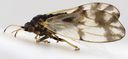
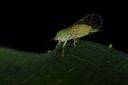
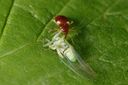
16Craspedolepta is a of psyllids (jumping plant lice) in the Aphalaridae. occur in Europe, Japan, and North America. Several European species have been documented, including C. artemisiae, C. flavipennis, C. malachitica, C. nebulosa, C. nervosa, C. sonchi, and C. subpunctata. C. nebulosa and C. subpunctata are notable as the first Aphalaridae psyllids found to harbor 'Candidatus Liberibacter solanacearum', a phloem-limited bacterium associated with crop .
Pronunciation
How to pronounce Craspedolepta: /ˌkræspəˈdoʊlɪptə/
These audio files are automatically generated. While they are not always 100% accurate, they are a good starting point.
Identification
Craspedolepta are distinguished from other Aphalaridae by features of the genitalia and wing venation. C. nebulosa and C. subpunctata can be separated by their altitudinal distribution patterns, with C. nebulosa extending to higher elevations than C. subpunctata where they co-occur on shared plants.
Images
Habitat
Associated with fireweed (Chamaenerion angustifolium, formerly Epilobium angustifolium) in field margins and natural vegetation. In Scotland, found in carrot and parsnip growing areas. Occupies altitudinal gradients, with -specific upper range limits determined by thermal constraints.
Distribution
Europe, Japan, and North America. European records include Denmark, Norway, and Sweden. In the British Isles, C. nervosa and five other occur. In Scotland specifically, documented at Milnathort (Perth and Kinross), Tayport (Fife), Howe of Fife, and SASA Farm (Midlothian).
Diet
Phloem-feeding on plants. Documented feeding on Chamaenerion angustifolium (fireweed/Rosebay Willow Herb).
Host Associations
- Chamaenerion angustifolium - plantPrimary ; also known as fireweed or Rosebay Willow Herb
- 'Candidatus Liberibacter solanacearum' - harbored Two novel haplotypes (Cras1 and Cras2) identified in C. nebulosa and C. subpunctata; first report of this bacterium in Aphalaridae
Behavior
Transplant experiments demonstrate that neither C. nebulosa nor C. subpunctata can establish viable above their current upper altitudinal limits, even when plants are present. C. nebulosa shows reduced body size with increasing elevation.
Ecological Role
Potential for 'Candidatus Liberibacter solanacearum' novel haplotypes. May pose risk to carrot and potato industries through potential spread of new Lso haplotypes into crops, though capability has not been experimentally confirmed.
Human Relevance
Emerging concern for agriculture due to association with 'Candidatus Liberibacter solanacearum', a affecting Solanaceous and Apiaceous crops. First detection of this bacterium in the Aphalaridae raises questions about potential transmission routes to cultivated crops.
Similar Taxa
- Trioza anthrisciBoth are psyllids in the superfamily Psylloidea found in the UK that harbor 'Candidatus Liberibacter solanacearum'; however, Trioza anthrisci belongs to Triozidae and carries Lso haplotype C rather than the novel Cras1 and Cras2 haplotypes found in Craspedolepta
- Trioza urticaeCo-occurs in Scottish agricultural and harbors Lso haplotype U; distinguished by association with Urtica dioica rather than Chamaenerion angustifolium
More Details
Lso Haplotype Infection Rates
In Scotland, C. nebulosa showed 100% Lso at Milnathort and Tayport, 0% at SASA Farm. C. subpunctata showed 55.81% at Milnathort, 100% at Howe of Fife, and 75% at SASA Farm. Both co-occurred at some locations with different ratios.
Genetic Characterization
Novel Lso haplotypes Cras1 and Cras2 were characterized by multi-gene sequencing (16S rRNA, 16-23S IGS, 50S rplJ/rplL, outer protein). Cras1 showed genetic variants Cras1a and Cras1b differing by 3 SNPs. These haplotypes are most closely related to Lso haplotype H found in carrot and parsnip.
Sources and further reading
- BugGuide
- Wikipedia
- GBIF taxonomy match
- iNaturalist taxon
- NCBI Taxonomy
- Catalogue of Life
- What limits the altitudinal distribution of Craspedolepta species (Sternorrhyncha: Psylloidea) on fireweed?
- ‘Candidatus Liberibacter solanacearum’ distribution and diversity in Scotland and the characterisation of novel haplotypes from Craspedolepta spp. (Psylloidea: Aphalaridae)