
Phyllaphis
Koch, 1856
woolly beech aphids
Species Guides
2- Phyllaphis fagi(Woolly Beech Aphid)
- Phyllaphis grandifoliae
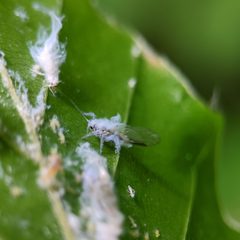
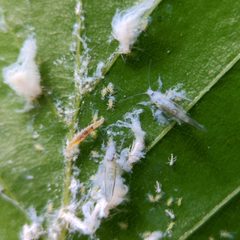
Phyllaphis is a of woolly aphids in the Aphididae, established by Koch in 1856. The genus comprises at least four described , with Phyllaphis fagi and P. grandifoliae commonly known as woolly beech aphids. Species in this genus are associated with beech trees (Fagus spp.) and exhibit complex with multiple per growing season. The genus has been subject to taxonomic revision, with some species historically placed in related genera such as Tamalia.

Pronunciation
How to pronounce Phyllaphis: /ˈfɪləfɪs/
These audio files are automatically generated. While they are not always 100% accurate, they are a good starting point.
Images
Habitat
Forest and nursery environments where beech trees occur. At least one , Phyllaphis fagi, has been documented in forest nurseries where situations occur.
Distribution
Documented from Denmark, Norway, and Sweden based on GBIF records. Distribution likely broader in regions where beech trees (Fagus spp.) are native or cultivated.
Seasonality
Phyllaphis fagi exhibits hatch before budburst of trees. Ten have been recorded during a single growing season in nursery conditions. Winged morph formation continues for several months with peak activity in mid-June.
Diet
Phloem feeding on beech trees. Phyllaphis fagi is specifically associated with Fagus sylvatica (European beech).
Host Associations
- Fagus sylvatica - primary European beech; documented of Phyllaphis fagi
- Fagus - -level association-level association inferred from 'woolly beech aphid' and epithets
Life Cycle
Holocyclic with . Egg hatch occurs before budburst. Multiple parthenogenetic (up to ten per season) followed by and egg deposition. Development time, nymph mortality, and vary by temperature and generation. Winged morphs (alatae) form across multiple generations rather than being restricted to specific generations.
Behavior
Newly hatched nymphs are highly active in searching for feeding sites, resulting in elevated first- mortality. Winged morph formation peaks in mid-June and continues for several months, facilitating to new seedlings. Both and females have been observed to have similar reproductive effort.
Human Relevance
Phyllaphis fagi is a pest of forest nurseries where situations can develop. High reproductive potential throughout summer creates risk for seedling damage. Winged morphs migrate to new seedlings, spreading within nurseries.
Similar Taxa
- TamaliaHistorical taxonomic confusion; Tamalia coweni was previously classified as Phyllaphis coweni. The two can be distinguished by cytological and morphological characteristics.
More Details
Taxonomic history
The has undergone taxonomic revision. Tamalia coweni was originally described as Phyllaphis coweni but later moved to Tamalia based on cytological and morphological evidence. This indicates Phyllaphis as historically defined may have been polyphyletic or contained now recognized as belonging to distinct lineages.
Temperature sensitivity
Laboratory studies on Phyllaphis fagi show optimal growth rate (r_m) at 20°C. Nymphs born at 25°C sometimes exhibit deformities and reduced survival. The first shows less temperature sensitivity than subsequent generations.
Sources and further reading
- BugGuide
- Wikipedia
- GBIF taxonomy match
- iNaturalist taxon
- NCBI Taxonomy
- Catalogue of Life
- Life table parameters affecting the population development of the woolly beech aphid, Phyllaphis fagi
- A cytological and experimental analysis of the meiotic behavior of the univalent X chromosome in the bearberry aphid Tamalia (Phyllaphis) coweni (Ckll.)