
Eriosomatinae
Kirkaldy, 1905
Woolly Aphids, Gall-making Aphids
Tribe Guides
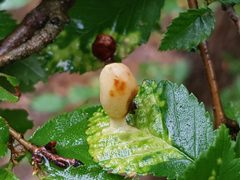
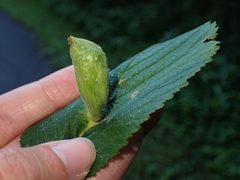
3Eriosomatinae is a of aphids distinguished by filamentous waxy secretions that produce a cotton-like or woolly appearance. Members exhibit typically heteroecious , alternating between primary and secondary plants, with strong primary host plant specialization. Many induce galls on primary hosts, particularly on Ulmaceae (elms, zelkovas), Salicaceae (poplars), and Anacardiaceae (sumacs). The subfamily contains three tribes: Eriosomatini, Fordini, and Pemphigini.
Pronunciation
How to pronounce Eriosomatinae: /ˌɛri.əˌsoʊməˈtaɪniː/
These audio files are automatically generated. While they are not always 100% accurate, they are a good starting point.
Images
Habitat
Associated with diverse plants including primary hosts Ulmus and Zelkova (Ulmaceae), Rhus and Pistacia (Anacardiaceae), Populus (Salicaceae), and secondary hosts including Cypeaceae, Graminaceae, Hypnaceae, Magnoliaceae, and Pinaceae. Gall-forming inhabit leaf, petiole, and branch tissues of primary hosts.
Distribution
Widely distributed in Holarctic and Oriental regions, with records from North America, Europe, Asia (including China, Mongolia, and Taiwan), and Iran. Global distribution reflects plant ranges, particularly of elm, poplar, and sumac .
Diet
Phloem-feeding using needle-like mouthparts to withdraw sap from leaves, buds, bark, and roots. Feeding produces honeydew, a sticky that can promote growth on plants.
Life Cycle
Typically heteroecious holocyclic, with seasonal alternation between primary plants (where galls are induced and occurs) and secondary host plants (where parthenogenetic develop). Some exhibit two-year . is . Fundatrices initiate colonies on primary hosts in spring. Winged morphs () disperse between hosts. Some species have been documented with ovoviviparity in sexual females.
Behavior
Nymphs secrete dense filamentous wax coatings for protection against and environmental conditions. Winged engage in -seeking . Some produce specialized sterile soldier for colony defense. First and second instar nymphs in galls of some species exhibit attacking toward intruders.
Ecological Role
Primary endosymbiont Buchnera supplies essential nutrients lacking in phloem sap. Six facultative bacterial have been identified (Regiella most common), potentially providing defense against and , heat , and plant . Host plant associations influence symbiont composition. Serve as prey for various and hosts for parasitoids; documented as hosts for mermithid .
Human Relevance
Several are agricultural and horticultural pests. Eriosoma lanigerum (woolly apple aphid) damages fruit trees including apple, pear, hawthorn, and elm. Feeding causes twisted and curled leaves, yellowed foliage, poor growth, and branch dieback. Can plant and fungi including powdery mildew. Honeydew production leads to that reduces . Some species produce galls that cause unsightly damage to ornamental plants.
Similar Taxa
- Mealybugs (Pseudococcidae)Both produce white waxy secretions, but mealybugs are in a separate hemipteran with distinct body plan, lack the cornicles characteristic of aphids, and do not exhibit the or gall induction typical of Eriosomatinae
- Flatid planthoppers (Flatidae)Nymphs also secrete white waxy filaments for protection, but are in a different hemipteran superfamily (Fulgoroidea), have different body shape and wing venation, and do not form galls or exhibit alternation
- Aphidinae (other aphid subfamilies)Lack the dense woolly wax secretions; most are not heteroecious and do not induce complex galls; cornicles (when present) are more prominent and functional
Sources and further reading
- BugGuide
- Wikipedia
- iNaturalist taxon
- NCBI Taxonomy
- Catalogue of Life
- These Insect Costume Designers are Dressed to Impress
- Host Plants Influence the Symbiont Diversity of Eriosomatinae (Hemiptera: Aphididae)
- Morphological phylogeny of gall‐forming aphids of the tribe Eriosomatini (Aphididae: Eriosomatinae)
- Characterization of Mariner transposons in Rhus gall aphids (Hemiptera: Aphididae: Eriosomatinae)
- Molecular evidence for sympatric taxa withinPemphigus betae(Hemiptera: Aphididae: Eriosomatinae)
- Cryptic species in the aphid genusMelaphisWalsh (Hemiptera: Aphididae: Eriosomatinae)
- Description of fundatrices ofZelkovaphis caucasica(Hemiptera: Aphididae: Eriosomatinae) and its life cycle
- Defensive nymphs in the water-repellent gall of the social aphid Colophina monstrifica (Hemiptera: Aphididae: Eriosomatinae)
- First record of a mermithid nematode (Nematoda: Mermithidae) parasitizing winged females of gall-forming aphids (Hemiptera: Aphididae: Eriosomatinae)
- Wings as Part of the Sensory System in the Aphid Subfamily Eriosomatinae s. lat. (Insecta, Hemiptera)
- Cuticular Pegs near Wing Bases in Aphids of the Subfamily Eriosomatinae Kirkaldy, 1905 s. str. (Insecta, Aphididae)
- Comparative morphology and plant volatile responses of antennal sensilla in Cinara cedri (Hemiptera: Lachninae), Eriosoma lanigerum (Hemiptera: Eriosomatinae), and Therioaphis trifolii (Hemiptera: Calaphidinae)
- Molecular phylogeny of Iberian Fordini (Aphididae: Eriosomatinae): implications for the taxonomy of genera Forda and Paracletus
- Systematic status of the genus Formosaphis Takahashi and the evolution of galls based on the molecular phylogeny of Pemphigini (Hemiptera: Aphididae: Eriosomatinae)
- Historical biogeography of Eastern Asian–Eastern North American disjunct Melaphidina aphids (Hemiptera: Aphididae: Eriosomatinae) on Rhus hosts (Anacardiaceae)
- Gall-inducing Aphids (Hemiptera: Aphidoidea: Eriosomatinae) Associated with Salicaceae and Ulmaceae in Razavi Khorasan Province, with New Records for Fauna of Iran
- Draft genome sequences of Buchnera aphidicola from three aphid species (Hemiptera: Aphididae: Eriosomatinae) associated with gall formation on elm trees.