
Tamalia
Baker, 1920
Ericaceous Gall Aphids, Manzanita Leaf Gall Aphids
Species Guides
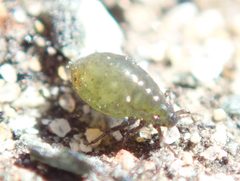
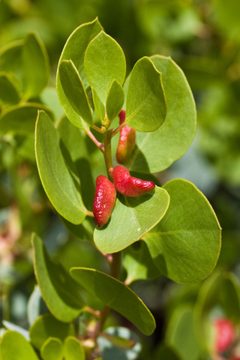
1- Tamalia coweni(Manzanita leaf gall aphid)
Tamalia is a Nearctic of gall-forming aphids and the sole genus in the Tamaliinae. Eight described induce galls on woody plants in the heath (Ericaceae), primarily on manzanita (Arctostaphylos) and related genera. The genus exhibits a distinctive social system in which multiple foundresses co-occupy galls, a trait that has been exploited by the evolution of socially parasitic species within the same genus.
Pronunciation
How to pronounce Tamalia: /tæˈmeɪliə/
These audio files are automatically generated. While they are not always 100% accurate, they are a good starting point.
Identification
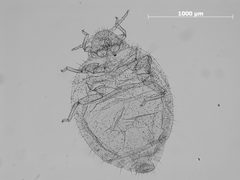
Gall-inhabiting are the primary diagnostic stage; are distinguished by morphological measurements and gall characteristics. The is the only member of Tamaliinae, separating it from all other genera. Species-level identification requires examination of gall-inhabiting apterous adults and associated plant; a published key exists for this purpose.
Images
Habitat
Galls on leaves of woody Ericaceae, primarily Arctostaphylos (manzanita) , with some species on Arbutus arizonica and Comarostaphylis diversifolia. Galls provide protected microhabitats for colony development.
Distribution
Nearctic region; occur in western North America including California, Oregon, and adjacent areas. Specific distributions vary by species; some have restricted ranges associated with particular plants.
Diet
Phloem sap from plants (Ericaceae), obtained through feeding within induced leaf galls.
Host Associations
- Arctostaphylos - primary plantmanzanita; primary for most Tamalia
- Arbutus arizonica - plant for Tamalia cruzensis
- Comarostaphylis diversifolia - plant for Tamalia moranae
- Arctostaphylos columbiana - plant for Tamalia milleri
- Arctostaphylos patula - plantgreenleaf manzanita; for Tamalia coweni
- Arctostaphylos insularis - plant for Tamalia coweni
Life Cycle
Clonal via vivipary within galls; colonies founded by multiple foundresses that co-occupy galls. occurs with production of females.
Behavior
Gall induction on plant leaves; communal gall occupation by multiple foundresses. Some are that obligately inhabit galls induced by other Tamalia species and act as social , competing successfully with host aphids in reproductive output.
Ecological Role
Similar Taxa
- other Aphididae generaTamalia is distinguished as the sole in Tamaliinae; other genera do not form the characteristic communal galls on Ericaceae and lack the associated social parasitic system
- Tamalia inquilinus (relative to gall-inducing Tamalia) are morphologically and behaviorally distinct in lacking gall-inducing ability and acting as obligate social within galls
Sources and further reading
- BugGuide
- Wikipedia
- GBIF taxonomy match
- iNaturalist taxon
- NCBI Taxonomy
- Catalogue of Life
- Lessons from the Ants | Bug Squad
- Communal behavior and its exploitation in Tamalia social gall aphids (Aphididae: Tamaliinae)
- The origin and genetic differentiation of the socially parasitic aphidTamalia inquilinus
- TheTamaliagall-inducing aphid as intermediary between host plant and inquiline
- Ecology and radiation of galling aphids (Tamalia; Hemiptera: Aphididae) on their host plants (Ericaceae)
- A new species of the nearctic gall-forming genus Tamalia Baker (Hemiptera: Aphididae: Tamaliinae)
- ARTHROPODS ASSOCIATED WITH A MANZANITA GALL INDUCED BY THE APHIDTAMALIA COWENI(COCKERELL) (HOMOPTERA: APHIDIDAE)
- The Ecology of Inquilinism in Communally Parasitic <I>Tamalia</I> Aphids (Hemiptera: Aphididae)
- The evolution of inquilinism, host-plant use and mitochondrial substitution rates in Tamalia gall aphids
- Influence of Host Phenology and Vegetation on the Abundance of Tamalia coweni Galls (Homoptera: Aphididae) on Arctostaphylos insularis (Ericaceae)
- Life history, ecology and communal gall occupation in the manzanita leaf-gall aphid,Tamalia coweni(cockerell) (Homoptera: Aphididae)
- A cytological and experimental analysis of the meiotic behavior of the univalent X chromosome in the bearberry aphid Tamalia (Phyllaphis) coweni (Ckll.)
- Three new species ofTamalia(Hemiptera, Aphididae, Tamaliinae) associated with leaf galls onArbutus,Arctostaphylos, andComarostaphylisin North America