
Pemphigus populivenae
Fitch, 1859
Sugarbeet Root Aphid
Pemphigus populivenae is a root-feeding in the Aphididae, commonly known as the Sugarbeet Root Aphid. It belongs to the Pemphigus, which comprises gall-forming and root-feeding aphids primarily associated with poplar (Populus) as primary . The species has been historically documented in North America since the mid-19th century. Like other Pemphigus species, it exhibits a complex involving host alternation between poplar trees and secondary herbaceous hosts.

Pronunciation
How to pronounce Pemphigus populivenae: //ˈpɛm.fɪ.ɡəs ˌpɒp.jʊ.lɪˈviː.naɪ//
These audio files are automatically generated. While they are not always 100% accurate, they are a good starting point.
Identification
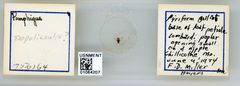
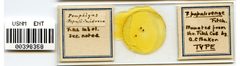
Identification to level requires specialized examination and is challenging without molecular or detailed morphological analysis. Differentiation from other Pemphigus species, particularly those also associated with poplar , depends on subtle morphological characters and host association records. The species has been confused with other root-feeding aphids in general literature and online sources, including grape phylloxera and other Pemphigus species.
Images
Habitat
Associated with Populus (poplar/cottonwood) as primary . Secondary hosts include herbaceous plants, with historical association with sugarbeet suggested by . Root-feeding habit on secondary hosts; specific substrate preferences not documented.
Distribution
Documented in North America; authority Fitch, 1859 indicates original description from this region. Specific range boundaries are not well established in available sources. Observations on iNaturalist suggest presence in temperate North American regions.
Diet
Phloem-feeding on plants. Primary host: Populus (poplars/cottonwoods). Secondary hosts include herbaceous plants; specific secondary host range is not well documented in available sources.
Host Associations
- Populus - primary Poplar and cottonwood trees serve as primary for and gall formation, typical of Pemphigus .
- Beta vulgaris - secondary 'Sugarbeet Root Aphid' suggests historical association with sugarbeet as secondary , though specific documentation is limited in provided sources.
Life Cycle
Complex with alternation (heteroecy), characteristic of the Pemphigus. Involves and gall formation on primary host (Populus ), followed by to secondary herbaceous hosts where parthenogenetic occurs on roots. Return migration to primary host in autumn. Specific details of morphs and timing are not documented in available sources.
Behavior
Root-feeding habit on secondary makes colonies cryptic and difficult to detect, a trait shared with other root-feeding Pemphigus . This concealed feeding location allows to establish before above-ground become apparent.
Ecological Role
As a phloem-feeding herbivore, extracts plant sap and excretes honeydew. Specific ecological impacts on plants or interactions with other organisms (such as ants tending colonies) are not documented in available sources.
Human Relevance
Potential pest of sugarbeet and possibly other root crops based on , though specific economic impact data is not available in provided sources. Has been subject to misidentification in agricultural and horticultural literature, with online sources frequently confusing this and related Pemphigus with other root-feeding insects such as grape phylloxera (Daktulosphaira vitifoliae) and rice root aphid (Rhopalosiphum rufiabdominale).
Similar Taxa
- Pemphigus betaeClosely related congeneric also associated with sugarbeet and poplar ; differentiation requires detailed morphological or molecular analysis.
- Rhopalosiphum rufiabdominaleRice root aphid, frequently confused with Pemphigus in online literature and grower reports due to similar root-feeding habit on crop plants; belongs to different tribe (Aphidini) within Aphididae and has different primary (Prunus species).
- Daktulosphaira vitifoliaeGrape phylloxera, often incorrectly cited in online sources discussing 'root aphids'; belongs to Phylloxeridae, not Aphididae, and is not closely related despite similar usage.
Misconceptions
Frequently subject to misidentification in online agricultural forums and grower literature, where images and biological information have been borrowed from unrelated . This has led to confusion about , range, and management approaches. The species name has been applied incorrectly to root problems on cannabis and other crops that are actually caused by Rhopalosiphum rufiabdominale or other species.
More Details
Taxonomic Authority
Originally described by Asa Fitch in 1859, an early American entomologist who documented many agricultural pests in North America.
Data Limitations
Available sources provide minimal biological detail for this specific . Much of the general is inferred from -level characteristics of Pemphigus, which should be treated with appropriate caution. iNaturalist observations (n=50) suggest it is documented but not frequently encountered or reported.