
Drepanosiphum
Koch, 1855
sycamore aphids, maple aphids
Species Guides
2- Drepanosiphum oregonensis(Dark-streaked Maple Aphid)
- Drepanosiphum platanoidis(sycamore aphid)
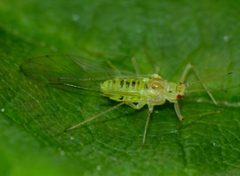
A of aphids in the Aphididae, primarily associated with maple trees (Acer). include economically significant pests such as the sycamore (D. platanoidis), which has been extensively studied for its complex involving wing dimorphism, seasonal , and -dependent reproductive strategies. The genus exhibits sophisticated correlated with body size and wing loading, and serves as a model system for studying aphid and -prey interactions.
Pronunciation
How to pronounce Drepanosiphum: //ˌdrɛpəˈnoʊsɪfəm//
These audio files are automatically generated. While they are not always 100% accurate, they are a good starting point.
Images
Habitat
Associated with deciduous trees, particularly maples (Acer spp.). D. platanoidis specifically colonizes sycamore maple (Acer pseudoplatanus).
Distribution
Europe and North America. GBIF records confirm presence in Denmark, Norway, and Sweden.
Seasonality
Active primarily during the growing season. Autumn represents a critical transition period when sexuparae switch from producing oviparae to producing males, with a reproductive pause of 2.5–4.0 days between morph types.
Diet
Phloem-feeding on plant sap. Stylet penetration involves puncture during feeding.
Host Associations
- Acer pseudoplatanus - primary sycamore maple; primary for D. platanoidis
- Acer - maple trees; -level association for Drepanosiphum
Life Cycle
Complex with seasonal . Sexuparae produce oviparae ( sexual females) followed by males after a brief reproductive pause. Nymphal development time differs between sexes: approximately 22 days for oviparae versus 18 days for males under field conditions. Development time varies with nutritive status (20–23 days for oviparae; 17–19 days for males).
Behavior
activity correlates with body size and wing loading: larger aphids with higher wing loading engage in frequent short trivial flights within or between trees, while smaller aphids with lower wing loading undertake long-distance migratory flights. Both sexes exhibit high-level polygamy with multiple matings.
Ecological Role
Serves as prey for predatory including Anthocoris nemorum and A. confusus. Parasitized by hymenopteran including Monoctonus pseudoplatani, Trioxys cirsii, and Dyscritulus planiceps. Acts as a for plant viruses, though with low for potato virus Y (<1% acquisition efficiency).
Human Relevance
D. platanoidis is a significant pest of ornamental and forest maples. has been sequenced, contributing to genomic resources for research.
Similar Taxa
- Periphillus acericolaAlso associated with maple trees; compared in mating studies revealing similar high-level polygamy
- Brachycaudus helichrysiCompared in studies; B. helichrysi shows substantially higher potato virus Y transmission efficiency (15% vs. <1% for D. platanoidis)
Sources and further reading
- BugGuide
- Wikipedia
- GBIF taxonomy match
- iNaturalist taxon
- NCBI Taxonomy
- Catalogue of Life
- WING LOADING AND FLIGHT ACTIVITY IN THE SYCAMORE APHID, DREPANOSIPHUM PLATANOIDES
- FECUNDITY OF BRACHYPTEROUS AND MACROPTEROUS ALATAE IN DREPANOSIPHUM DIXONI (CALLAPHIDIDAE, APHIDIDAE)
- Mating behaviour and high level polygamy in the aphids,Periphillus acericolaandDrepanosiphum platanoidis(Homoptera Drepanosiphidae)
- Plant quality, progeny sequence, and the sex ratio of the sycamore aphid, Drepanosiphum platanoidis
- The Effect of Population Density and Nutritive Status of the Host on the Summer Reproductive Activity of the Sycamore Aphid, Drepanosiphum platanoides (Schr.)
- Stylet activities and potato virus Y vector efficiencies by the aphids Brachycaudus helichrysi and Drepanosiphum platanoidis
- The Biology of Monoctonus Pseudoplatani, Trioxys Cirsii and Dyscritulus Planiceps, With Notes on their Effectiveness as Parasites of the Sycamore Aphid, Drepanosiphum Platanoides
- THE EFFECTIVENESS OF ANTHOCORIS NEMORUM AND A. CONFUSUS (HEMIPTERA: ANTHOCORIDAE) AS PREDATORS OF THE SYCAMORE APHID, DREPANOSIPHUM PLATANOIDES.
- The genome sequence of the Common Sycamore Aphid, Drepanosiphum platanoidis (Schrank, 1801).