
Takecallis
Matsumura, 1917
bamboo aphids
Species Guides
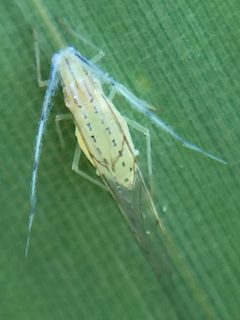
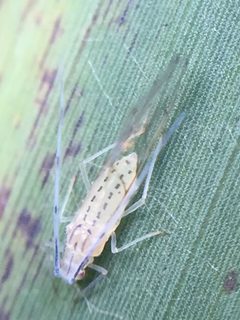
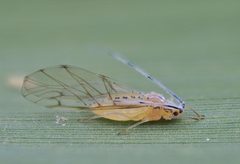
1- Takecallis arundinariae(black-spotted bamboo aphid)
Takecallis is a of bamboo-feeding aphids in the Aphididae, containing approximately 7-8 of Oriental origin. All species are specialized herbivores on bamboo ( Bambusoideae). Native to Southeast Asia including China, India, Japan, Korea, and Taiwan, several species have been introduced to Europe, Africa, the Americas, and Oceania through the ornamental bamboo trade. Some introduced exhibit characteristics including range expansion and holocyclic or anholocyclic strategies.
Pronunciation
How to pronounce Takecallis: //ˈtæ.kɪ.kæl.ɪs//
These audio files are automatically generated. While they are not always 100% accurate, they are a good starting point.
Identification
Takecallis are distinguished from other bamboo aphids by -level morphological characters including antennal structure and siphuncular . Species-level identification requires examination of diagnostic characters such as antennal coloration (e.g., T. nigroantennatus has dark ), body pigmentation patterns, and chaetotaxy. Molecular markers (mitochondrial COI, nuclear EF1α) can resolve cryptic species; T. nigroantennatus was distinguished from using .
Images
Habitat
Strictly associated with bamboo plants (Poaceae: Bambusoideae). In native range: natural bamboo stands and forest understories. In introduced range: botanic gardens, specialized bamboo nurseries, garden centers, urban green spaces, private gardens, hotel grounds, and residential allotments. Found at elevations from 1,100 m to 2,600 m a.s.l. in tropical regions and in temperate climates where cold-hardy bamboo varieties are cultivated.
Distribution
Native to Southeast Asia: China, India, Japan, Korea, Taiwan. Introduced to: Europe (United Kingdom, Belgium, The Netherlands, Germany, Poland, Norway, Spain, Iberian Peninsula), South America (Colombia, Argentina, Brazil, Chile), Africa (Algeria), and Oceania. Northernmost record from Trondheim, Norway (approximately 63°N).
Seasonality
vary by and climate. Takecallis arundinaria in Korea showed peak in late May to early June, with production increasing in late June. In temperate European climates, T. nigroantennatus reproduces throughout the growing season with holocyclic capability allowing as .
Diet
Phloem-feeding herbivores restricted to bamboo (Poaceae: Bambusoideae). Documented include Fargesia spp. (F. murielae, F. nitida, F. 'Jiuzhaigou 1'), Phyllostachys spp. (P. aurea, P. cf. aurea), Yushania aceps, Dendrocalamus sp., Merostachys sp., Arundinaria sp., and Bambusa sp. Feeding can negatively affect plant health and photosynthetic performance.
Host Associations
- Fargesia murielae - including cultivars 'Simba', 'Jumbo'
- Fargesia nitida - including cultivar 'Winter Joy'
- Fargesia 'Jiuzhaigou 1' -
- Phyllostachys aurea - golden stem bamboo
- Yushania aceps -
- Dendrocalamus sp. -
- Merostachys sp. -
- Arundinaria sp. -
- Bambusa sp. -
Life Cycle
Reproductive strategies include both holocyclic (with sexual phase, producing ) and anholocyclic (parthenogenetic year-round) cycles depending on and environment. Holocyclic species produce oviparae and males for ; anholocyclic reproduce via females. Alate viviparae observed throughout the year in tropical climates. Short times; populations can establish from single viviparous females. Overwintering as eggs on bamboo shoots documented for temperate species.
Behavior
Form small, scattered colonies typically of 1-3 individuals per leaf. viviparae disperse to new plants; vagrant alate males reported. Directional observed: in T. arundinaria, nymphs concentrated in southern and eastern quadrants of host plants, possibly maximizing sun exposure and minimizing wind exposure. Cryptic habits and small size facilitate unintentional transport through plant trade.
Ecological Role
Primary consumer and phloem-feeding herbivore on bamboo. In introduced ranges, functions as pest of ornamental bamboo with potential to reduce plant health and aesthetic value. Part of documented plant-insect invasion pairings with ornamental bamboo trade. for introduced including Trioxys liui (Braconidae) and Aphelinus chaonia (Aphelinidae), which may provide partial .
Human Relevance
Economic pest of ornamental bamboo in horticulture and landscape applications. Associated with global bamboo trade; introduction to new regions occurs through transport of infested plant material. Subject of biosecurity monitoring and molecular-based early detection protocols. Chlorophyll fluorescence measurements have been used to assess feeding damage to plants.
Similar Taxa
- Cranaphis formosanaAlso bamboo-feeding ; distinguished by morphological characters and associations
- Phyllaphoides bambusicolaBamboo-feeding in same tribe; Takecallis distinguished by antennal and abdominal features
More Details
Invasion genetics
Takecallis nigroantennatus in Europe shows striking genetic uniformity with a single mitochondrial COI haplotype across six countries, indicating a narrow introduction bottleneck and clonal spread from a single maternal lineage despite holocyclic capability.
Taxonomic history
T. nigroantennatus was formally described in 2023 from Poland, though first observed in the UK in 2015, illustrating lag time between arrival and formal taxonomic recognition.
Parasitoid associations
The introduced Trioxys liui, native to China and Russia, has established in the Iberian Peninsula attacking Takecallis spp., representing a novel -parasitoid association in the invaded range.
Sources and further reading
- BugGuide
- Wikipedia
- GBIF taxonomy match
- iNaturalist taxon
- NCBI Taxonomy
- Catalogue of Life
- First record of Takecallis taiwana (Takahashi) and T. arundinariae (Essig) (Hemiptera: Aphididae) in Colombia
- Seasonal Abundance and Population Dynamics of a Bamboo Aphid, Takecallis arundinaria (Homoptera: Aphididae)
- Tracing the Invasion of Takecallis nigroantennatus (Hemiptera, Aphididae) on Cold-Hardy Bamboo Fargesia Using Mitochondrial COI Data
- DNA Barcoding and Molecular Phylogenetics Revealed a New Cryptic Bamboo Aphid Species of the Genus Takecallis (Hemiptera: Aphididae)
- Takecallis nigroantennatus Wieczorek (Hemiptera: Aphididae) – implications of the ability to holocycle and overwintering of eggs on the spread of a potentially invasive bamboo aphid species
- Trioxys liui Chou & Chou, 1993 (Hymenoptera, Braconidae, Aphidiinae): an invasive aphid parasitoid attacking invasive Takecallis species (Hemiptera, Aphididae) in the Iberian Peninsula
- First report of the parasitoid Aphelinus chaonia Walker, 1839 (Hymenoptera: Aphelinidae) in Algeria and its host aphid Takecallis arundicolens Clarke, 1903 in Africa
- A new parasitoid (Hymenoptera: Braconidae: Aphidiinae) of the invasive bamboo aphidsTakecallisspp. (Hemiptera: Aphididae) from Western Europe
- Figure 3 from: Rakhshani E, Saval JM, Pérez Hidalgo N, Pons X, Kavallieratos NG, Starý P (2020) Trioxys liui Chou & Chou, 1993 (Hymenoptera, Braconidae, Aphidiinae): an invasive aphid parasitoid attacking invasive Takecallis species (Hemiptera, Aphididae) in the Iberian Peninsula. ZooKeys 944: 99-114. https://doi.org/10.3897/zookeys.944.51395
- Figure 2 from: Rakhshani E, Saval JM, Pérez Hidalgo N, Pons X, Kavallieratos NG, Starý P (2020) Trioxys liui Chou & Chou, 1993 (Hymenoptera, Braconidae, Aphidiinae): an invasive aphid parasitoid attacking invasive Takecallis species (Hemiptera, Aphididae) in the Iberian Peninsula. ZooKeys 944: 99-114. https://doi.org/10.3897/zookeys.944.51395
- Figure 4 from: Rakhshani E, Saval JM, Pérez Hidalgo N, Pons X, Kavallieratos NG, Starý P (2020) Trioxys liui Chou & Chou, 1993 (Hymenoptera, Braconidae, Aphidiinae): an invasive aphid parasitoid attacking invasive Takecallis species (Hemiptera, Aphididae) in the Iberian Peninsula. ZooKeys 944: 99-114. https://doi.org/10.3897/zookeys.944.51395
- Figure 1 from: Rakhshani E, Saval JM, Pérez Hidalgo N, Pons X, Kavallieratos NG, Starý P (2020) Trioxys liui Chou & Chou, 1993 (Hymenoptera, Braconidae, Aphidiinae): an invasive aphid parasitoid attacking invasive Takecallis species (Hemiptera, Aphididae) in the Iberian Peninsula. ZooKeys 944: 99-114. https://doi.org/10.3897/zookeys.944.51395