
Shivaphis
Das, 1918
Species Guides
1- Shivaphis celti(Asian Woolly Hackberry Aphid)
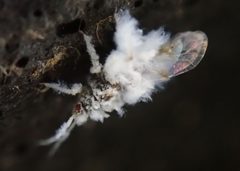
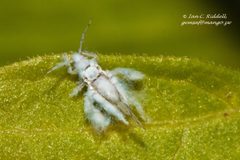
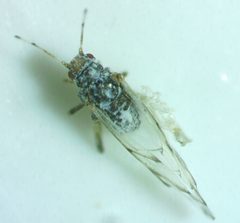
Shivaphis is a of aphids in the Aphididae, Calaphidinae, described by Das in 1918. The genus includes associated with trees in the family Cannabaceae, particularly Celtis (hackberries) and Pteroceltis. The most widely documented species, S. celti, is known as the Asian woolly hackberry and has been introduced to North America. Species in this genus are characterized by their woolly wax secretions and specific associations with woody plants.
Pronunciation
How to pronounce Shivaphis: /ʃɪˈvɑːfɪs/
These audio files are automatically generated. While they are not always 100% accurate, they are a good starting point.
Identification
Distinguished from other woolly aphids by combination of: dense woolly wax covering entire body; specific association with Celtis (hackberry) or Pteroceltis trees; presence in Calaphidinae ; relatively long . Separation from other Shivaphidini requires microscopic examination of antennal , chaetotaxy, and genitalia. S. celti specifically identified by association with Celtis and its introduced range in North America.
Images
Appearance
Small, soft-bodied aphids covered with dense woolly wax secretions, giving a distinctive fuzzy or cottony appearance. Body typically pale to bluish-gray under the wax. Cornicles (siphunculi) present but may be reduced or obscured by wax. and legs relatively long compared to body size. Winged forms (alatae) with dark wing and typically more elongate body shape.
Habitat
Associated with deciduous trees in the Cannabaceae, primarily Celtis (hackberry) and Pteroceltis tatarinowii. Occurs in urban, suburban, and natural forest settings where trees are present. Colonies develop on leaves and twigs, particularly on new growth.
Distribution
Native to Asia (China, likely broader Asian range). Shivaphis celti introduced to and established in North America (United States). Specific distribution of other poorly documented.
Diet
Phloem feeder; specifically documented feeding on Celtis (hackberries) and Pteroceltis tatarinowii. Sucks sap from leaves and young stems.
Host Associations
- Celtis - primary of hackberry trees; specific for S. celti
- Pteroceltis tatarinowii - primary Chinese tree, for S. pteroceltis; used in Xuan paper production
Life Cycle
Holocyclic (complete with sexual phase) documented in S. pteroceltis with described morphs: fundatrices (stem mothers), viviparae (wingless parthenogenetic females), viviparae (winged parthenogenetic females), oviparae (-laying females), and males. Anholocyclic (parthenogenetic only) likely occur in introduced ranges. Specific seasonal timing not documented.
Behavior
Forms dense colonies on plant leaves and new growth. Produces copious woolly wax secretions that protect from and environmental conditions. Winged forms disperse to establish new colonies. No specific behavioral details beyond typical colony formation documented.
Ecological Role
Herbivore feeding on phloem sap of trees. Potential pest of ornamental and economically important trees. S. pteroceltis specifically noted as potential pest of Pteroceltis tatarinowii used in Xuan paper production. Role in native not documented; likely prey for and .
Human Relevance
S. celti (Asian woolly hackberry ) is an introduced pest in North America causing aesthetic damage to ornamental hackberry trees through honeydew production and growth. Heavy can cause leaf drop and branch dieback. S. pteroceltis has potential economic impact on Xuan paper production in China. No other documented human interactions.
Similar Taxa
- EriosomaOther woolly aphids with dense wax secretions; distinguished by associations (typically Ulmaceae for Eriosoma) and placement (Eriosomatinae vs. Calaphidinae)
- ProciphilusWoolly aphids in same tribe Shivaphidini; requires microscopic examination of morphological characters for separation
- Other Aphididae generaGeneral distinction by woolly wax covering and specific Celtis/Pteroceltis associations
More Details
Taxonomic history
described by B.C. Das in 1918; placed in tribe Shivaphidini within Calaphidinae. Relatively small genus with few described , though taxonomic revision may reveal additional diversity.
Molecular data
COI sequences for S. pteroceltis deposited in GenBank as part of description, enabling future molecular identification and phylogenetic studies.