
Calaphidini
Oestlund, 1919
Tribe Guides
2Calaphidini is a tribe of aphids in the Calaphidinae, Aphididae. The tribe comprises approximately 18 divided into two subtribes: Calaphidina and Monaphidina. Members are phloem-feeding insects associated primarily with woody plants, particularly in the families Betulaceae and Salicaceae. The tribe was established by Oestlund in 1919 and is widely distributed across temperate regions of the Northern Hemisphere.
Pronunciation
How to pronounce Calaphidini: /kæləˈfɪdɪnaɪ/
These audio files are automatically generated. While they are not always 100% accurate, they are a good starting point.
Identification
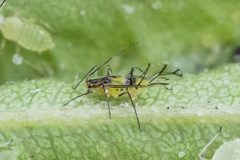
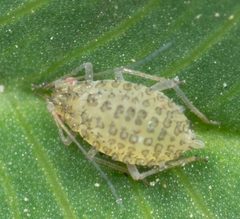
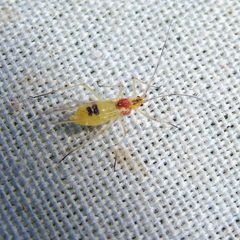
Calaphidini aphids can be distinguished from other Calaphidinae tribes by a combination of morphological features including reduced or absent abdominal spinal , siphunculi that are usually cylindrical or slightly swollen, and a cauda that is typically triangular or finger-shaped. The tribe is further characterized by the presence of on antennal segment III in most . Subtribe Calaphidina generally includes larger species with more prominent wax gland plates, while Monaphidina species tend to be smaller with reduced wax production. Identification to requires examination of antennal segmentation, siphuncular shape, and caudal structure.
Images
Habitat
in this tribe inhabit temperate forest and woodland , primarily occupying the foliage and young stems of deciduous trees and shrubs. They are strongly associated with plants in Betulaceae (birch, alder, hazel) and Salicaceae (willow, poplar), with some restricted to specific host genera. Colonies typically establish on new growth, leaf undersides, and shoot tips during the growing season.
Distribution
Widely distributed across the temperate regions of the Northern Hemisphere, including North America, Europe, and Asia. The distribution follows that of their primary plants in Betulaceae and Salicaceae. Some show more restricted ranges, with several Nearctic and Palearctic endemics.
Seasonality
Most exhibit typical with active colonies from spring through autumn in temperate climates. occurs as on plants. Parthenogenetic predominate during the growing season, with sexual morphs and oviparae produced in autumn. Specific timing varies by species and latitude.
Diet
Phloem sap feeders specializing on woody dicotyledonous plants, primarily in Betulaceae and Salicaceae. plant specificity varies: some are monophagous or oligophagous (e.g., Betulaphis on Betula), while others have broader host ranges within their primary plant families.
Host Associations
- Betulaceae - primary Includes birch (Betula), alder (Alnus), and hazel (Corylus)
- Salicaceae - primary Includes willow (Salix) and poplar (Populus)
Life Cycle
Heteroecious or depending on and . Most Calaphidini undergo typical development with fundatrices hatching from in spring, followed by multiple parthenogenetic . morphs disperse to found new colonies. Sexual females (oviparae) and males are produced in autumn, mating occurs, and fertilized eggs are laid on plants to overwinter. Some species may exhibit anholocyclic (parthenogenetic year-round) in mild climates or greenhouses.
Behavior
Colony-forming aphids that aggregate on new growth and leaf undersides. Many produce copious amounts of honeydew, attracting ants and supporting growth. Some (e.g., Euceraphis) are known to drop from plants when disturbed, a defensive called . Wax filament production varies among genera, with some species secreting visible woolly coatings.
Ecological Role
As phloem feeders, they function as herbivores that transfer nutrients from plants to higher through honeydew production. They serve as prey for numerous including lady beetles, lacewings, hoverfly larvae, and parasitic . Their honeydew supports mutualisms and microbial . Heavy can cause leaf curling, stunting, and reduced host plant vigor.
Human Relevance
Several are occasional pests of ornamental and forestry trees, particularly birch and alder. Betulaphis and Calaphis can cause aesthetic damage and honeydew nuisance in urban settings. They are not significant agricultural pests but may be monitored in nursery and Christmas tree production. Some species are used in ecological studies of insect-plant and climate change impacts on forest .
Similar Taxa
- PanaphidiniAnother tribe in Calaphidinae; distinguished by different antennal arrangement and typically more pronounced spinal on abdominal tergites
- MonaphiniRelated tribe in Calaphidinae; historically confused with Calaphidini but separated based on caudal and siphuncular structure
- AphidiniTribe in Aphidinae; distinguished by different wing venation, typically more elongate siphunculi, and different plant associations (often herbaceous plants)
More Details
Taxonomic History
The tribe has undergone significant revision, with the subtribal classification (Calaphidina and Monaphidina) established to reflect phylogenetic relationships. Some have been transferred between subtribes or to other tribes as morphological and molecular data have clarified relationships.
Molecular Phylogenetics
Recent molecular studies support the monophyly of Calaphidini but suggest some currently placed in the tribe may require reclassification. The tribe represents a well-supported clade within the Calaphidinae radiation associated with temperate woody .