
Hyperomyzus lactucae
(Linnaeus, 1758)
Sowthistle Aphid, Blackcurrant-sowthistle Aphid
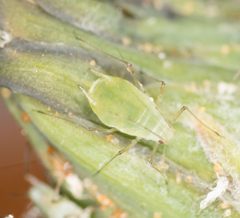
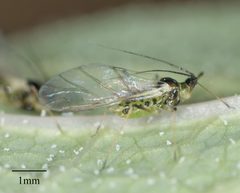
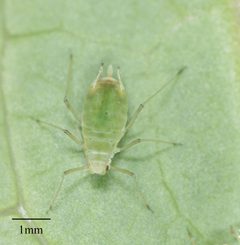
Hyperomyzus lactucae is a European in the Aphididae, commonly known as the sowthistle aphid or blackcurrant-sowthistle aphid. The species exhibits a -alternating , utilizing Sonchus species (sowthistles) as primary hosts and Ribes nigrum (blackcurrant) as a secondary host. It is a known of lettuce necrotic yellows virus and has been introduced to Australia as a pest of lettuce crops. Development, survival, and are strongly influenced by temperature and , with faster development at higher temperatures within a range of approximately 12.5–24°C.
Pronunciation
How to pronounce Hyperomyzus lactucae: /hʌɪpəˈɹɒmɪzəs lækˈtjuːkiː/
These audio files are automatically generated. While they are not always 100% accurate, they are a good starting point.
Images
Habitat
Primary plants are Sonchus (sowthistles), including Sonchus oleraceus. Secondary host is blackcurrant (Ribes nigrum). Agricultural settings include lettuce areas where the has been introduced as a pest.
Distribution
Native to Europe. Introduced to Australia. Distribution records from the Azores (Corvo, Faial, Flores, São Miguel, Terceira).
Diet
Phloem sap from plants. Primary hosts: Sonchus (sowthistles). Secondary host: blackcurrant (Ribes nigrum).
Host Associations
- Sonchus oleraceus - primary
- Sonchus spp. - primary -level association with sowthistles
- Ribes nigrum - secondary Blackcurrant; -alternating
Life Cycle
-alternating between primary hosts (Sonchus ) and secondary host (blackcurrant). Development time varies with temperature; notional development threshold estimated at approximately 2°C. Within 12.5–24°C, development speed increases with temperature. Embryonic conditions within the mother influence subsequent survival and development. Both (wingless) and (winged) virginoparae occur; alatae generally have longer development time and lower than apterae under identical conditions.
Behavior
of honeydew is reduced when feeding on plants infected with sowthistle yellow virus. Wing development in potentially alatiform nymphs is affected by parasitization timing.
Ecological Role
Herbivore feeding on phloem sap of plants. of lettuce necrotic yellows virus. Host for Aphidius sonchi, which has been introduced to Australia as a agent. Parasitization by Aphidius sonchi is age-dependent; early-instar parasitization prevents host maturity, while later parasitization allows some .
Human Relevance
Agricultural pest on lettuce in Australia, where it lettuce necrotic yellows virus. Controlled using plant growth regulators such as chlormequat chloride on blackcurrant. Subject of efforts using the Aphidius sonchi.
Sources and further reading
- BugGuide
- Wikipedia
- GBIF taxonomy match
- iNaturalist taxon
- NCBI Taxonomy
- Catalogue of Life
- Use of the plant growth regulator chlormequat chloride to control the aphid Hyperomyzus lactucae on black currants
- The influence of temperature and photoperiod on the development, survival and reproduction of the sowthistle aphid, Hyperomyzus lactucae
- Reduction of excretion, reproduction, and survival in Hyperomyzus lactucae fed on plants infected with isolates of sowthistle yellow vein virus
- Studies on the biology of Aphidius sonchi Marshall (Hymenoptera: Aphidiidae), a parasite of the sowthistle aphid, Hyperomyzus lactucae (L.) (Hemiptera: Aphididae)
- Development, adult size and fecundity of Aphidius sonchi reared in two instars of its aphid host, Hyperomyzus lactucae
- The influence of temperature and photoperiod on the development, survival and reproduction of the sowthistle aphid, Hyperomyzus lactucae
- Effect of host age at parasitization by Aphidius sonchi on the development, survival, and reproduction of the sowthistle aphid, Hyperomyzus lactucae