
Blissus arenarius
Barber, 1918
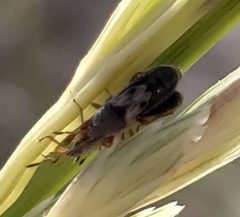
Blissus arenarius is a of true in the Blissidae, first described by Barber in 1918. It is a member of the chinch bug Blissus, which contains several economically significant agricultural pests. The species is known to occur in North America and has two recognized : B. a. arenarius and B. a. maritimus. Like other Blissus species, it is associated with grassland and sandy .
Pronunciation
How to pronounce Blissus arenarius: /ˈblɪsəs aɪˈriːnəriəs/
These audio files are automatically generated. While they are not always 100% accurate, they are a good starting point.
Identification
Blissus arenarius can be distinguished from other Blissus by subtle morphological characters typical of the , including small size (approximately 3-4 mm), dark body coloration with contrasting pale markings on the wings, and the characteristic pronotal shape of Blissidae. The two differ in geographic distribution and minor morphological features: B. a. arenarius occurs inland while B. a. maritimus is found in coastal areas. Definitive identification requires examination of genitalic structures and comparison with .
Images
Habitat
Associated with sandy environments, including sand dunes and sandy grasslands. The B. a. maritimus is specifically found in coastal sand , while B. a. arenarius occupies inland sandy areas.
Distribution
North America. The nominate B. a. arenarius occurs in inland sandy regions, while B. a. maritimus is restricted to coastal areas of the eastern United States.
Human Relevance
Members of the Blissus include significant agricultural pests such as the chinch bug (Blissus leucopterus), which damages cereal crops. The specific economic impact of B. arenarius has not been documented, but its presence in sandy suggests potential relevance to turfgrass and pasture management in coastal and inland dune systems.
Similar Taxa
- Blissus leucopterusThe hairy chinch bug is a closely related congeneric and major pest of turfgrass and cereals; differs in distribution, preferences, and subtle morphological features of the pronotum and male genitalia
- Nysius speciesFalse chinch bugs share similar small size, dark coloration with pale wing markings, and grassland ; distinguished by different structure, absence of the distinctive pronotal carinae found in Blissidae, and different antennal proportions
More Details
Subspecies
Blissus arenarius includes two : Blissus arenarius arenarius Barber, 1918 (inland form) and Blissus arenarius maritimus Leonard, 1966 (coastal form). The subspecific distinction reflects geographic separation and minor morphological differentiation associated with coastal versus inland sandy .