
Nysius
Dallas, 1852
false chinch bugs
Species Guides
3- Nysius fuscovittatus
- Nysius raphanus(False Chinch Bug)
- Nysius tenellus
Nysius is a large of seed-feeding true bugs in the Lygaeidae, commonly known as false chinch bugs. The genus contains approximately 100-106 described with worldwide distribution. Several species are significant agricultural pests, including N. huttoni (wheat ) in New Zealand and N. cymoides in Europe and Turkey. A unique Hawaiian radiation contains 26 species, including two flightless, predatory wēkiu bugs (N. wekiuicola and N. aa) that feed on dead and dying insects on high-elevation volcanoes. Most species feed on seeds and plant fluids, though some exhibit atypical feeding .
Pronunciation
How to pronounce Nysius: //ˈnɪsi.əs//
These audio files are automatically generated. While they are not always 100% accurate, they are a good starting point.
Identification
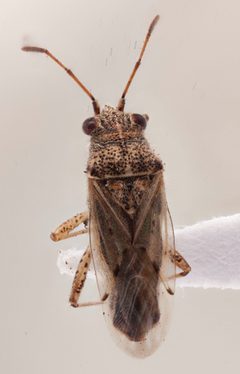
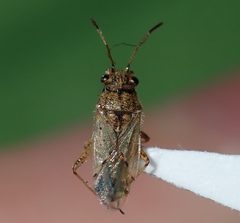
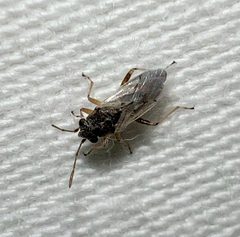
Distinguished from true chinch bugs (Blissus leucopterus) by smaller size, more slender body, and uniform grayish-brown coloration without the conspicuous black triangular spots on white forewings. Separated from other Lygaeidae by the combination of small size, seed-feeding habits, and wing venation. Hawaiian wēkiu (N. wekiuicola, N. aa) uniquely identified by reduced nonfunctional wings and high-elevation volcanic . -level identification requires examination of genitalic structures.
Images
Habitat
Diverse including agricultural fields, grasslands, weedy areas, and open sparse vegetation. Many associated with hot, dry habitats. Some species found in alpine and subalpine environments. Hawaiian species occur from sea level to high-elevation volcanic summits above 3000 m.
Distribution
Worldwide distribution with approximately 100-106 described . Particularly diverse in Hawaii (26 species representing a unique radiation), Argentina (3 species), Australia and New Zealand (multiple species including N. vinitor and N. huttoni), Turkey and Europe (N. cymoides), and the Mongolian Plateau (8 species). In North America, N. raphanus occurs widely across the United States and southern Canada.
Seasonality
Activity patterns vary by and climate. In temperate regions, multiple per year possible with up to three generations annually; typically as . In arid regions, often associated with spring and early summer when weedy plants are abundant. Activity declines with onset of monsoon rains or freezing temperatures.
Diet
Predominantly seed-feeding (granivorous), sucking plant fluids from seeds and developing grains. Most feed on seeds of various plants including grasses, composites, and agricultural crops. Two Hawaiian species (N. wekiuicola, N. aa) are exceptional, feeding on dead and dying insects (carrion/predatory ).
Host Associations
- wheat - pestN. huttoni damages wheat during milk-ripe stage, reducing gluten protein and baking quality
- sunflower - pestN. cymoides causes damage to sunflower fields in Turkey
- corn - pestN. cymoides reported from corn fields
- brassicas - pestN. huttoni feeds on forage brassicas, reducing seedling establishment
- mustard family plants (Brassicaceae) - N. raphanus commonly breeds on weedy mustards
- Chenopodium quinoa - Reported for N. cymoides
- kiwifruit - contaminantN. huttoni occasional pest on export kiwifruit from New Zealand
Life Cycle
Hemimetabolous development with . laid on or near plants. Nymphs resemble small wingless , passing through five instars. Nymphal development rapid, maturing in approximately three weeks under favorable conditions. Multiple per year in favorable climates. stage typically adult.
Behavior
Highly migratory with strong capability; N. vinitor observed flying several hundred feet above ground. Tendency to aggregate in large numbers, possibly mediated by . Mass occur when plants dry up or deteriorate. Attracted to artificial lights, sometimes causing nuisance aggregations at porch lights. Some exhibit swarming resembling miniature locust .
Ecological Role
Seed in natural and agricultural . Some act as agricultural pests causing economic damage to grain crops. Two Hawaiian species function as scavengers/predators in high-elevation ecosystems. May serve as prey for various including , birds, and other arthropods.
Human Relevance
Several are significant agricultural pests. N. huttoni (wheat ) reduces wheat quality and baking properties in New Zealand and has been accidentally introduced to the Netherlands and Belgium via apple exports. N. cymoides is an pest in Turkey and Europe damaging sunflowers and corn. N. raphanus occasionally causes in North American crops. N. huttoni is a concern for New Zealand kiwifruit exports. Management includes applications, trap cropping, and cultivars.
Similar Taxa
- Blissus leucopterus (true chinch bug)Similar and general appearance, but distinguished by larger size, black body with white forewings bearing black triangular spots, and different wing posture
- Other Lygaeidae (seed bugs)Many small lygaeids resemble Nysius; precise identification requires examination of genitalic structures and wing venation patterns
- Lygus bugs (Miridae)Similar size and plant-feeding habits, but Lygus have different body shape, proportions, and lack the characteristic wing tip extension of Nysius
Misconceptions
Despite the "false chinch bug," these insects are not closely related to true chinch bugs ( Blissidae) and do not cause equivalent damage in most situations. are often temporary and self-limiting, with dispersing within weeks. The insects do not bite humans and rarely cause permanent plant damage except during exceptional population explosions.
More Details
Hawaiian radiation
A unique adaptive radiation in Hawaii produced 26 , representing nearly a quarter of global . This includes the remarkable wēkiu (N. wekiuicola and N. aa) on Mauna Loa and Mauna Kea, which evolved reduced nonfunctional wings and shifted from seed-feeding to scavenging/ on dead insects in the harsh high-elevation environment.
Population dynamics
often associated with drought and warm periods, with increases linked to ground waste and previous crop history. Rapid range expansion documented for several including N. vinitor across Pacific islands and N. cymoides in Europe.
Integrated pest management
For N. huttoni, management strategies include use of (alyssum, wheat), less-susceptible cultivars (kale cultivars Corka and Regal; wheat cultivars Batten, Domino, Oroua), and integration with 'soft' chemicals to reduce non-target effects.
Sources and further reading
- BugGuide
- Wikipedia
- GBIF taxonomy match
- iNaturalist taxon
- NCBI Taxonomy
- Catalogue of Life
- Occasional Pests - AgriLife Extension Entomology
- Insects that feed on developing grain in the head - AgriLife Extension Entomology
- Stem- and Leaf- Feeding Insects - AgriLife Extension Entomology
- Bug Eric: False Chinch Bugs
- Bug Eric: July 2010
- Oecanthidae | Beetles In The Bush
- Nysius huttoni . [Distribution map].
- Molecular Identification of the Invasive Species Nysius cymoides (Spinola, 1837) (Hemiptera: Lygaeidae) in Turkey Türkiye’de İstalacı bir tür olan Nysius cymoides (Spinola, 1837) (Hemiptera: Lygaeidae)’in Moleküler Tanımlaması
- PRELIMINARY NOTE ON THE DISTRIBUTION OF NYSIUS VINITOR BERGROTH AND NYSIUS CLEVELANDENSIS EVANS (HEMIPTERA: LYGAEIDAE)
- New Hosts and Spread Areas of Invasive Species Nysius cymoides (Spinola, 1837) (Hemiptera: Heteroptera: Lygaeidae) in Crop Plants in Turkey Türkiye'de Kültür Bitkilerinde Istilacı Tür Nysius cymoides (Spinola, 1837) (Hemiptera: Heteroptera: Lygaeidae)’ın Yeni Konukçuları ve Yayılma Alanları
- False Chinch Bug Nysius raphanus Howard (Insecta: Hemiptera: Lygaeidae)
- Review of the genus Nysius Dallas from Mongolian Plateau (Hemiptera: Heteroptera: Orsillidae)
- A review of genus Nysius Dallas in Argentina (Hemiptera: Heteroptera: Orsillidae)
- Flight Activity and Displacement in the Rutherglen Bug Nysius Vinitor (Hemiptera: Lygaeidae).
- Biology and Management of the New Zealand Endemic Wheat Bug, Nysius huttoni (Hemiptera: Lygaeidae)
- Assessment of Trap Crops for The Wheat Bug, Nysius huttoni Management: A Cage Study
- Spatial distribution and sequential sampling of Nysius spp. (Hemiptera: Lygaeidae) on sunflowers
- Onorchard habitats for <i>Nysius huttoni</i> an important kiwifruit passenger pest