
Nysius raphanus
Howard, 1872
False Chinch Bug
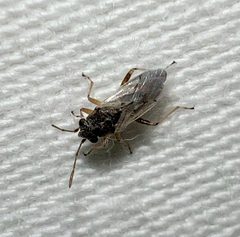
Nysius raphanus, commonly known as the false chinch bug, is a small North American in the Lygaeidae. measure no more than 1/8 inch (approximately 3 mm) in length. The undergoes hemimetabolous development with multiple nymphal stages rather than a larval stage; nymphs resemble wingless adults. While recognized as the most serious pest among Nysius species, reports of heavy causing significant crop damage are uncommon. can reach levels under dry conditions.
Pronunciation
How to pronounce Nysius raphanus: //ˈnɪsiʊs ˈræfænəs//
These audio files are automatically generated. While they are not always 100% accurate, they are a good starting point.
Identification
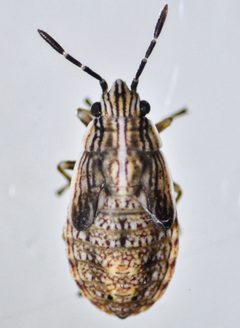
Distinguished from the true chinch bug (Blissus leucopterus) by its uniform grey-brown coloration; true chinch bugs have black bodies with white wings marked by black triangular spots. Distinguished from other Nysius by size and association with specific plants. The transparent wing tips extending beyond the are a key visual characteristic. Nymphs are recognized by their wingless, -like form.
Images
Appearance
Small, grey to brown body with largely transparent wings that extend beyond the . are narrow-bodied and uniform in coloration, lacking the distinct black-and-white wing pattern of the true chinch bug (Blissus leucopterus). Nymphs resemble adults but lack wings. The can release an offensive odor when disturbed, similar to stink bugs.
Habitat
Found in both cultivated and non-cultivated . Primary early-season habitat includes winter mustard (Descurainia spp.) and other wild mustards such as flixweed (D. sophia) and tansy mustard (D. pinnata). develop on alfalfa and migrate to adjacent crops after cutting. In agricultural settings, found on canola during early flower and pod stages. Dry weather conditions favor population increases and development.
Distribution
Native to North America. Documented across the United States and Canada, with specific survey records from Colorado (Larimer and western Weld County). Also reported from Mexico, the Caribbean (Haiti, Puerto Rico, Grand Cayman, and multiple Lesser Antilles islands), and parts of Central America. Distribution extends from southern Canada through the continental United States into Mexico and the Caribbean region.
Seasonality
First appear in early season on winter mustard (Descurainia spp.). Movement to cultivated crops occurs after alfalfa cutting. Activity and potential increase during dry weather periods; heavy rainfall decreases . In Colorado, surveyed throughout the growing season with peak movement to canola during early flowering and pod stages.
Diet
Herbivorous ; feeds on plant sap. Specific feeding details on plant tissues are not well documented in available sources.
Host Associations
- Descurainia spp. - primary early-season winter mustard
- Descurainia sophia - wild flixweed
- Descurainia pinnata - wild tansy mustard
- Medicago sativa - agricultural alfalfa; move from alfalfa to adjacent crops after cutting
- Brassica napus - agricultural canola; significant injury during early flower and pod stages
Life Cycle
Hemimetabolous development with no larval stage. Development proceeds through multiple nymphal stages (typically 5 instars in Lygaeidae, though specific number for this not confirmed in sources). Nymphs resemble wingless . Duration of developmental stages and total time not documented in available sources.
Behavior
Exhibits migratory movement between : from winter mustard in early season, to alfalfa, then to adjacent canola crops after alfalfa cutting. Movement patterns are influenced by agricultural practices and weather conditions. Can release offensive odor when disturbed, similar to defensive secretions of stink bugs. Tends to concentrate in small areas of fields rather than distributing uniformly.
Ecological Role
Agricultural pest causing injury to canola during early flower and pod stages. can result in significant plant damage when densities are high. Serves as a herbivore in early successional plant on weedy mustards. Role in natural beyond agricultural contexts is not well documented.
Human Relevance
Economic pest of canola and potentially other crops. Management thresholds have been established for grain sorghum: 140 per grain when begins at the milk stage. are labeled for control in multiple crops. Damage extent in small grains is not well documented; feeding on stems and heads may cause poorly filled heads and shriveled grain. Monitoring recommendations include beat-bucket sampling methods.
Similar Taxa
- Blissus leucopterusTrue chinch bug; distinguished by black body with white wings marked by black triangular spots, versus uniform grey-brown coloration of N. raphanus
- Other Nysius speciesN. raphanus is recognized as the most serious pest among Nysius ; other species generally less associated with significant agricultural damage
Misconceptions
'false chinch bug' reflects historical confusion with the true chinch bug (Blissus leucopterus), though the two are not closely related and differ in appearance, , and damage patterns. Despite being labeled the most serious Nysius pest, reports of heavy and serious crop damage are uncommon, suggesting potential may be overestimated in some contexts.
More Details
Weather Influence
Dry weather increases activity and potential; heavy rain decreases . This relationship has been documented in Colorado survey studies.
Taxonomic Note
Originally described by Howard in 1872. Some sources may list the as Orsillinae () within Lygaeidae, reflecting alternative classification schemes.
Sources and further reading
- BugGuide
- Wikipedia
- GBIF taxonomy match
- iNaturalist taxon
- NCBI Taxonomy
- Catalogue of Life
- Occasional Pests - AgriLife Extension Entomology
- Insects that feed on developing grain in the head - AgriLife Extension Entomology
- Big Blue: A Sweet Ride for a Cabbage White Butterfly | Bug Squad
- Rejection in the World of Cabbage White Butterflies | Bug Squad
- He Nabbed It on New Year's Day | Bug Squad
- Beer-for-a-Butterfly Contest: We Have a Winner! | Bug Squad
- False Chinch Bug Nysius raphanus Howard (Insecta: Hemiptera: Lygaeidae)
- Surveys of False Chinch Bug, Nysius raphanus (Howard) (Hemiptera: Lygaeidae) and Their Movement on Cultivated Crops and Non-cultivated Habitats Throughout Growing Season in Colorado