
Mezira subsetosa
Mezira subsetosa is a of flat bug in the Aradidae. Members of this family are characterized by their extremely flattened bodies, an for living in tight spaces under bark and in decaying wood. The species has been documented in North America with over 800 observations, suggesting it is relatively common within its range. Like other aradids, it is presumed to feed on fungal in dead wood, though specific dietary studies for this species are lacking.
Pronunciation
How to pronounce Mezira subsetosa: /mɛzˈiːrə sʌbsɛˈtoʊsə/
These audio files are automatically generated. While they are not always 100% accurate, they are a good starting point.
Identification
Distinguished from other Mezira by the combination of: moderately dense body setae (less dense than M. lobata, denser than glabrous species); antennal segment proportions; and the shape of the abdominal margins. M. subsetosa has been observed more frequently than many , suggesting either greater abundance or more accessible preferences. Definitive identification requires examination of male genitalia or detailed comparison of setal and antennal against regional keys.
Images
Appearance
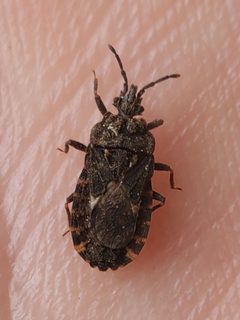
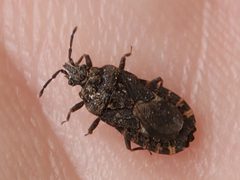
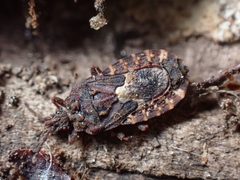
Extremely dorsoventrally flattened body, typical of the Aradidae. are four-segmented. Body surface is covered with fine setae (hairs), reflected in the epithet 'subsetosa' (somewhat hairy). Coloration is generally dark brown to black. The pronotum and are expanded laterally, creating a broad, oval outline when viewed from above. Wings are reduced or absent in some individuals; when present, forewings () are abbreviated and do not fully cover the abdomen.
Habitat
Found under bark of dead and decaying hardwood trees, particularly in moist forest environments. Has been observed in association with rotting logs and stumps. Prefers with active fungal decomposition.
Distribution
Documented across eastern and central North America, with records from the northeastern United States west to the Great Plains and south to the Gulf Coast. The 800+ iNaturalist observations suggest continuous presence throughout the eastern deciduous forest biome.
Seasonality
have been observed year-round, with peak activity during spring and summer months. likely occurs under bark or in decaying wood.
Diet
Presumed to feed on fungal and spores in decaying wood, based on -level characteristics. Specific dietary studies for M. subsetosa have not been published.
Life Cycle
(hemimetabolous). Nymphs resemble smaller, wingless and are found in the same microhabitats. Developmental stages and duration unknown for this .
Behavior
Remains concealed under bark during daylight. Slow-moving when disturbed. of multiple individuals have been observed under suitable bark sections, suggesting of conspecifics.
Ecological Role
Contributes to decomposition processes in forest through consumption of fungi associated with dead wood. May serve as prey for other forest floor arthropods.
Human Relevance
No direct economic importance. Occasionally encountered by entomologists, naturalists, and woodworkers handling decaying hardwood. Not a pest .
Similar Taxa
- Mezira lobataOverlapping distribution and ; distinguished by denser body setae and more lobate abdominal margins
- Aradus speciesSame and microhabitat; Aradus generally have more pronounced lateral abdominal expansions and different antennal proportions
- Neuroctenus speciesSimilar flattened appearance but in Berytidae; distinguished by extremely long, stilt-like legs and different preferences
More Details
Taxonomic Note
The epithet 'subsetosa' (from Latin sub- 'somewhat' and setosa 'bristly') refers to the moderate of body setae compared to related species.
Observation Bias
High observation count on iNaturalist likely reflects the ' occurrence in accessible eastern North American forests and the relative ease of finding flat bugs under loose bark, rather than necessarily indicating exceptional abundance.