
Notonecta petrunkevitchi
Hutchinson, 1945
Notonecta petrunkevitchi is a of backswimmer in the Notonectidae, described by Hutchinson in 1945. As a member of the Notonecta, it shares the characteristic habit of swimming upside down in aquatic environments. The species is known from North America, though specific details about its and distribution within this range remain poorly documented. Like other backswimmers, it is presumably predatory and possesses hydrophobic hairs for underwater respiration.
Pronunciation
How to pronounce Notonecta petrunkevitchi: //ˌnɔtoʊˈnɛktə ˌpɛtrʊnˈkɛvɪtʃaɪ//
These audio files are automatically generated. While they are not always 100% accurate, they are a good starting point.
Identification
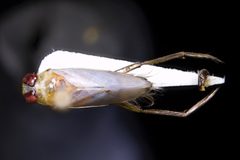
As a member of the Notonecta, this would be distinguished from water boatmen ( Corixidae) by its triangular cross-section when viewed from front to back, keel-like surface, and bold color patterning rather than fine transverse lines. Specific diagnostic features separating N. petrunkevitchi from are not documented in available sources.
Images
Habitat
Presumably aquatic, as with all members of Notonectidae. Related Notonecta frequent open water rather than bottom substrates.
Distribution
North America. Specific range details beyond this continental-level occurrence are not established in available sources.
Behavior
Presumably swims upside down, as characteristic of the Notonecta. likely capable of .
Similar Taxa
- Notonecta spp.Other backswimmers in the same share the triangular body shape, upside-down swimming posture, and general appearance. Specific distinguishing characters for N. petrunkevitchi are not documented.
- Corixidae (water boatmen)Superficially similar aquatic with long hind legs modified for swimming, but distinguished by flattened body (not triangular), spoon-shaped front for feeding, rostrum, and fine transverse striations rather than bold markings.