Adelphocoris
Reuter, 1896
plant bugs
Species Guides
2- Adelphocoris lineolatus(Lucerne bug)
- Adelphocoris rapidus(rapid plant bug)
Adelphocoris is a of plant bugs in the Miridae, tribe Mirini. Multiple are significant agricultural pests, particularly in Chinese cotton production following widespread Bt cotton adoption. The genus includes at least three economically important species—A. suturalis, A. lineolatus, and A. fasciaticollis—that exhibit distinct geographic distributions, seasonal dynamics, and plant associations. Species within this genus show complex involving migratory , , and multi-generational development on diverse host plants.
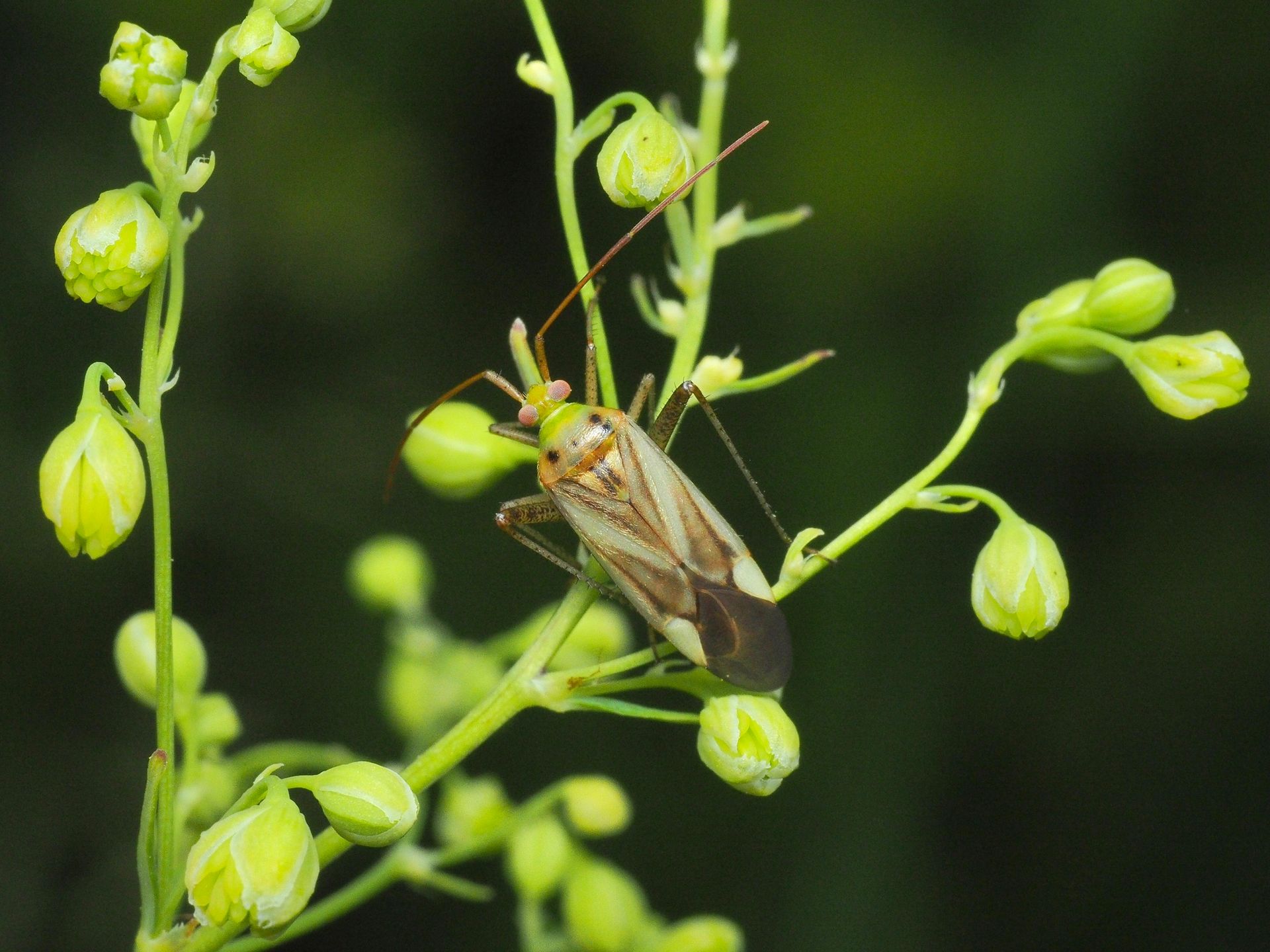
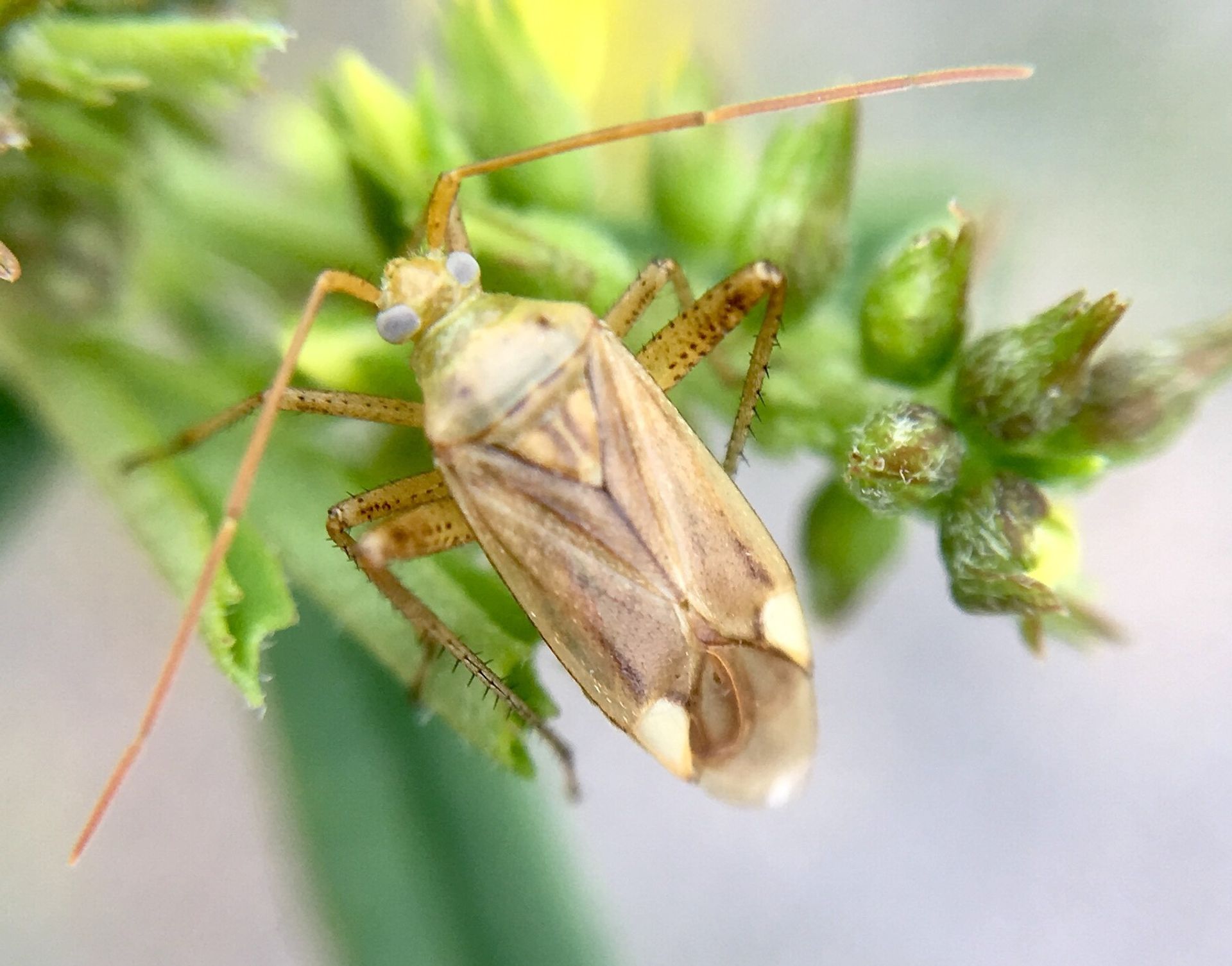
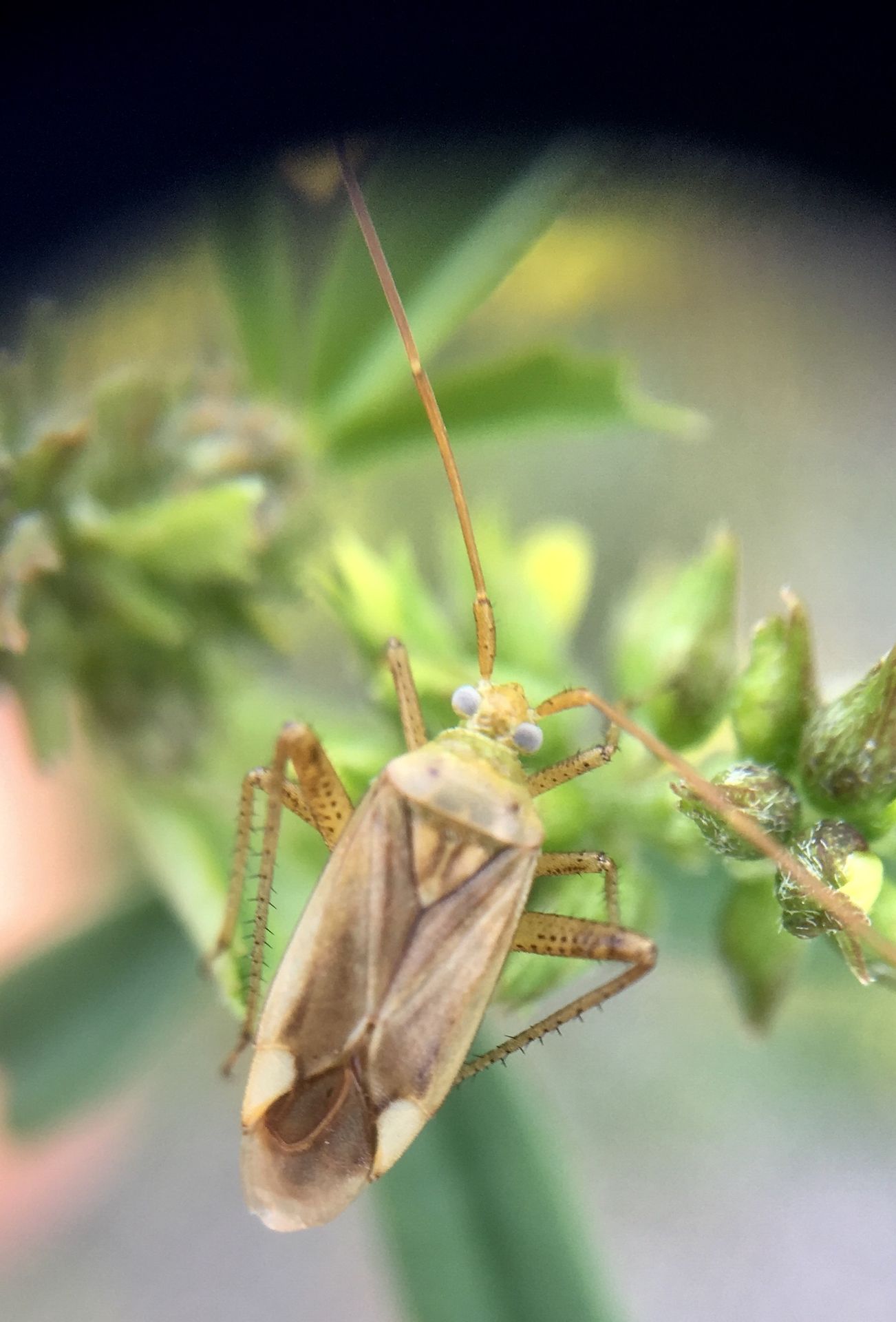
Pronunciation
How to pronounce Adelphocoris: //əˌdɛlfoʊˈkɔːrɪs//
These audio files are automatically generated. While they are not always 100% accurate, they are a good starting point.
Identification
Members of Adelphocoris are medium-sized mirid bugs. -level identification requires examination of morphological characters such as coloration patterns, body proportions, and genitalia structure. A. suturalis, A. fasciaticollis, and A. lineolatus can be distinguished by subtle differences in pronotal and hemelytral markings, though accurate identification often requires expert taxonomic assessment. The is part of a species group that includes Creontiades, Megacoelum, and Pseudomegacoelum, from which it can be separated by genitalic and external morphological features.
Images
Habitat
Agricultural and semi-natural including cotton fields, alfalfa fields, and areas with flowering plants. occurs in weed hosts neighboring crop fields. Some utilize early-season non-target host plants before migrating to crop fields. Habitat use varies seasonally, with distinct host switching between overwintering sites, wild flowering hosts, and cultivated crops.
Distribution
Widely distributed across the Palearctic and Nearctic regions. Documented from China (major cotton-growing regions including Yellow River and Changjiang river regions), Europe, United States, Canada (Saskatchewan, Alberta), and Scandinavia (Denmark, Norway, Sweden). Specific distributions vary: A. suturalis and A. fasciaticollis are in Chinese cotton systems, while A. lineolatus occurs across Europe, North America, and China.
Seasonality
Activity patterns vary by and latitude. In northern regions, some exhibit with in late June and -laying in July. In warmer Chinese cotton regions, multiple occur annually (4 generations in Yellow River region, 5-6 generations in Changjiang region). as eggs; hatching occurs in early spring (late May to early April depending on region).
Diet
Phytophagous; nymphs and feed on developing plant tissues including flower buds, fruits, and developing stems. Documented include cotton (Gossypium spp.), alfalfa (Medicago spp.), red clover (Trifolium pratense), grape (Vitis vinifera, V. labrusca), jujube (Ziziphus jujuba), common bean (Phaseolus vulgaris), and carrot (Daucus carota). Feeding damage causes perforated plant parts, abnormal growth, wilting, or abscission.
Host Associations
- Gossypium spp. - foodcotton, major for A. suturalis
- Medicago sativa - foodalfalfa, primary for A. lineolatus and A. superbus
- Trifolium pratense - foodred clover
- Vitis vinifera - foodgrape
- Vitis labrusca - foodgrape
- Ziziphus jujuba - foodjujube
- Phaseolus vulgaris - foodcommon bean
- Daucus carota - foodcarrot
- weed hosts neighboring cotton fields - sites
- early-season non-target host plants - foodfirst nymph development
- flowering wild hosts - foodsecond feeding and
- Entomophthora sp. - fungal of A. lineolatus, destroys ovaries and
- Euphorus pallipes - braconid of nymphs
Life Cycle
as laid in stems or on non-target . Egg in spring when temperatures permit (thresholds vary by : approximately 5.6-6.3°C for eggs). Development through five nymphal instars. Nymphal development thresholds range from 3.0-6.2°C lower to 38.4-41.9°C upper limits. Thermal constants for development vary among species (188.8-231.7 for eggs, 291.6-366.7 degree-days for nymphs). longevity and temperature-dependent; optimal oviposition occurs at 23-25°C. Multiple per year in warmer climates; single generation in northern latitudes where freezing weather limits second generation completion.
Behavior
exhibit migratory essential for and rapid . Seasonal patterns involve movement from sites to early-season , then to crop fields, and finally to late-season flowering hosts for oviposition. capacity develops with age, peaking at 10-13 days post-. Flight performance varies among : A. suturalis and A. fasciaticollis show greater flight distance and duration than A. lineolatus. Adults use olfactory cues for host plant location, with species-specific responses to volatile organic compounds including n-butyl ether, butyl acrylate, butyl propionate, butyl butyrate, p-xylene, m-xylene, and 1,8-cineole. Tetradecane plays a significant role in host recognition for some species.
Ecological Role
Secondary pest in agricultural systems, particularly in Bt cotton where reduction of broad-spectrum use has enabled increases. Some are zoophytophagous, potentially contributing to of other arthropods. Serves as prey for including lynx spiders (Oxyopes salticus). Acts as for and fungal . influenced by temperature-dependent development rates and migratory capacity.
Human Relevance
Major agricultural pest in Chinese cotton production systems, causing significant economic damage to cotton, alfalfa, and other crops. Feeding damage reduces yield through bud-blasting, flower-drop, and seed destruction. Control challenges arise from migratory requiring repeated interventions. Subject of extensive research on , plant volatile-based trapping, and interference-based reproductive disruption. Some (A. lineolatus) have expanded ranges through North America, becoming established pests in new agricultural regions.
Similar Taxa
- Apolygus lucorumOverlapping pest status in Chinese cotton systems; both mirids increased following Bt cotton adoption. Distinguished by morphological features and volatile response patterns.
- Lygus lineolarisSimilar plant bug pest ; both preyed upon by Oxyopes salticus. Distinguished by coloration, body shape, and geographic distribution.
- CreontiadesClosely related in same group; separation requires examination of genitalic .
- MegacoelumClosely related in same group; separation requires examination of genitalic .
- PseudomegacoelumClosely related in same group; separation requires examination of genitalic .
More Details
Temperature-dependent development
Laboratory studies demonstrate that development and patterns correspond to distributions. A. suturalis tolerates higher temperatures better than A. fasciaticollis and A. lineolatus, which show adverse development above 30°C. A. suturalis shows reduced nymphal survival at low temperatures (10°C).
Gut microbiome
A. suturalis harbors symbiotic bacteria dominated by Proteobacteria (87%) and Firmicutes (9%), with Erwinia, Staphylococcus, and Acinetobacter as . Bacterial composition varies across developmental stages, with younger nymphs showing higher .
Reproductive molecular biology
The aspartic gene AsAP has been identified as essential for ovarian development and female in A. suturalis, representing a potential target for novel control strategies.
Sources and further reading
- BugGuide
- Wikipedia
- GBIF taxonomy match
- iNaturalist taxon
- NCBI Taxonomy
- Catalogue of Life
- Bug Eric: Spider Sunday: Striped Lynx Spider
- The Alfalfa Plant Bug, Adelphocoris lineolatus (Goeze) in Northern Saskatchewan
- Perception of and Behavioral Responses to Host Plant Volatiles for Three Adelphocoris Species
- Characterization of Adelphocoris suturalis (Hemiptera: Miridae) Transcriptome from Different Developmental Stages
- DISTRIBUTION OF ADELPHOCORIS LINEOLATUS (HETEROPTERA: MIRIDAE) IN WESTERN CANADA
- Functional Role of AsAP in the Reproduction of Adelphocoris suturalis (Hemiptera: Miridae)
- The role of tetradecane in the identification of host plants by the pest bugs Apolygus lucorum and Adelphocoris suturalis
- Early-Season Host Switching in Adelphocoris spp. (Hemiptera: Miridae) of Differing Host Breadth
- Biology of the Superb Plant Bug, Adelphocoris superbus (Uhl.) (Hemiptera: Miridae), in Southern Alberta
- ENDOCRINE DYSFUNCTIONS IN ADELPHOCORIS LINEOLATUS (GOEZE) (HEMIPTERA: MIRIDAE) CAUSED BY A FUNGUS (ENTOMOPHTHORA SP.)
- Comparative overwintering host range of three Adelphocoris species (Hemiptera: Miridae) in northern China
- Comparative study of temperature‐dependent life histories of three economically important Adelphocoris spp.
- Gut Bacterial Diversity in Different Life Cycle Stages of Adelphocoris suturalis (Hemiptera: Miridae)
- Comparative flight performance of three important pestAdelphocorisspecies of Bt cotton in China
- Environmental control of the seasonal life cycle of a zoophytophagous mirid, Adelphocoris triannulatus (Hemiptera: Miridae)