Macrolophus pygmaeus
(Rambur, 1839)
Macrolophus pygmaeus is a zoophytophagous in the , widely distributed across Europe, North Africa, and Central Asia. It functions as a of agricultural pests including , , , and , while also feeding on sap and extrafloral nectar. The has been extensively studied for its potential as a agent in greenhouse vegetable , particularly for controlling whiteflies and the tomato Tuta absoluta. Males produce distinctive during courtship and male-male interactions.
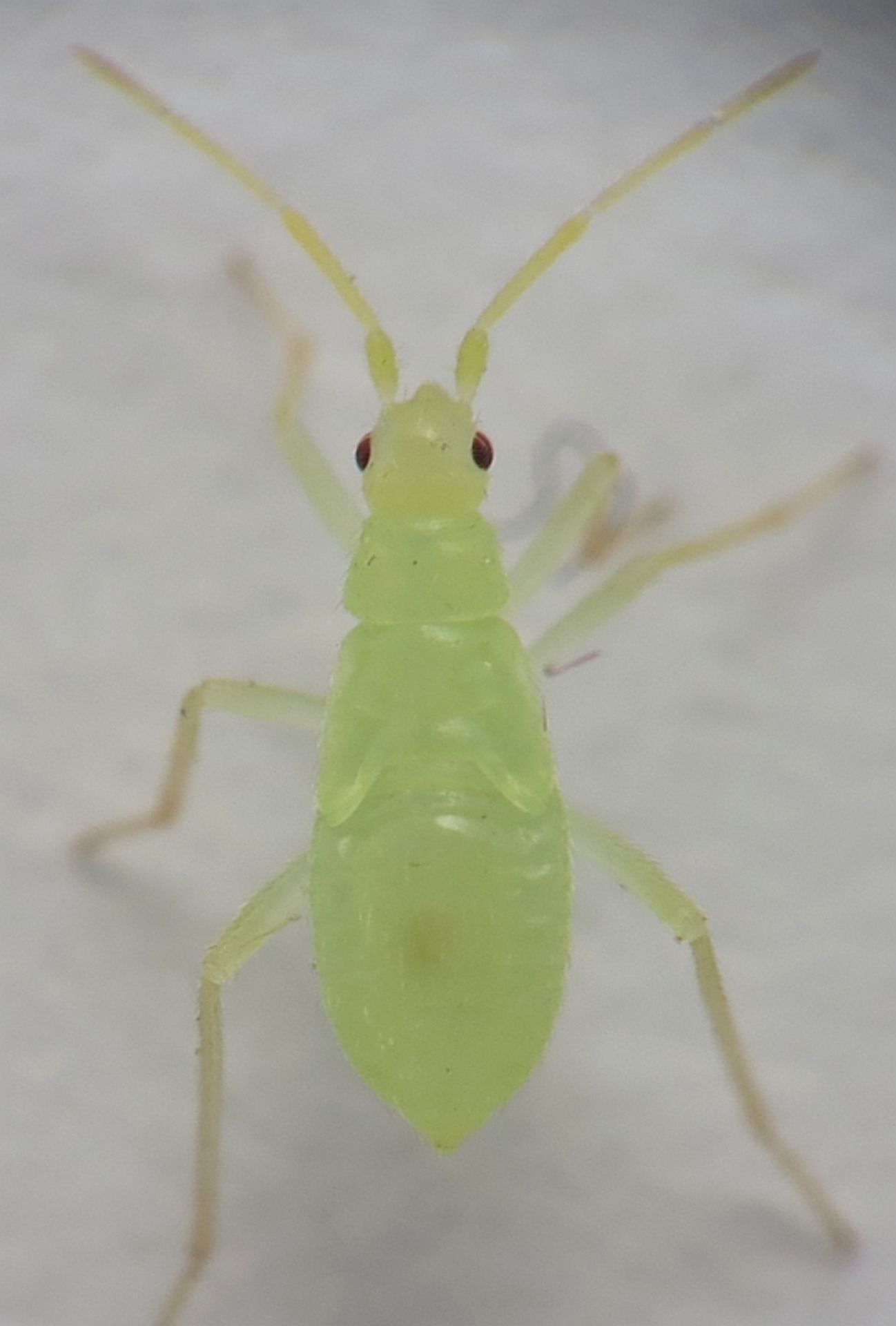
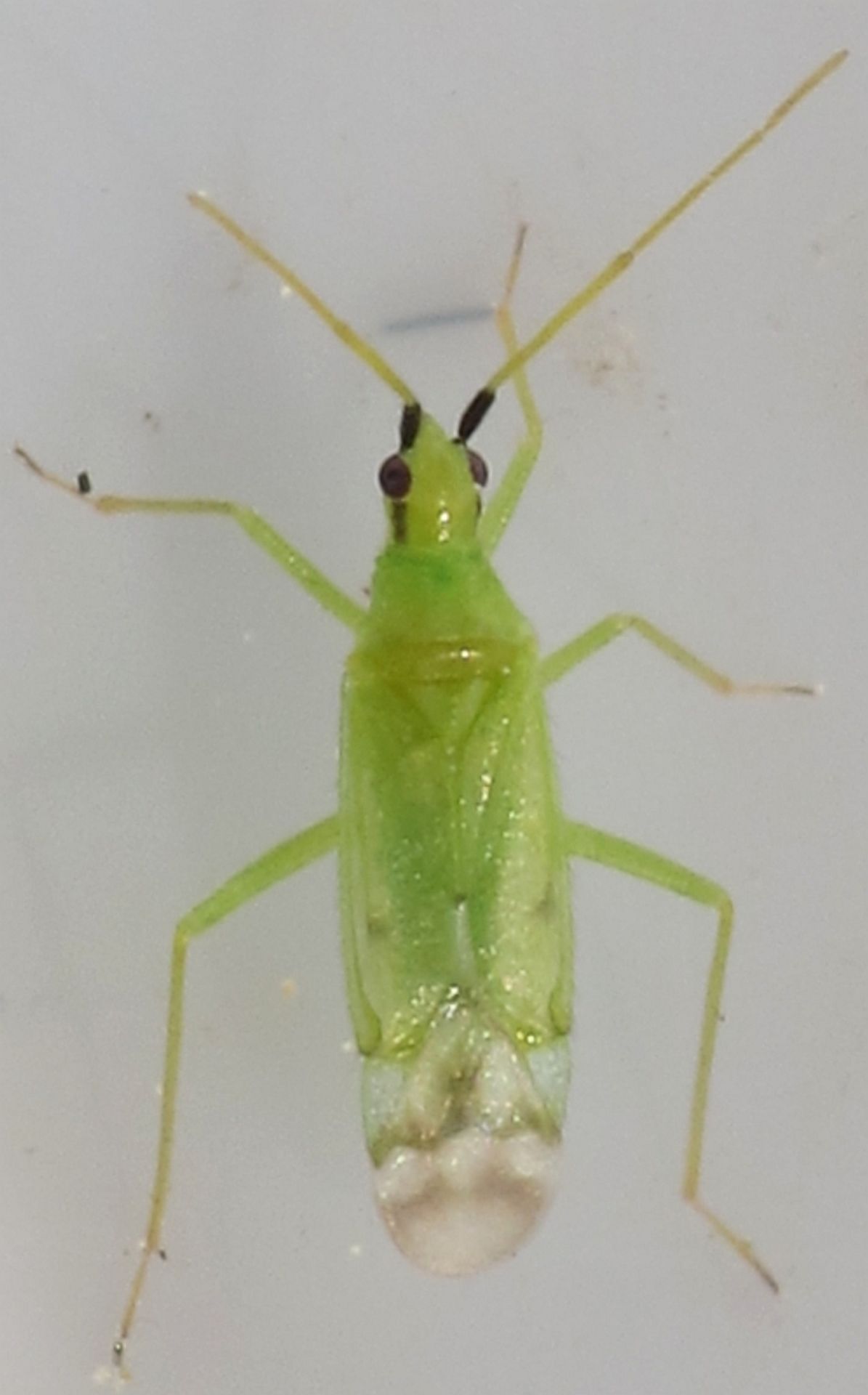
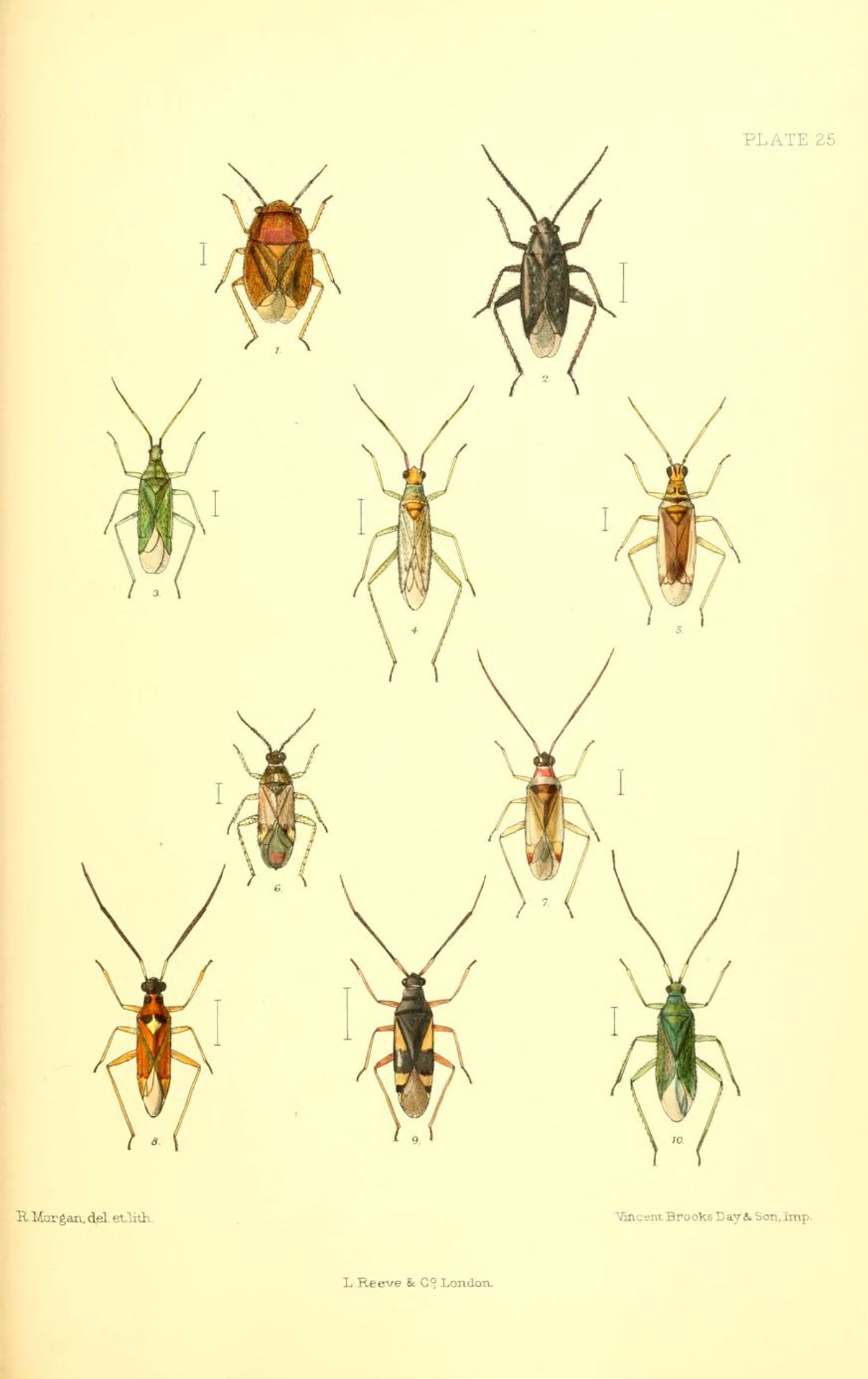
Pronunciation
How to pronounce Macrolophus pygmaeus: /məˈkroʊloʊfəs pɪɡˈmiːəs/
These audio files are automatically generated. While they are not always 100% accurate, they are a good starting point.
Identification
Morphologically very similar to Macrolophus melanotoma (formerly M. caliginosus); reliable separation requires molecular markers or detailed morphometric analysis of measurements in males. Males of M. pygmaeus can be distinguished using a linear discriminant function combining head measurements. Specific mitochondrial have been developed for unambiguous identification.
Images
Habitat
Associated with herbaceous plants and agricultural , particularly solanaceous crops such as tomato and sweet pepper. Found on plants including Dittrichia viscosa in . Thrives in greenhouse environments and has established in New Zealand.
Distribution
Europe (excluding high north), North Africa, Asia Minor, and Central Asia. and established in New Zealand (first recorded 2007). Widely used in greenhouse programs across Mediterranean region.
Diet
Zoophytophagous: preys on and of Tuta absoluta, eggs of Ephestia kuehniella, of , , Bemisia tabaci, occidentalis, and Tetranychus urticae. Also feeds on sap and consumes extrafloral nectar from plants such as Vicia faba.
Host Associations
- Solanum lycopersicum (tomato) - primary
- Capsicum annuum (sweet pepper) - secondary
- Dittrichia viscosa - source of wild
- Vicia faba - extrafloral nectar source
- Tuta absoluta - and
- Ephestia kuehniella - ; used as in rearing
- Myzus persicae -
- Macrosiphum euphorbiae -
- Bemisia tabaci -
- Trialeurodes vaporariorum -
- Frankliniella occidentalis - western
- Tetranychus urticae - two-spotted
- Meloidogyne spp. - induced induced in tomato plants reduces nematode
Life Cycle
stage approximately 13 days at 23°C. Five nymphal with total nymphal development of approximately 20 days at 23°C when feeding on ; development time significantly longer when feeding only on juices. Preoviposition period approximately 6 days. longevity: females approximately 50 days, males longer. 0.0615.
Behavior
Males use during courtship, actively down plants while producing . Males produce a distinctive 'yelp' vibrational sound associated with male-male interactions and physical contact, often emitted while males run away from each other. Females prefer longer duration calls. Exhibits site selection , reducing laying on upper leaves in presence of intraguild competitors. Can complete nymphal development on juices alone, though development is slower than with .
Ecological Role
functioning as agent in agricultural systems. Induces in susceptible tomato plants against root-knot nematodes (Meloidogyne spp.), reducing nematode by 37-52% and by 37-53%. Serves as intraguild predator and is subject to , particularly by males on . development increases under avoidance conditions in plants due to reduced defenses and higher .
Human Relevance
Important agent used in of greenhouse vegetable , particularly for and Tuta absoluta control. Mass reared for inoculative releases. Subject to concerns; lethal and behavioral effects of pesticides have been studied. Risk of crop damage from when is scarce, potentially mitigated by .
Similar Taxa
- Macrolophus melanotoma with nearly identical ; historically confused with M. pygmaeus, requiring molecular or detailed morphometric identification
- Macrolophus costalisCongeneric with similar biology and ; differs in biological parameters including higher consumption rate and faster nymphal development
- Nesidiocoris tenuisCo-occurring zoophytophagous with similar ecological role; intraguild competitor and potential intraguild of M. pygmaeus
More Details
Taxonomic confusion
Long confused with Macrolophus melanotoma (formerly M. caliginosus), leading to misidentification in releases and studies. Molecular and morphometric tools now allow reliable separation.
Vibrational communication research
Among the few with documented vibrational courtship signals; research has characterized male 'yelp' signals and female preference for longer call duration.
Systemic resistance induction
Unusual among predatory in ability to induce -mediated against root-feeding nematodes through feeding ; effect limited to susceptible tomato and not observed in Mi1.2 cultivars.
Sources and further reading
- BugGuide
- Wikipedia
- GBIF taxonomy match
- iNaturalist taxon
- NCBI Taxonomy
- Catalogue of Life
- Cerambycidae | Beetles In The Bush | Page 10
- Formicidae | Beetles In The Bush | Page 2
- Flower ants? Check again! | Beetles In The Bush
- Host Plant Perception and Selection in the Sibling Species Macrolophus melanotoma and Macrolophus pygmaeus (Hemiptera: Miridae)
- Prey killing without consumption: Does Macrolophus pygmaeus show adaptive foraging behaviour?
- Macrolophus pygmaeus (Heteroptera: Miridae) induces systemic resistance in tomato against Meloidogyne spp
- Lethal and behavioral effects of pesticides on the insect predator Macrolophus pygmaeus
- Taxonomic identification of Macrolophus pygmaeus and Macrolophus melanotoma based on morphometry and molecular markers
- First New Zealand record of the genus Macrolophus Fieber, 1858 (Hemiptera: Miridae: Bryocorinae: Dicyphini): Macrolophus pygmaeus (Rambur, 1839), a beneficial predacious insect
- Biological characteristics of the mirids Macrolophus costalis and Macrolophus pygmaeus preying on the tobacco form of Myzus persicae (Hemiptera: Aphididae)
- Effects of Various Items, Host Plants, and Temperatures on the Development and Survival of Macrolophus pygmaeus Rambur (Hemiptera: Miridae)
- Effects of far-red light on the behaviour and reproduction of the zoophytophagous predator Macrolophus pygmaeus and its interaction with a whitefly herbivore
- Ephestia kuehniella eggs as a surrogate host to test feeding preference and intraguild interactions between and Macrolophus pygmaeus and Trichogramma achaeae
- Predation of the Peach Aphid Myzus persicae by the mirid Predator Macrolophus pygmaeus on Sweet Peppers: Effect of Prey and Predator Density
- Oviposition behavior of the mirid Macrolophus pygmaeus under risk of intraguild predation and cannibalism