
Bryocorinae
Baerensprung, 1860
Tribe Guides
3Bryocorinae is a of plant bugs (Miridae) characterized by extraordinary morphological heterogeneity despite relatively modest compared to other mirid subfamilies. Five tribes are currently recognized: Bryocorini, Dicyphini, Eccritotarsini, Felisacini, and Monaloniini. The subfamily exhibits diverse feeding strategies, with members ranging from predominantly phytophagous to predacious. Several , particularly in the Macrolophus, are economically important as agents. The subfamily has a global distribution with particular diversity in the Neotropics.
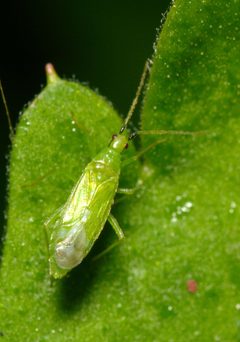
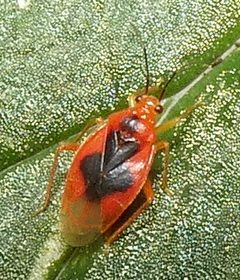
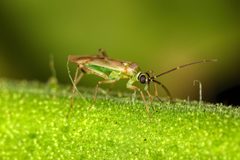
Pronunciation
How to pronounce Bryocorinae: /ˌbraɪ.oʊˈkɔr.aɪˌni/
These audio files are automatically generated. While they are not always 100% accurate, they are a good starting point.
Identification
Identification to level requires examination of tribal characters. Keys to tribes are available based on morphological features including pretarsal structure, trichobothrial arrangement, and genitalic . The Campyloneura was transferred from Dicyphini to Eccritotarsini based on phylogenetic analysis. -level identification typically requires examination of male genitalia and selected female genitalic characters.
Images
Habitat
Diverse including tropical and temperate forests, agricultural systems, and plantations. Many are associated with specific plants: Araceae (particularly Aroideae), Agave and related Asparagaceae, Bromeliaceae, cacao, and various other flowering plants. Some species inhabit leaf abaxial surfaces where and immatures occur gregariously.
Distribution
Global distribution with primary diversity centers in the Neotropics. Documented from European Russia and the Caucasus, Colombia, Brazil (Atlantic Forest, Minas Gerais), Australia, New Zealand, Indonesia, Japan, Laos, Nepal, Taiwan, Thailand, Vietnam, and Papua New Guinea. The tribe Eccritotarsini is the most speciose within the with 650 described in 112 worldwide.
Diet
Variable across tribes and . Eccritotarsini are predominantly phytophagous. Some Dicyphini, including Macrolophus pygmaeus, are predacious and feed on whiteflies (Aleyrodidae). plant associations documented for many genera including specialized relationships with Araceae, Agavoideae, Bromeliaceae, and cacao.
Host Associations
- Araceae - primary Particularly Aroideae; and immatures gregarious on leaf abaxial surfaces
- Agavoideae - primary Agave and related ; associated with genus Caulotops and related eccritotarsines
- Asparagaceae - primary Broad including Agavoideae
- Bromeliaceae - primary Documented for Pachymeroceroides and related
- Theobroma cacao - primary Cacao pest in New Britain including Parabryocoropsis typicus and Pseudodoniella pacifica
- Aleyrodidae - preyPrey of predacious Macrolophus pygmaeus
Behavior
Some exhibit gregarious with and all instars occurring together on plant leaves, particularly on abaxial surfaces. Braconid-mimic species occur in the Australian Rayieria. Several species are economically important as pests of cacao and other crops.
Ecological Role
Several widely used as agents, particularly Macrolophus pygmaeus for management of whitefly pests in vegetable crops. Phytophagous members serve as herbivores in their respective . Some species are significant agricultural pests, notably on cacao.
Human Relevance
Economic importance includes both beneficial and pest . Macrolophus pygmaeus is a beneficial predacious insect used in of whiteflies in vegetable crops. Pest species damage cacao in New Britain (Parabryocoropsis typicus, Pseudodoniella pacifica) and other crops. Several species are used or studied as biological control agents.
Similar Taxa
- Other Miridae subfamiliesDistinguished by combination of tribal-level morphological characters including pretarsal structure, trichobothrial arrangement, and genitalic ; keys available for identification
- CylapinaeSympatric in some regions (e.g., Atlantic Forest of Brazil); distinguished by different tribal structure and morphological features
- DeraeocorinaeSympatric in some regions; predacious members may be confused with predacious Bryocorinae but differ in tribal composition and morphological details
More Details
Tribal classification
Five tribes recognized: Bryocorini, Dicyphini, Eccritotarsini, Felisacini, and Monaloniini. The Felisacini is ( Felisacus). Monaloniini and Odoniellini are now treated as subtribes within Dicyphini.
Taxonomic challenges
delimitation remains challenging even in relatively well-studied faunas such as European Russia and the Caucasus. Previous records have been corrected based on misidentifications, including Dicyphus annulatus records corrected to D. albonasutus.
Recent taxonomic revisions
The Caulotops was extensively revised with four new genera established (Agaveocoris, Laterospinocoris, Nigrotomocoris, Schaffnerocoris) for 20 based on phylogenetic analysis. The Australian genus Rayieria was revised with ten new species described.
Sources and further reading
- BugGuide
- Wikipedia
- iNaturalist taxon
- NCBI Taxonomy
- A taxonomic synopsis of the Eccritotarsini (Hemiptera: Heteroptera: Miridae: Bryocorinae) of Colombia
- Review of Pachymeroceroides genus with the description of a new species (Hemiptera: Heteroptera: Miridae: Bryocorinae)
- Bryocorinae Baerensprung, 1860 (Hemiptera: Heteroptera: Miridae) of European Russia and the Caucasus: synopsis and key to species
- Synopsis and keys to the tribes, genera, and species of Miridae (Hemiptera: Heteroptera) of Minas Gerais, Brazil Part I: Bryocorinae
- A synopsis of the bryocorine tribes (Heteroptera : Miridae : Bryocorinae): key, diagnoses, hosts and distributional patterns
- Systematics, phylogeny and host associations of the Australian endemic monaloniine genus Rayieria Odhiambo (Insecta : Heteroptera : Miridae : Bryocorinae)
- Four new Species representing two new Genera of Bryocorinae associated with Cacao in New Britain (Hemiptera, Miridae)
- First New Zealand record of the genus Macrolophus Fieber, 1858 (Hemiptera: Miridae: Bryocorinae: Dicyphini): Macrolophus pygmaeus (Rambur, 1839), a beneficial predacious insect
- First United States Record and Host for the Plant Bug Schaffnerocoris fuscotibialis Henry and Menard (Miridae: Bryocorinae: Eccritotarsini)
- Twelve new species of the Asian plant bug genus Ernestinus Distant (Heteroptera: Miridae: Bryocorinae: Eccritotarsini), with emphasis on unique biology and descriptions of three additional new eccritotarsine species
- Revision and Phylogeny of the Eccritotarsine Plant Bug Genus Caulotops Bergroth, with Descriptions of Four New Genera and 14 New Species (Hemiptera: Heteroptera: Miridae: Bryocorinae) Associated with Agave (Agavoideae: Asparagaceae) and Related Plant Genera
- Synopsis of Miridae (Hemiptera: Heteroptera) in Atlantic Forest Dominion, Espírito Santo State, Brazil: keys, diagnoses, new species, plant associations, and geographic distribution. Part I: Bryocorinae, Cylapinae and Deraeocorinae.