
Cylapinae
Genus Guides
3Cylapinae is a poorly studied of plant bugs (Miridae) comprising approximately 100 and 500 . Members are predominantly ground-dwelling insects found in tropical and subtropical regions, where they inhabit forest litter, decaying wood, and beneath bark. Unlike most mirids, they cannot be collected using standard sweeping and beating techniques and require specialized methods such as hand collection, , light traps, fogging, and bark spraying. The subfamily includes five recognized tribes: Bothriomirini, Fulviini, Cylapini, Rhinomirini, and Vanniini.
Pronunciation
How to pronounce Cylapinae: /sɪˈlæpɪniː/
These audio files are automatically generated. While they are not always 100% accurate, they are a good starting point.
Identification
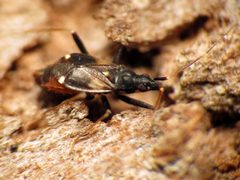
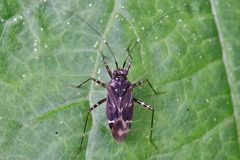
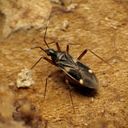
Cylapinae are distinguished from other Miridae by their ground-dwelling habits and association with decaying organic matter rather than living vegetation. Many exhibit staphylinoid (rove beetle-like) body forms with elongated bodies and relatively short . The can be separated from the potentially related Psallopinae/Psallopini by specific genitalic and external morphological characters, though tribal assignment requires examination of male and female genitalia.
Images
Habitat
Forest litter, under bark, and on fungus-covered rotten logs in humid tropical and subtropical forests. Many occupy microhabitats in decaying wood and cannot be collected using standard plant-based sampling methods.
Distribution
Primarily tropical and subtropical regions worldwide. Documented from Australia (23 , 48+ with estimated diversity of at least 100 species), Japan (Ryukyu Islands), New Guinea, Java, Taiwan, Europe, and the United States. The tribe Bothriomirini shows distribution patterns correlated with major tropical biomes and climatic zones.
Behavior
Active foragers on fungus-covered rotten logs. Cannot be collected using the most common mirid collection technique of plant sweeping and beating; specialized collection methods required include hand collection, , light traps, fogging, and bark spraying.
Similar Taxa
- Psallopinae/PsallopiniHistorically disputed placement; Psallops shares some morphological characters with certain Cylapinae such as Psallofulvius, leading to alternative classifications as either a separate or a tribe within Cylapinae. Distinguished by specific genitalic and external character combinations.
- Other Miridae subfamiliesMost other mirids are plant-associated and collected by sweeping vegetation, whereas Cylapinae are ground-dwelling and require specialized collection methods in forest litter and decaying wood .
Sources and further reading
- BugGuide
- Wikipedia
- iNaturalist taxon
- NCBI Taxonomy
- Five new genera of the subfamily Cylapinae (Insecta, Heteroptera, Miridae) from Australia
- Review of Australian Cylapinae (Hemiptera: Heteroptera: Miridae) with key to genera and descriptions of new species
- A new genus and two new species of Australian Fulviini (Insecta: Heteroptera: Miridae: Cylapinae)
- Revision of the staphylinoid and ground-dwelling genus Carvalhoma Slater & Gross (Insecta: Heteroptera: Miridae: Cylapinae) of Australia
- A new species and a new synonymy of the plant bug genus Fulvius from Japan (Hemiptera: Heteroptera: Miridae: Cylapinae)
- New species, taxonomy, phylogeny, and distribution of the tropical tribe Bothriomirini (Insecta: Heteroptera: Miridae: Cylapinae)
- Revisiting the Taxonomy of Cylapocoris Carvalho, 1954 (Hemiptera: Miridae: Cylapinae) with Descriptions of Five New Species and Morphology-Based Phylogenetic Analysis of the Genus.