
Cicadellini
Latreille, 1825
sharpshooters
Genus Guides
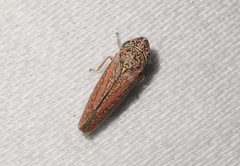
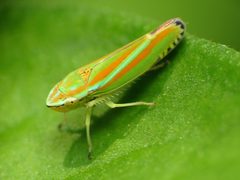
15Cicadellini is a large tribe of leafhoppers (sharpshooters) within the Cicadellidae, comprising approximately 1,886 described across 266 —four times more diverse than the related tribe Proconiini. These insects are characterized by their distinctive suctorial-piercing mouthparts adapted for xylem-feeding. The tribe exhibits highest diversity in the Neotropical region, with significant economic importance as of plant , particularly Xylella fastidiosa, which causes Citrus Variegated and other affecting commercial crops.

Pronunciation
How to pronounce Cicadellini: //sɪkəˌdɛlɪˈnaɪ//
These audio files are automatically generated. While they are not always 100% accurate, they are a good starting point.
Identification
Members of Cicadellini can be distinguished from Proconiini by genitalic features, though male genitalia alone are often insufficient for defining and relating due to relatively low morphological variation within the tribe. Female genitalia characters have become increasingly important for identification. The tribe is characterized by suctorial-piercing mouthparts typical of Hemiptera. Specific identification requires examination of male and female terminalia, including structure and ovipositor valvulae.
Images
Habitat
Cicadellini occupy diverse across the Neotropical region and beyond, including native forests, grasslands, and agricultural . In temperate South America, many species occur in grasslands, while at lower latitudes in Brazil they are isolated in alpine meadows on peaks of the southeast highlands. Several exhibit specialized microhabitat associations: Cavichiana species occur exclusively within bromeliad rosettes, while Balacha species are restricted to the rosette-disposed leaves of Eryngium (Apiaceae) in grassland and alpine meadow habitats.
Distribution
The tribe has a distribution with greatest diversity in the Neotropical region. In the Americas, documented occurrences include: Argentina (northeast and northwest regions, particularly Corrientes, Misiones, Entre Ríos, Tucumán, and Salta provinces); Brazil (Minas Gerais, Paraná, Rio de Janeiro, São Paulo, Rio Grande do Sul, Maranhão, Bahia, Roraima, Amazonas, Acre, Goiás, Mato Grosso, Espírito Santo, Santa Catarina); Colombia; Ecuador; Peru; Paraguay; Uruguay; and Mexico (Oaxaca). Records from Cuba are considered doubtful.
Seasonality
Seasonal fluctuation patterns have been documented in citrus agroecosystems, with maximum periods recorded for predominant . In northeastern Argentina, Dilobopterus costalimai abundance has been observed to be significantly affected by irrigation practices in citrus .
Diet
Xylem-feeding using suctorial-piercing mouthparts. Feeding occurs on vascular plant tissues, with many associated with specific plants including Citrus species (citrus fruits), coffee plants, and various spontaneous vegetation surrounding cultivated areas.
Host Associations
- Citrus spp. - primary cultivated ; of Xylella fastidiosa causing Citrus Variegated
- Coffea spp. - coffee plants
- Eryngium spp. - Apiaceae; of Balacha , restricted to rosette-disposed leaves
- Bromeliaceae - bromeliad rosettes; exclusive of Cavichiana
Life Cycle
Hemimetabolous development with five larval instars. The fifth larval instar has been described and illustrated for several including Hortensia similis, Sonesimia grossa, and Tapajosa rubromarginata. Detailed duration and specific developmental timing require further study for most species.
Behavior
Many exhibit -specific including restriction to particular microhabitats such as bromeliad rosettes or leaf rosettes of plants. Seasonal fluctuations occur in agricultural settings, with species showing preferences for either citrus or surrounding vegetation. Some species are predominantly collected in yellow sticky traps while others are more abundant in surrounding vegetation.
Ecological Role
Cicadellini serve as the most important of Xylella fastidiosa to citrus and coffee plants in the Americas. This bacterium causes Citrus Variegated (CVC), affecting all commercial varieties of sweet orange and other citrus species. In Argentina, at least 10 species have been confirmed as vectors of X. fastidiosa in citrus agroecosystems. The tribe thus plays a significant role in agricultural pest and plant .
Human Relevance
Major agricultural pests due to transmission of Xylella fastidiosa, causing significant economic damage to citrus and coffee industries. Research focuses on identifying , understanding their , and developing management strategies for control. The tribe is also subject of taxonomic research due to its high diversity and systematic complexity.
Similar Taxa
- Proconiinisister tribe within Cicadellinae; Cicadellini is four times more diverse with greater systematic complexity due to lower morphological variation between members, requiring female genitalia characters for reliable identification
- Membracidae (treehoppers)related within Membracoidea; distinguished by often elaborate pronotal modifications and different associations
- Iassinae within Cicadellidae; includes such as Webaskola found in similar citrus agroecosystems
More Details
Systematic complexity
The tribe exhibits systematic complexity greater than Proconiini due to relatively low morphological variation between members, making male genitalia alone often insufficient for defining and relating . Female genitalia characters have become increasingly important for identification, though detailed study of female genitalia diversity remains relatively recent.
Taxonomic research needs
The tribe remains taxonomically understudied in many regions. In Argentina, information was particularly scarce prior to recent doctoral research, coming mainly from faunistic studies in commercial crops. Many await description, and plant associations, natural enemies, and detailed are poorly known for most species.
Natural enemies
Recorded natural enemies include ( Mermithidae), (Comosmocomoidea annulicornis, C. metanotalis in Mymaridae; Burksiella sp. in Trichogrammatidae), and strepsipterans (family Halictophagidae). These represent potential agents in agricultural settings.
Sources and further reading
- BugGuide
- Wikipedia
- iNaturalist taxon
- NCBI Taxonomy
- Catalogue of Life
- Zoologia | Blog
- biodiversity | Blog - Part 29
- Brazil | Blog
- insect diversity | Blog - Part 2
- new species | Blog - Part 18
- A review of the Neotropical sharpshooter genus Onega Distant, 1908 (Hemiptera: Cicadellidae: Cicadellini)
- Taxonomic revision and phylogenetic analysis of the sharpshooter genus Balacha Melichar (Hemiptera: Cicadellidae: Cicadellini)
- Biodiversidad de Cicadellini en la regiones norte y centro de la Argentina (Hemiptera-Cicadellidae)
- A new Brazilian species of Segonalia Young 1977 (Hemiptera, Cicadellidae, Cicadellini) and key to species
- A new species of Scoposcartula (Hemiptera: Cicadellidae: Cicadellini) with phylogenetic and biogeographic comments on the genus
- Eight new Brazilian species of Fonsecaiulus (Hemiptera: Cicadellidae: Cicadellini), new records of species, and key to males of the genus
- A new genus of Cicadellini (Hemiptera: Cicadellidae) from the Oaxacan Cloud Forest, with taxonomic notes on allied red-striped genera
- Taxonomy of the Neotropical leafhopper genus Exogonia with description of seven new Brazilian species (Hemiptera: Cicadellidae: Cicadellini)
- Exploring the diversity of leafhoppers from Brazil: five new species of Erythrogonia Melichar (Insecta: Hemiptera: Cicadellidae: Cicadellini)
- Hidden diversity inside bromeliads: a new species of Cavichiana from Espírito Santo, southeastern Brazil (Insecta: Hemiptera: Cicadellidae: Cicadellini)
- A new species of the sharpshooter genus Hanshumba (Insecta: Hemiptera: Cicadellidae: Cicadellini) from the Mantiqueira mountain range, southeastern Brazil, associated with olive orchards