
Iassinae
Walker, 1870
Tribe Guides
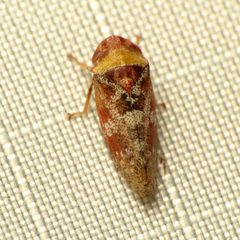
4Iassinae is a of leafhoppers in the Cicadellidae, comprising approximately 11 tribes including Iassini, Gyponini, Trocnadini, Krisnini, Selenomorphini, Hyalojassini, and others. The subfamily exhibits a distribution with notable diversity in the Neotropical, Australian, and Oriental regions. Some have been documented as phytophagous pests of cultivated plants, including introductions to regions outside their native range. Taxonomic research has focused heavily on morphological revision of constituent tribes and , with particular attention to genitalic characters for species delimitation.


Pronunciation
How to pronounce Iassinae: /jaˈsɪniː/
These audio files are automatically generated. While they are not always 100% accurate, they are a good starting point.
Identification
Members of Iassinae are distinguished from other Cicadellidae primarily by genitalic and wing venation characters. The subfamily includes tribes with distinctive morphological features: Gyponini typically have a broad, flattened body form; Trocnadini possess characteristic pronotal and wing structures; Hyalojassini often exhibit translucent or hyaline wing areas. Identification to tribe level requires examination of male genitalia, particularly aedeagal structure and connective . A key to tribes of Iassinae has been published based on morphological evidence.
Images
Distribution
with major centers of diversity in the Neotropical region (including Brazil, Bolivia, Peru, Suriname), Australia, and China. The tribe Selenomorphini occurs in the New World and New Caledonia. Some have been introduced outside native ranges; Penestragania apicalis, native to North America, has been recorded as in Eastern Europe (Ukraine).
Host Associations
- Gleditsia triacanthos - specialized phytophagePenestragania apicalis is a specialized feeder on honey locust; this is the third such phytophagous introduced to Europe
Human Relevance
Some Iassinae are recognized as agricultural or horticultural pests. Penestragania apicalis has become an pest of honey locust (Gleditsia triacanthos) in Eastern Europe, with potential for negative impact on ornamental plantings. The species was first detected in Ukraine in 2020 and is likely to spread throughout honey locust areas in Europe. Light trapping has been recommended as an effective detection method for monitoring this and related leafhopper species.
Similar Taxa
- Other Cicadellidae subfamiliesDistinguished by combinations of structure, wing venation, and male genitalic characters; Iassinae specifically diagnosed by features of the , connective, and subgenital plates
- Gyponinae (if treated as separate)Historically related or sometimes confused; current classification places Gyponini within Iassinae, but some systems may treat these groups differently
Sources and further reading
- BugGuide
- Wikipedia
- iNaturalist taxon
- NCBI Taxonomy
- Catalogue of Life
- Review of the Australian leafhopper genus Trocnada with notes on related genera (Hemiptera: Cicadellidae: Iassinae)
- Synopsis of Clinonana Osborn (Hemiptera: Cicadellidae: Iassinae): new distributional records and description of a new species
- Description of two new species of the genus Siniassus (Hemiptera: Cicadellidae: Iassinae: Hyalojassini) from China
- New species of Bertawolia Blocker and Momoria Blocker (Cicadellidae: Iassinae: Hyalojassini) from Brazil, including notes about host plants
- New genera and species of Selenomorphini (Hemiptera: Cicadellidae: Iassinae), including redescription of Scaroidana Osborn, Pachyopsis Uhler and updated key to genera and species
- Penestragania apicalis (Osborn & Ball, 1898) (Hemiptera: Cicadellidae, Iassinae) – a new invasive phytophages of honey locust in Eastern Europe
- The mitochondrial genome sequences of eleven leafhopper species of Batracomorphus (Hemiptera: Cicadellidae: Iassinae) reveal new gene rearrangements and phylogenetic implications.