
Tabanini
Latreille, 1802
horse flies, deer flies
Genus Guides
7- Agkistrocerus
- Atylotus(horse flies)
- Hamatabanus
- Hybomitra(horse flies)
- Poeciloderas
- Tabanus(True Horse Flies)
- Whitneyomyia
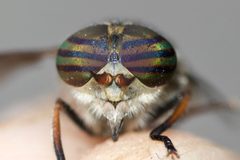
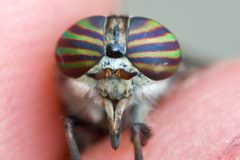
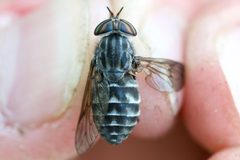
Tabanini is a tribe of horse and deer flies within the Tabanidae, containing at least 220 described . Members are robust, medium to large flies with prominent and biting mouthparts. The tribe includes economically significant such as Tabanus and Hybomitra, many of which are biting pests of mammals including humans and livestock.
Pronunciation
How to pronounce Tabanini: //ˌtæbəˈnaɪnaɪ//
These audio files are automatically generated. While they are not always 100% accurate, they are a good starting point.
Identification
Tabanini are distinguished from other tabanid tribes primarily by male genitalia structure and larval . possess large, often in males, separated eyes in females, and a prominent piercing-sucking . Wing venation patterns and scutal setation provide additional diagnostic characters for separating within the tribe.
Images
Habitat
Larvae develop in moist to wet substrates including stream margins, pond edges, marshy ground, and saturated soil. frequent open near larval development sites, including woodland edges, pastures, and riparian zones. Many show affinity for sunlit areas where they actively seek .
Distribution
distribution with present on all continents except Antarctica. Particularly diverse in tropical and temperate regions. In Australia, represented primarily by Tabanus with Torresian distribution patterns and Oriental-Papuan affinities.
Seasonality
activity peaks during warm months, varying by latitude. Temperate active primarily summer; tropical species may show extended or year-round activity patterns depending on rainfall and temperature.
Diet
Females are obligate blood-feeders on mammals, requiring blood meals for development. Males feed on nectar, pollen, and honeydew; do not blood-feed.
Life Cycle
Holometabolous development with , three larval instars, pupa, and stages. Eggs laid in masses on vegetation over water or moist ground. Larvae are aquatic or semi-aquatic in soil or mud. occurs in drier soil above water line. time typically one year, though some may require two years.
Behavior
Females are , visual hunters that pursue with persistent, aggressive . Strong, direct flight capable of covering several kilometers. Both sexes frequent flowers for nectar feeding. Males form swarms for mating.
Ecological Role
Larvae function as in aquatic and semi-aquatic , consuming and small organisms in mud and saturated soils. serve as during nectar feeding. Blood-feeding females can impact and physiology; some are significant of agents including and filarial worms.
Human Relevance
Major biting pests of livestock, causing reduced weight gain, decreased milk production, and blood loss. Bites painful and can trigger allergic reactions in sensitive individuals. Mechanical of livestock including Trypanosoma evansi (surra), T. equiperdum (dourine), and Loa loa in humans. Tabanus are primary vectors of surra in camels and cattle across Asia and Africa.
Similar Taxa
- ChrysopsiniDeer fly tribe with generally smaller body size, patterned wings with dark markings, and larvae in flowing water rather than mud or pond margins.
- DiachloriniPrimarily Neotropical tribe with different male genitalia structure and larval preferences; often show metallic coloration absent in most Tabanini.
More Details
Notable genera
Tabanus is the largest and most economically significant , containing the common horse flies. Hybomitra contains many northern temperate with distinctive striped . Therioplectes includes species specialized for feeding on ungulates in Eurasia.
Taxonomic note
Generic limits within Tabanini remain under revision; molecular has challenged some traditional groupings based on alone.