
Hybomitra
Enderlein, 1922
horse flies
Species Guides
36- Hybomitra aequetincta
- Hybomitra affinis(moose-fly)
- Hybomitra arpadi
- Hybomitra astuta(horse fly)
- Hybomitra aurilimbus
- Hybomitra californica(California horse fly)
- Hybomitra captonis(horse fly)
- Hybomitra cincta
- Hybomitra criddlei
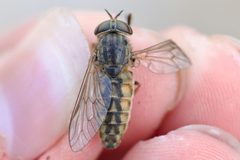
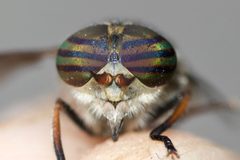
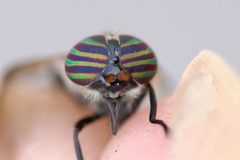
Hybomitra is a of horse flies in the Tabanidae, containing at least 240 described . The genus includes Hybomitra hinei, which holds the record for the fastest flying insect, with males documented reaching 89 miles per hour while pursuing air rifle pellets. Species in this genus are found across the Holarctic region, with records from Scandinavia, North America, and other temperate regions. As with other horse flies, females are blood-feeders while males feed on nectar.
Pronunciation
How to pronounce Hybomitra: /ˌhaɪbɵˈmaɪtrə/
These audio files are automatically generated. While they are not always 100% accurate, they are a good starting point.
Identification
Hybomitra can be distinguished from other Tabanidae using morphological keys; Martin C. Harvey published a 2018 key to the genus. Specific identification features are not provided in available sources.
Images
Distribution
Recorded from Denmark, Norway, Sweden, Vermont (USA), and other parts of the United States. The has a Holarctic distribution pattern.
Diet
Females are blood-feeders; males feed on nectar. Specific associations are not documented in available sources.
Behavior
Males are known for extremely fast ; Hybomitra hinei males have been documented flying at 89 miles per hour, the fastest recorded speed for any insect.
Human Relevance
Females bite humans and other animals to obtain blood meals, potentially serving as . The includes the fastest flying insect known to science.
More Details
Speed record
The male Hybomitra hinei holds the verified record for fastest insect speed at 89 mph, documented during pursuit of an air rifle pellet.
Species diversity
The contains at least 240 described , making it one of the larger genera within Tabanidae.