
Hamatabanus
Philip, 1941
Species Guides
3Hamatabanus is a of horse flies ( Tabanidae) containing at least three described . The genus was established by Philip in 1941 and is classified within the Tabaninae and tribe Tabanini. Species within this genus share the general characteristics of horse flies, including large and blood-feeding females.
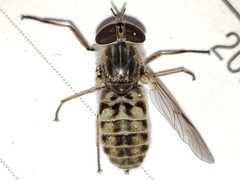
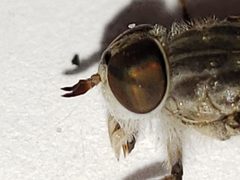
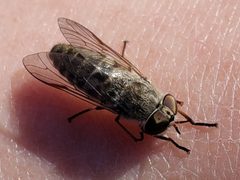
Pronunciation
How to pronounce Hamatabanus: //ˌhæm.ə.təˈbeɪ.nəs//
These audio files are automatically generated. While they are not always 100% accurate, they are a good starting point.
Identification
Distinguishing Hamatabanus from other tabanid requires examination of morphological characters such as patterns, wing venation, and genitalia structure. The genus name refers to a characteristic marking pattern (from Greek 'hama' meaning together and Latin 'tabanus' for horse fly), though specific diagnostic features for field identification are not well documented in general literature.
Images
Distribution
of Hamatabanus have been recorded in North America. Hamatabanus carolinensis, described by Macquart in 1838, suggests a southeastern United States distribution, while other species have been documented across various regions of the continent.
Human Relevance
As with other horse flies, females of Hamatabanus likely bite mammals, including humans, to obtain blood meals required for development. The is not among the most frequently cited tabanid pests, though individual may cause nuisance biting in their range.
Similar Taxa
- TabanusThe type of Tabanidae; Hamatabanus can be distinguished by specific morphological characters in the structure and genitalia, though superficially similar in general body plan.
- ChrysopsDeer flies in the Chrysopsinae, which differ from Hamatabanus in having spotted or banded wings and typically smaller body size.
More Details
Taxonomic History
The was erected by Cornelius Becker Philip in 1941, a prolific dipterist who described numerous tabanid . The type is Hamatabanus carolinensis (Macquart, 1838), originally described in the genus Tabanus.
Species Diversity
At least three are currently recognized: Hamatabanus annularis (Hine, 1917), Hamatabanus carolinensis (Macquart, 1838), and Hamatabanus sexfasciatus (Stone, 1935). Some sources suggest a fourth undescribed or recently described species may exist.