
Chrysopsini
deer flies, horse flies
Genus Guides
3- Chrysops(Deer flies)
- Neochrysops(horse flies)
- Silvius
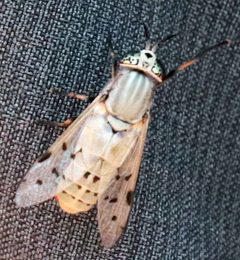
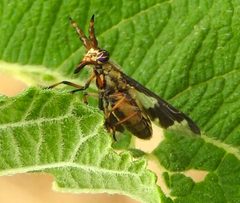
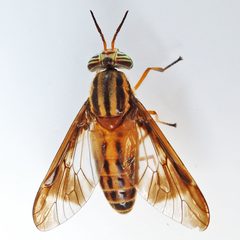
Chrysopsini is a tribe of biting flies in the Tabanidae, commonly known as deer flies and horse flies. The tribe includes approximately eight , with Chrysops being the most -rich and widely distributed. Members are characterized by their large , often with colorful or patterned iridescence, and their blood-feeding by females. The tribe is distinguished from other tabanid tribes by specific wing venation patterns and larval preferences.
Pronunciation
How to pronounce Chrysopsini: //ˌkrɪ.soʊpˈsaɪ.ni//
These audio files are automatically generated. While they are not always 100% accurate, they are a good starting point.
Identification
Members of Chrysopsini can be distinguished from other Tabanidae tribes by the presence of a darkened crossband or patterning on the wings in many , particularly in the Chrysops. The of living often show brilliant metallic green, purple, or gold iridescence with distinct banding or spotting patterns. The tribe is further characterized by with a relatively short terminal style and specific features of the larval mouthparts.
Images
Habitat
Larvae develop in aquatic or semi-aquatic environments including marshes, ponds, streams, and moist soil along shorelines. activity is concentrated near larval , particularly in wooded or shrubby areas adjacent to water.
Distribution
Widespread across all biogeographic regions except Antarctica, with greatest diversity in temperate and tropical zones of the Northern Hemisphere.
Seasonality
activity peaks during warm months, typically late spring through early autumn in temperate regions; activity patterns vary by latitude and .
Diet
Females are obligate blood feeders on mammals including deer, livestock, and humans; males feed on nectar and pollen. Larvae are predatory on small aquatic .
Life Cycle
Complete with , larva, pupa, and stages. Eggs are deposited in masses on vegetation overhanging water. Larvae are aquatic or semi-aquatic , developing through multiple instars over one to three years depending on and climate. occurs in moist soil or substrate near the water margin. Adults are relatively short-lived, with females requiring a blood meal for egg development.
Behavior
Females are persistent, painful biters with scissor-like mouthparts that create a wound to pool blood. is swift and agile, with often pursuing moving . Males do not blood feed and are rarely encountered.
Ecological Role
Larvae function as in freshwater . serve as of some plants via male nectar feeding. Blood-feeding females can transmit including Loa loa (African worm), , and various .
Human Relevance
Significant biting pests causing painful wounds, allergic reactions, and reduced outdoor work . Medical importance includes transmission of Loa loa in Africa and potential mechanical transmission of other . Livestock harassment can cause reduced weight gain and milk production.
Similar Taxa
- TabaniniLarger body size, typically meet dorsally in males, wing patterns generally absent or reduced; larvae in drier soil .
- HaematopotiniSmaller body size, often have horizontal banding rather than spotted patterns, wing typically clear without dark markings; associated with different larval substrates.