
Haematopotini
clegs, deer flies
Genus Guides
1- Haematopota(Clegs)
Haematopotini is a tribe of horse flies within the Tabanidae. Members are commonly known as clegs or deer flies. The tribe contains approximately four , including the well-known genus Haematopota. These flies are blood-feeding insects with females requiring blood meals for development.
Pronunciation
How to pronounce Haematopotini: //ˌhiːmətoʊˈpɒtɪnaɪ//
These audio files are automatically generated. While they are not always 100% accurate, they are a good starting point.
Identification
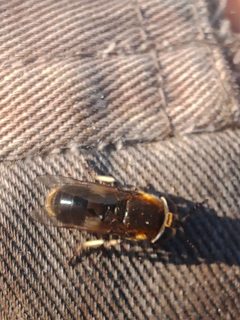
Haematopotini can be distinguished from other tabanid tribes by wing venation patterns and . Members of the Haematopota typically display spotted or patterned wings, a trait useful for field identification. The tribe is placed within Tabaninae based on morphological characteristics.
Images
Distribution
The tribe has a wide distribution with member occurring across multiple continents. Haematopota is particularly diverse in the Palearctic region.
Diet
Females are obligate blood-feeders, requiring vertebrate blood for maturation. Males do not blood-feed and are presumed to feed on nectar and other sugar sources, though this has not been explicitly documented for all .
Life Cycle
Development follows the typical tabanid pattern: laid in masses on vegetation near water or moist soil, larval stages are aquatic or semi-aquatic , occurs in soil or mud, and emerge to mate. Specific timing varies by and region.
Behavior
Females are persistent biters and strong fliers, capable of following for considerable distances. They are and visual hunters, using large to locate hosts.
Ecological Role
Larvae function as in aquatic and semi-aquatic . females serve as blood-feeding on mammals and birds, potentially acting as .
Human Relevance
Bites cause pain, swelling, and allergic reactions in sensitive individuals. Some are of livestock including equine infectious anemia and . Heavy can reduce productivity in grazing animals.
Similar Taxa
More Details
Systematics
The tribe is classified within Tabaninae. The Heptatoma is sometimes treated as distinct due to its unusual , though it remains within Haematopotini in current classifications.