
Dioprosopa
Hull, 1949
drone flies
Species Guides
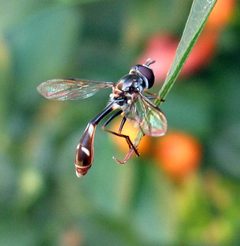
1- Dioprosopa clavata(Four-speckled Hover Fly)
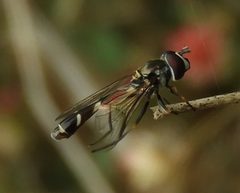
Dioprosopa is a of hoverflies ( Syrphidae) in the tribe Syrphini, containing two described found in the New World. The genus was elevated from subgenus rank in 2018 based on phylogenetic studies. Both species occur in tropical and subtropical regions of the Americas, where they contribute to services through pollination and larval on agricultural pests.
Pronunciation
How to pronounce Dioprosopa: /ˈdioʊprəˌsoʊpə/
These audio files are automatically generated. While they are not always 100% accurate, they are a good starting point.
Identification
Formerly treated as a subgenus of Pseudodoros; distinguished by phylogenetic analysis supporting generic separation in 2018. -level identification requires examination of morphological characters not detailed in available sources.
Images
Habitat
Tropical and subtropical regions of the Americas; occurs in natural and agroecosystems including citrus systems. Higher elevations may serve as moisture-retentive refugia due to cloud immersion and adiabatic cooling.
Distribution
New World; tropical and subtropical regions of the Americas. Current range concentrated in tropical lowlands of northern South America and Central America.
Diet
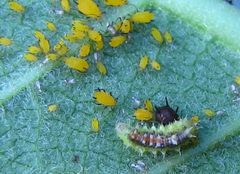
feed on nectar and pollen, including composites such as Tridax procumbens. Larvae are aphidophagous of aphids, spittlebugs, and other hemipteran pests.
Host Associations
- Tridax procumbens - food sourcenectar and pollen source
- Aphids - larval preyaphidophagous
- Spittlebugs - larval preyprey in Cercopidae
- Hemipteran pests - larval preygeneral on sternorrhynchous hemipterans
Behavior
mediate pollination mutualisms; larvae exert top-down control on hemipteran pests in agroecosystems. Foraging and regulated by temperature, solar radiation, humidity, cloud cover and wind; remains active under conditions when bees are inactive. Performs long-distance seasonal movements that redistribute services across regions.
Ecological Role
Contributes to functioning through complementary services: pollination (including crop pollination) and larval of agricultural pests. Serves as bioindicator of integrity and landscape quality. Provides ecosystem services overlapping with and complementing those of bees.
Human Relevance
Provides agricultural services including crop pollination (documented for onion, oilseed rape, strawberry, sweet pepper) and of aphids and other hemipteran pests in agroecosystems. Climate change poses significant threat: projected range contractions up to 43.5% by 2100 under high-emission scenarios.
Similar Taxa
- PseudodorosFormerly treated as subgenus; separated based on 2018 phylogenetic studies