
Dioprosopa clavata
(Fabricius, 1794)
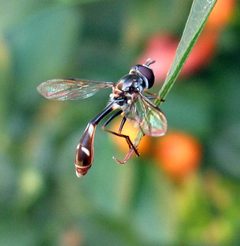
Four-speckled Hover Fly
Dioprosopa clavata is a Neotropical hoverfly (Diptera: Syrphidae) and the type of Dioprosopa. feed on nectar and pollen, while larvae are aphidophagous that also attack spittlebugs and other hemipteran pests. The species provides dual services as both a and agent in natural and agroecosystems, including citrus orchards. Climate change projections indicate substantial habitat loss by 2100, with range contractions in tropical lowlands and modest shifts toward cooler, higher-elevation refugia.

Pronunciation
How to pronounce Dioprosopa clavata: //ˌdaɪ.oʊ.proʊˈsoʊpə kləˈvɑːtə//
These audio files are automatically generated. While they are not always 100% accurate, they are a good starting point.
Images
Habitat
Tropical and subtropical regions of the Americas; occurs in both natural and agroecosystems. Favors areas with topographic heterogeneity that provides microclimatic buffering. Projected to shift toward higher-elevation, cooler refugia under climate change scenarios.
Distribution
Widely distributed across tropical and subtropical regions of the Americas, including northern South America, Central America, and other Neotropical areas. Near-term projections (2021–2040) suggest stability in 88–89% of current range, but dramatic contractions expected by late century (2081–2100), particularly in tropical lowlands of northern South America and Central America, with modest poleward and upslope gains.
Diet
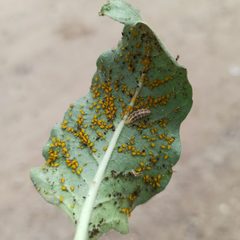
feed on nectar and pollen, including composites such as Tridax procumbens. Larvae are aphidophagous and attack spittlebugs (Cercopoidea) and other hemipteran pests of economic importance.
Host Associations
- Tridax procumbens - food source (nectar/pollen)coatbuttons/tridax daisy, a composite plant
- aphids - larval preygeneral
- spittlebugs - larval preyCercopoidea
- other hemipteran pests - larval preyeconomic pests in agroecosystems
Life Cycle
Third-instar larva and have been redescribed with diagnostic cuticular and cephalopharyngeal skeletal characters. Larvae are aphidophagous .
Behavior
Performs long-distance seasonal movements that redistribute pollination and pest-control services across regions. Active under environmental conditions when bees are inactive, including of temperature, solar radiation, humidity, cloud cover, and wind variations.
Ecological Role
Key contributor to functioning through dual services: mediate pollination mutualisms for crops including onion, oilseed rape, strawberry, sweet pepper, and citrus; larvae provide top-down of sternorrhynchous hemipterans in agroecosystems. Serves as a bioindicator of integrity and landscape quality.
Human Relevance
Important for in agricultural systems, particularly citrus and other crops. Provides pollination services for multiple crop . Climate change threatens to reduce its range and contributions by 2100.
Sources and further reading
- BugGuide
- iNaturalist taxon
- Destination: Eastern North America to revisit Jorō spiders, Trichonephila clavata, spreading in their new home in the United States — Bug of the Week
- Jorō spiders enjoy their new home in the DMV: Jorō spider, Trichonephila clavata — Bug of the Week
- Terrifying big spiders soon in the DMV? Meet the Jorō Spider, Trichonephila clavata, and its cousin the Golden Silk Spider, Trichonephila clavipes — Bug of the Week
- Is the Jorō spider coming to your neighborhood? Trichonephila clavata — Bug of the Week
- Jorō Spiders: Pretty, Big, and Not Very Bitey
- Bug Eric: Save A Spider (Every) Day
- Small gains, large losses: range shifts of the hoverfly Dioprosopa clavata (Fabricius, 1794) (Diptera: Syrphidae) to 2100.