
Platycheirus hyperboreus
(Staeger, 1845)
Pearly Sedgesitter
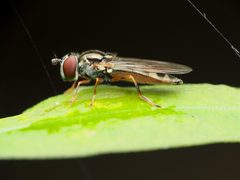
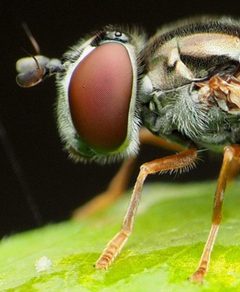
Platycheirus hyperboreus, commonly known as the Pearly Sedgesitter, is a small hoverfly (Syrphidae) distributed across and arctic regions of North America and northern Europe. are 5.3–8.7 mm in length and exhibit distinctive abdominal patterning with pale spots on dark segments. The is recognized by its modified front legs, which are yellow with gradually dilated tibiae—an associated with its . It occurs in northern latitudes ranging from Alaska and Greenland through Scandinavia to northern Siberia.
Pronunciation
How to pronounce Platycheirus hyperboreus: //ˌplætɪˈkaɪrəs ˌhaɪpərˈbɔːriəs//
These audio files are automatically generated. While they are not always 100% accurate, they are a good starting point.
Identification
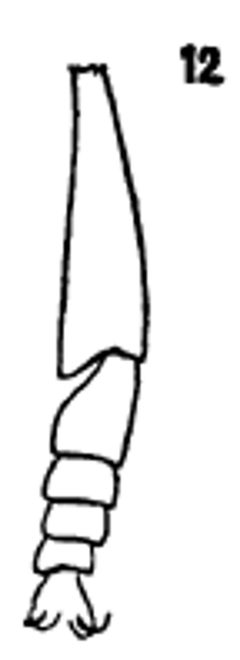
Distinguished from other Platycheirus by the combination of: gradually dilated front tibiae (not strongly clubbed), yellow front and middle legs with blackish middle , and the specific abdominal spot pattern—small rounded spots on segment 2, large quadrate spots on segments 3–4 that do not extend to segment apex. The wing is entirely trichose or nearly so. Similar species with modified front legs include P. trichopus and P. scutatus, which differ in leg coloration and tibial dilation patterns.
Images
Distribution
and arctic regions: North America across Alaska, Canada, Greenland, and northern United States (south to North Carolina east, Nevada west); western and northern Europe including Norway, Finland, northern Russia (Kola Peninsula), and northern Siberia.
Similar Taxa
- Platycheirus trichopusSimilar modified front legs, but differs in leg coloration and degree of tibial dilation; P. hyperboreus has more gradual tibial expansion.
- Platycheirus scutatusShares front leg modification, but P. hyperboreus distinguished by yellow front and middle legs versus darker leg coloration in P. scutatus.