
Criorhina occidentalis
(Osburn, 1908)
Western Yellowjacket Fly
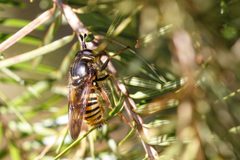
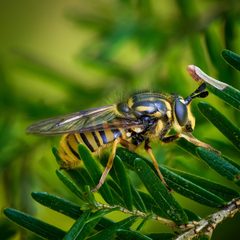
Criorhina occidentalis is a of hoverfly in the Syrphidae, commonly known as the Western Yellowjacket Fly. It belongs to a of hoverflies that exhibit mimicry of stinging insects such as and . The species is found in North America, with records from Canada and the United States. As a member of the Syrphidae family, likely visit flowers for nectar and pollen, though specific biological details remain poorly documented.
Pronunciation
How to pronounce Criorhina occidentalis: /ˌkraɪəˈraɪnə ˌɒksɪdɛnˈteɪlɪs/
These audio files are automatically generated. While they are not always 100% accurate, they are a good starting point.
Identification
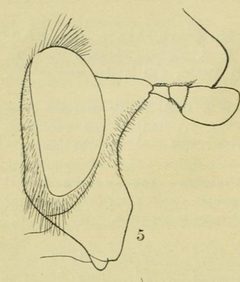
Members of the Criorhina are distinguished by their resemblance to yellowjacket (Vespula), featuring yellow and black coloration and a robust body form. The genus is characterized by a broad, flattened and modified . Specific diagnostic features for C. occidentalis relative to are not well established in available literature.
Images
Distribution
Canada and the United States.
Behavior
are likely flower visitors, as is typical for the Syrphidae. The name and suggest -mimicry, which may serve as a defensive against .
Similar Taxa
- Criorhina berisSimilar -mimicking hoverfly in the same , distinguished by distribution and subtle morphological differences in wing venation and color pattern.
- Vespula species (yellowjackets)The Western Yellowjacket Fly mimics these stinging in appearance but is distinguished by having only one pair of wings (Diptera), short , and large that nearly meet at the top of the .
More Details
Taxonomic history
Originally described as Sphecomyia occidentalis by Osburn in 1908, later transferred to the Criorhina.
Observation records
As of available data, the has relatively few documented observations (46 records on iNaturalist), suggesting it may be genuinely uncommon or underrecorded.
Sources and further reading
- BugGuide
- Wikipedia
- GBIF taxonomy match
- iNaturalist taxon
- NCBI Taxonomy
- Catalogue of Life
- Bumble Bees: Feeling Impact of Climate Change | Bug Squad
- Probing the Molecular Interactions Between Western Flower Thrips and the Tomato Spotted Wilt Virus | Bug Squad
- Flabellate Grasshopper
- Ticks Can Do More Than 'Tick You Off' | Bug Squad
- Good News for the Western Bumble Bee, Bombus occidentalis
- A sting to kill a cow? Red velvet ant, a.k.a. cow killer, Dasymutilla occidentalis — Bug of the Week