
Criorhina coquilletti
Williston, 1892
Coquillett's Bumble Fly
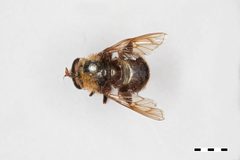
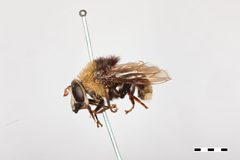
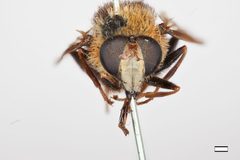
Criorhina coquilletti is a of hoverfly ( Syrphidae) known as Coquillett's Bumble Fly. The Criorhina belongs to the tribe Milesiini within the Eristalinae. Hoverflies in this genus are recognized for their mimicry, a form of that provides protection from . The species was described by Samuel Wendell Williston in 1892.
Pronunciation
How to pronounce Criorhina coquilletti: /ˈkriːoʊˌraɪnə ˌkoʊkɪˈjɛti/
These audio files are automatically generated. While they are not always 100% accurate, they are a good starting point.
Identification
in the Criorhina are distinguished from other syrphid genera by their robust, -like body form with dense pile. Specific identification of C. coquilletti requires examination of morphological characters including facial structure, wing venation patterns, and male genitalia. The species can be separated from by subtle differences in coloration and structural features, though precise diagnostic characters require taxonomic knowledge.
Images
Distribution
Canada and the United States.
Ecological Role
Similar Taxa
- Other Criorhina species share the mimicry and robust body form; require detailed morphological examination for separation.
- Mallota speciesAnother of -mimicking hoverflies in the same tribe Milesiini with similar overall appearance.
- Eristalis speciesDrone fly mimics of honey bees rather than bumble bees, but share similar hoverfly body plan and flower-visiting .
More Details
Nomenclature
The specific epithet coquilletti honors Daniel William Coquillett (1856-1911), an American entomologist who made significant contributions to the study of Diptera, particularly the Syrphidae. Coquillett worked for the U.S. Department of Agriculture and described numerous insect .
Mimicry System
The Criorhina exhibits of bumble bees (Bombus spp.), gaining protection from that avoid the stinging hymenopteran models. This mimicry includes not only coloration and body form but also behavioral components such as patterns.
Sources and further reading
- BugGuide
- Wikipedia
- GBIF taxonomy match
- iNaturalist taxon
- NCBI Taxonomy
- Catalogue of Life
- Coquillettia vicina Wyniger lateral | Entomology Research Museum
- Bembicid Holdings | Entomology Research Museum
- Bug Spotlight | Entomology Research Museum
- Primary Type List | Entomology Research Museum
- Field Guide Selected References
- Bug Eric: Wasp Wednesday: Poecilopompilus algidus