Sericomyia vockerothi
Skevington, 2012
Vockeroth's Pond Fly
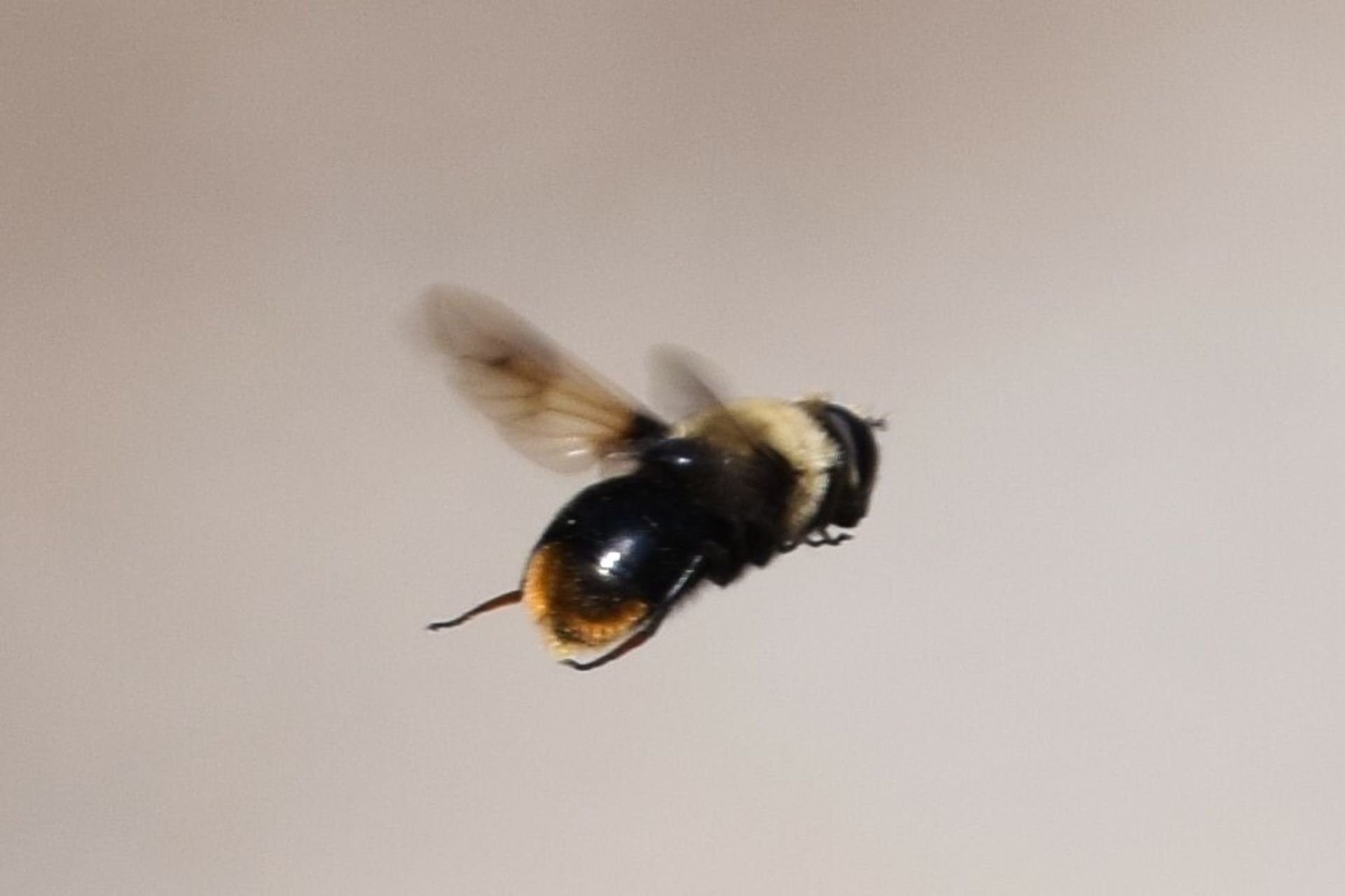
Sericomyia vockerothi is a of hoverfly in the Syrphidae, described by Skevington in 2012. The Sericomyia belongs to the tribe Milesiini (formerly Sericomyiini), a group whose larvae are known as "rat-tailed maggots" due to their distinctive breathing siphon. Larvae of related Sericomyia species inhabit bog mat pools and other aquatic environments with organic matter. are that visit flowers for nectar and pollen. The species is poorly documented in public sources, with only five observations recorded on iNaturalist as of the available data.
Pronunciation
How to pronounce Sericomyia vockerothi: /ˌsɛrɪkoʊˈmaɪə ˌvɒkəˈrɒθaɪ/
These audio files are automatically generated. While they are not always 100% accurate, they are a good starting point.
Identification
of Sericomyia can be distinguished from other hoverfly by a combination of wing venation and abdominal patterning, though specific diagnostic features for S. vockerothi are not detailed in available sources. The genus is related to Eristalis (drone flies) but typically lacks the strong -mimicry seen in that genus. Larval identification to species level requires examination of siphon length and other morphological details; Sericomyia larvae have moderately long breathing siphons, intermediate between the very long siphons of Eristalis and the short siphons of Chrysogaster.
Images
Habitat
Larvae of Sericomyia inhabit bog mat pools and other standing water with abundant organic matter. are associated with flower-rich including grasslands and wetlands where nectar sources are available.
Distribution
Specific distribution records for S. vockerothi are sparse. The Sericomyia occurs in the Holarctic region. The has been recorded in North America based on iNaturalist observations.
Diet
Larvae filter bacteria and other microbes from organic matter in water. feed on nectar and pollen from flowers.
Life Cycle
Complete with , larval, pupal, and stages. Larvae are aquatic "rat-tailed maggots" with a breathing siphon. Mature larvae leave water to pupate in a hardened on dry ground.
Behavior
Larvae remain submerged, using their extensible breathing siphon to connect to the water surface for respiration while feeding on organic matter below. are flower visitors.
Ecological Role
Larvae contribute to decomposition and nutrient cycling in aquatic environments. function as of wildflowers.
Human Relevance
are that may contribute to services in natural and managed landscapes. Larvae are not known to be pests.
Similar Taxa
- Sericomyia silentisAnother Sericomyia with similar preferences; S. silentis (Yellow-barred Peat Hoverfly) has been recorded in European grassland surveys and may overlap in range.
- Eristalis tenaxShares the rat-tailed maggot larval form and aquatic , but are strongly -mimetic with different abdominal patterning; larvae have much longer breathing siphons.
More Details
Taxonomic note
The was described by Skevington in 2012, making it a relatively recently described species. The Sericomyia was formerly placed in the tribe Sericomyiini, now synonymized under Milesiini.