Stratiomys badia
Walker, 1849
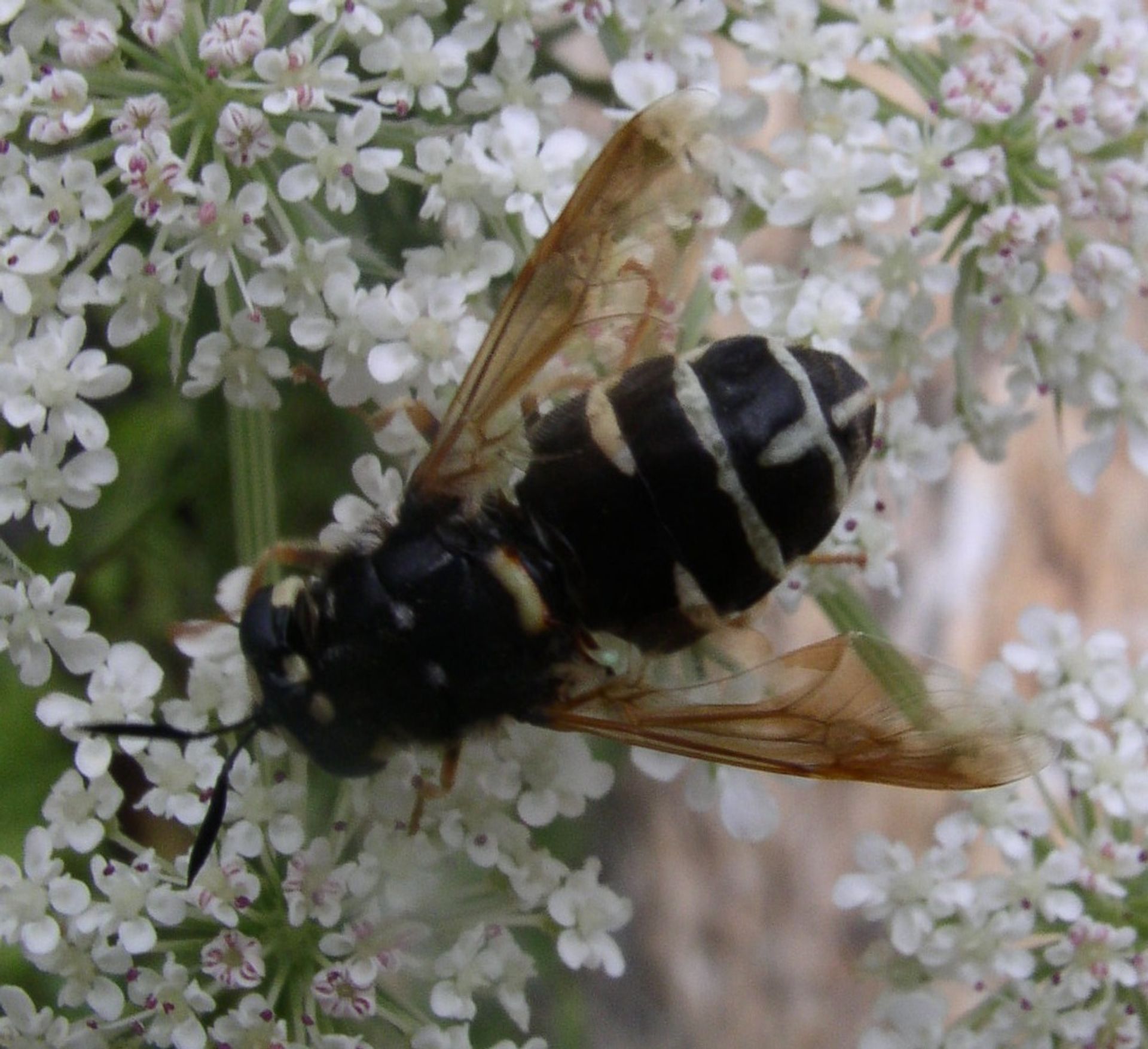
Stratiomys badia is a of soldier fly ( Stratiomyidae) first described by Walker in 1849. The Stratiomys is known for species that exhibit -mimicry, with black and yellow coloration and relatively broad bodies compared to many other dipterans. Related species in the genus have been documented as having aquatic larvae, though specific larval for S. badia remains unconfirmed. are typically associated with flowers where they feed on nectar.
Pronunciation
How to pronounce Stratiomys badia: /ˌstrætiˈoʊmɪs ˈbeɪdiə/
These audio files are automatically generated. While they are not always 100% accurate, they are a good starting point.
Identification
Distinguished from true (Hymenoptera: Vespidae) by single pair of wings (dipteran condition), reduced hindwings modified as , and lack of constricted 'wasp waist.' Separated from similar syrphid flies (Syrphidae) by broader, more flattened body form and wing venation characteristics typical of Stratiomyidae. Within Stratiomys, identification to requires examination of specific morphological features not detailed in available sources.
Images
Appearance
exhibit -mimic coloration with black and yellow patterning. The body is relatively broad and somewhat flattened compared to many other flies, contributing to the superficial resemblance to vespid wasps. are large and may show patterning, as observed in related Stratiomys . Wings are clear with typical dipteran venation. in patterning has been documented in related species.
Habitat
have been observed on flowering vegetation. Related in the are associated with aquatic or semi-aquatic due to larval requirements.
Distribution
Documented from Vermont and other parts of the United States. GBIF records indicate North American distribution.
Diet
feed on nectar from flowers. Larval diet unknown for this ; related Stratiomys species have aquatic larvae with feeding habits typical of stratiomyid larvae.
Life Cycle
Larval stage likely aquatic based on characteristics, though not directly confirmed for this . Complete with , larva, pupa, and stages.
Behavior
are active fliers and may be wary of close approach. Related in the Stratiomys have been described as relatively approachable compared to other -mimic flies.
Ecological Role
function as while feeding on nectar. Larval stage likely contributes to aquatic if preferences follow patterns.
Human Relevance
No documented economic or medical significance. -mimic appearance may cause mistaken identity with stinging insects.
Similar Taxa
- StratiomysCongeneric share -mimic appearance and require detailed morphological examination for species-level identification
- HoplitimyiaRelated stratiomyid with similar -mimic black and yellow coloration; distinguished by body shape and structural features
- Vespidae (wasps)Mimicry target; distinguished by two pairs of wings, constricted waist, and different structure
More Details
Taxonomic note
The Stratiomys and related stratiomyid genera such as Hoplitimyia exhibit complex -level , with some authors noting that species boundaries remain unresolved in certain groups.